Choose the Olympus M.Zuiko 40-150mm f/4-5.6 R if your camera has in-body stabilization and you want a very light, compact telephoto zoom at a budget cost, and choose the Panasonic Lumix G Vario 45-150mm f/4-5.6 if your camera lacks in-body stabilization and you want optical stabilization built into the lens. Both are entry-level Micro Four Thirds telephoto zooms with similar reach and aperture, so the choice depends mostly on the camera body you own.
Sourcing note: figures reflect makers’ published specifications for these older kit-class lenses, which are widely available second-hand and may be sold in several colors or revisions. Confirm the exact version when buying.
Our top picks
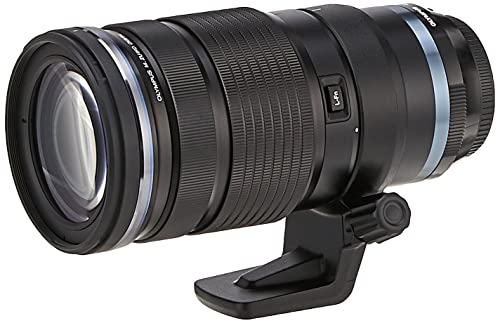

As an Amazon Associate we earn from qualifying purchases at no extra cost to you.
At a Glance
| Feature | Olympus 40-150mm f/4-5.6 R | Panasonic 45-150mm f/4-5.6 |
|---|---|---|
| Mount | Micro Four Thirds | Micro Four Thirds |
| Focal length | 40-150mm (about 80-300mm equivalent) | 45-150mm (about 90-300mm equivalent) |
| Aperture | f/4 to f/5.6 | f/4 to f/5.6 |
| Lens stabilization | None (relies on body) | Optical stabilization (Mega O.I.S.) |
| Weight | Very light, around 190 g class | Light, around 200 g class |
| Filter size | 58mm | 52mm |
| Best for | Olympus or OM System bodies with IBIS | Panasonic bodies without IBIS |
| Cost tier | Budget | Budget |
Reach and Optics
Both lenses cover a similar telephoto range on a Micro Four Thirds sensor, equivalent to roughly 80-300mm or 90-300mm on a full-frame camera. They share a variable aperture of f/4 at the short end to f/5.6 at the long end, which is typical for budget telephoto zooms. Reviewers generally describe both as sharp enough at moderate focal lengths and reasonably good through the zoom range, with the long end softer and best used with some stopping down or good light. Neither is a low-light lens, and neither offers strong background blur, but both give good reach for travel, family events and casual wildlife in daylight.
Stabilization: The Key Difference
The Panasonic lens includes optical image stabilization, which matters on cameras without in-body stabilization, such as many Panasonic G bodies and the GM series. The Olympus lens has no stabilization of its own and depends on the camera body, which works well on Olympus and OM System bodies and Panasonic bodies with in-body stabilization. On a body without in-body stabilization, an unstabilized telephoto is much harder to hold steady at 150mm, so the Panasonic lens is the better match. On a stabilized body, the Panasonic lens can still work, and some Panasonic bodies combine lens and body stabilization.
Size, Weight and Handling
The Olympus lens is notable for being very compact and light, and it retracts for storage. The Panasonic lens is also compact. The Olympus has a larger 58mm filter thread, while the Panasonic uses 52mm, which can matter if you already own filters. Both have a manual zoom ring and focus-by-wire controls with a thin, light feel that favors portability over robustness. Both have plastic construction and neither is described as weather-sealed, so protect them in rain and dust.
Autofocus and Video
Autofocus on both lenses is described by reviewers as quick and quiet on modern bodies, with the Olympus MSC design aimed at smooth, quiet focusing for video. The Panasonic lens also focuses quickly and works with Panasonic’s contrast autofocus system. Cross-brand use works, but some features vary: certain body-lens stabilization combinations are specific to the same brand. For video, stabilization and quiet focusing matter, and both lenses are reasonable for casual use.
Fit and Compatibility
Both lenses fit any Micro Four Thirds body from Panasonic, Olympus, OM System and other makers. Cross-brand pairing works, though features like dual stabilization are best matched within one brand. Some Olympus bodies offer lens stabilization coordination only with their own stabilized lenses, so check the camera manual. Lens hoods are sold separately for some versions, and a hood helps with flare and protection.
Pick X If
| If you… | Pick |
|---|---|
| Own an Olympus or OM System body with IBIS | Olympus 40-150mm |
| Own a Panasonic body without IBIS | Panasonic 45-150mm |
| Want the lightest and most compact option | Olympus 40-150mm |
| Want built-in lens stabilization for video or low light | Panasonic 45-150mm |
| Already own 52mm filters | Panasonic 45-150mm |
| Already own 58mm filters | Olympus 40-150mm |
Alternatives to Consider
- Olympus 40-150mm f/2.8 Pro: a premium-tier, weather-sealed, fast constant-aperture telephoto for serious use.
- Panasonic Lumix G Vario 45-175mm or 100-300mm: other Panasonic telephoto options for more reach or a power zoom.
- Olympus 75-300mm or OM System 100-400mm: longer zoom options for wildlife and sports.
Verdict
These lenses are close in reach and aperture, so match them to your camera. If your body has in-body stabilization, the Olympus 40-150mm is the lightest budget telephoto. If not, the Panasonic 45-150mm with built-in stabilization is the more practical pick. Either one is a low-cost way to add telephoto reach to a Micro Four Thirds kit, and condition matters when buying used.
Frequently Asked Questions
Can I use the Olympus lens on a Panasonic camera?
Yes. Both lenses use the Micro Four Thirds mount and work on bodies from either brand.
Does the Olympus 40-150mm have image stabilization?
No. It relies on in-body stabilization in your camera. If your body lacks it, the Panasonic lens is the better match.
Which lens is sharper?
Both are described by reviewers as sharp enough for everyday use, with softness toward the long end. Differences are small compared with the effect of stabilization and light.
Are these lenses weather-sealed?
No, neither is described as weather-sealed. Take care in rain, dust and sand.
Are they good for wildlife or sports?
They can handle casual daylight use, but the slow aperture and modest reach limit action and low-light work. Longer or faster telephotos are better for serious wildlife or sports.
Do they work well for video?
Yes, for casual video. Stabilization from the lens or body helps, and the autofocus is quiet on modern bodies.
More from Amazon
Programs that pair well with the guide above. Offers and eligibility are set by Amazon and may change.
Free shipping on eligible items, Prime Video and more. Eligible new members can start with a free trial.
Start a Prime free trialAd-free music streaming. Eligible new subscribers can start with a free trial.
Try Music Unlimited freeA Prime membership for ages 18-24 with a trial period. Eligibility is set by Amazon.
See Prime for Young AdultsAudiobooks and podcasts to listen to on the go. Eligible new members can start with a free trial.
Try Audible freeAs an Amazon Associate we earn from qualifying purchases.