Choose the Leica R 35mm Summicron-R f/2 if you want the faster aperture, shallower depth of field and better low-light ability, and choose the 35mm Elmarit-R f/2.8 if you want a smaller, lighter and usually more affordable lens that performs well from f/4 onward. Both are manual-focus lenses for the Leica R mount, so on modern mirrorless cameras they need an adapter and are used with manual focus and stop-down metering.
Sourcing note: these are discontinued vintage lenses with several production versions. Details such as optical formulas, weight and filter sizes differ by version and serial range, so the points below are general, and you should confirm the exact version with the seller and Leica’s published lens history.
Our top picks

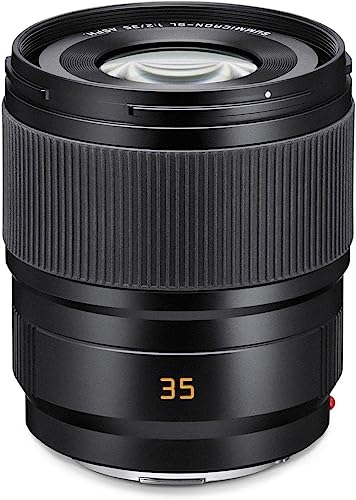
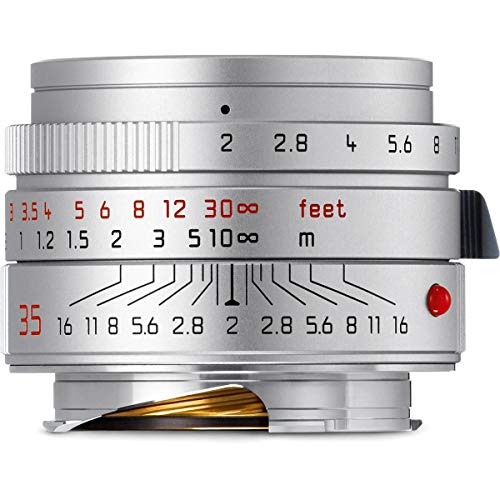
As an Amazon Associate we earn from qualifying purchases at no extra cost to you.
At a Glance
| Feature | 35mm Summicron-R f/2 | 35mm Elmarit-R f/2.8 |
|---|---|---|
| Maximum aperture | f/2 | f/2.8 |
| Focal length | 35mm | 35mm |
| Mount | Leica R | Leica R |
| Focus | Manual | Manual |
| Size and weight | Larger and heavier | More compact and lighter |
| Best for | Low light, shallow depth, character | Travel, landscape, street, lighter kit |
| Typical used cost tier | Premium | Mid-range |
| Main limit | Cost and size | Less light gathering |
Aperture and Low Light
The one-stop difference between f/2 and f/2.8 is the most obvious distinction. The Summicron lets in about twice as much light, which helps for indoor, evening and street work and allows shallower depth of field for subject separation. The Elmarit is still usable in decent light and is stopped down more often in practice, since many photographers shoot a 35mm at f/4 to f/8 for street and landscape scenes. If you plan to shoot wide open frequently, the Summicron is the clear choice. If you mostly stop down, the extra stop is less valuable.
Image Character
Reviewers and collectors often describe both lenses as sharp with good contrast and pleasant rendering, with the Summicron noted for more refined control of aberrations wide open and a smooth blend of sharpness and softness. The Elmarit is regarded as a solid performer that is sharp in the center and good across the frame when stopped down. The look varies between versions, and early versions can show more flare, lower contrast or color differences compared with later multi-coated or ROM versions. Adapted to digital sensors, edge performance can look different than on film, so check sample images from the same camera type if possible.
Size, Weight and Handling
The Elmarit is smaller and lighter, which balances better on compact mirrorless bodies. The Summicron is bulkier, and with an adapter the combined package can feel front-heavy on small cameras. Leica R lenses have a smooth, damped focus ring that many photographers enjoy for manual focus, particularly with focus peaking on mirrorless bodies. Check that the focus ring turns smoothly, the aperture ring clicks cleanly and the aperture blades are dry, since oily blades are a known issue on old lenses.
Adapting to Modern Cameras
Leica R lenses have a longer flange distance than most mirrorless systems, so adapters to Sony E, L-mount, Canon RF, Nikon Z and Micro Four Thirds are widely available. Leica R lenses are designed for the R mount, so adapters from Leica-compatible makers are common, with optional chips on some mounts for focus confirmation. On mirrorless bodies, use focus peaking or magnified live view, and set the camera to shoot without a lens or with adapted lenses allowed. Adapted lenses do not pass electronic information, so aperture is controlled on the lens ring. On full-frame bodies the 35mm acts as a classic 35mm view, while on Micro Four Thirds or APS-C it becomes a longer effective focal length.
Versions and What to Check
Both lenses were produced in several versions across decades, such as cam types and ROM versions, with changes to coatings, mechanical design and sometimes manufacturing location. The version affects compatibility with Leica R film bodies and some features, but on mirrorless adapters, optical differences and condition matter most. When buying used, check for haze, fungus, cleaning marks, separated elements, loose focusing or aperture issues. Prices vary by version and condition, and the Summicron tends to command a higher tier than the Elmarit. Buy from a seller with a return policy if you can.
Pick X If
| If you… | Pick |
|---|---|
| Often shoot in low light or wide open | Summicron-R f/2 |
| Want more subject separation at 35mm | Summicron-R f/2 |
| Want a lighter, smaller kit for travel | Elmarit-R f/2.8 |
| Mostly stop down for landscape or street | Elmarit-R f/2.8 |
| Want a lower cost entry to Leica R glass | Elmarit-R f/2.8 |
| Want a lens with strong collector demand | Summicron-R f/2 |
Alternatives to Consider
- Leica Summilux-R 35mm f/1.4: a faster, larger and pricier lens for those who want the widest aperture.
- Leica Elmarit-R 28mm f/2.8 or Summicron-R 50mm f/2: neighboring focal lengths in the same family, if 35mm is not the right view.
- Modern 35mm primes in native mounts: autofocus lenses from Sigma, Sony, Nikon, Canon or Panasonic if you want convenience and modern coatings.
Verdict
If you have the budget and the bag space, the Summicron-R f/2 is the more versatile and desirable lens for low light and shallow depth of field. The Elmarit-R f/2.8 is the smart choice for lighter kits and lower cost, and is often the better value for photographers who stop down. Both reward careful manual focus, and condition matters as much as model.
Frequently Asked Questions
Can I use Leica R lenses on modern mirrorless cameras?
Yes, with an adapter for your camera’s mount. Focus and aperture are manual, so use focus peaking or magnified live view.
How much faster is the Summicron than the Elmarit?
One stop: f/2 versus f/2.8. That means about twice the light and shallower depth of field at the widest setting.
Which is sharper?
Both are well regarded, and results vary by version and condition. Reviewers often note the Summicron handles wide-open performance better, while both are strong when stopped down.
Do all versions work the same on mirrorless cameras?
Mechanically they adapt the same way, but optical coatings and condition differ. Check the exact version and condition before buying.
What should I look for when buying used?
Check for haze, fungus, scratches, sticky aperture blades and a smooth focus ring. A seller with a return policy is helpful.
Will the lens work with image stabilization?
Adapted lenses have no electronic communication, but bodies with in-body stabilization can often be set to a manual focal length so stabilization still works. Check your camera’s menu.
More from Amazon
Programs that pair well with the guide above. Offers and eligibility are set by Amazon and may change.
Free shipping on eligible items, Prime Video and more. Eligible new members can start with a free trial.
Start a Prime free trialAd-free music streaming. Eligible new subscribers can start with a free trial.
Try Music Unlimited freeA Prime membership for ages 18-24 with a trial period. Eligibility is set by Amazon.
See Prime for Young AdultsAudiobooks and podcasts to listen to on the go. Eligible new members can start with a free trial.
Try Audible freeAs an Amazon Associate we earn from qualifying purchases.