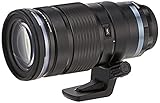
Full frame suits photographers who prioritise low-light performance, shallow depth of field and maximum image quality and accept larger, costlier gear; APS-C suits most enthusiasts who want a balance of image quality, size and budget; and Micro Four Thirds suits travellers, wildlife photographers and video shooters who value compact lenses and long reach in a small bag. The sensor size changes the field of view, the depth of field, the noise behaviour and the physical size of the system, but it does not decide image quality alone.
At a Glance
| Format | Typical sensor size | Crop factor | Best for | Main limit |
|---|---|---|---|---|
| Full frame | About 36 x 24 mm | 1.0x | Low light, portraits, professional work, shallow depth of field | Larger, heavier and costlier lenses |
| APS-C | About 23.5 x 15.6 mm (varies slightly by maker) | About 1.5x (1.6x for some makers) | All-round enthusiast use, travel, sport on a budget | Less low-light advantage than full frame |
| Micro Four Thirds | About 17.3 x 13 mm | 2.0x | Compact telephoto, travel, video, wildlife | More noise at very high ISO, deeper depth of field |
What Sensor Size Means
A sensor is the part of the camera that captures light. A larger sensor has more surface area, so each pixel, or the whole sensor, can collect more light in the same exposure. That generally translates into cleaner images in dim light and smoother tones, provided the technology, pixel count and processing are comparable. The sizes in the table are approximate nominal figures, and individual makers may vary slightly, which is why APS-C crop factors differ between brands.
Crop Factor and Field of View
The crop factor describes how much narrower a lens appears on a smaller sensor compared with full frame. A 50 mm lens on a full-frame camera gives the standard field of view. On an APS-C camera with a 1.5x crop, the same lens looks like a 75 mm lens in terms of framing, and on Micro Four Thirds with a 2x crop it looks like a 100 mm lens. The lens itself does not change its focal length; only the portion of the image that the sensor records changes. This is why Micro Four Thirds is popular for wildlife, since a 300 mm lens frames like a 600 mm lens on a full-frame body, in a much smaller package.
Depth of Field and Background Blur
For the same framing and the same aperture number, a larger sensor produces a shallower depth of field. Photographers often use equivalence to compare formats: a 50 mm f/1.8 lens on full frame behaves roughly like a 33 mm f/1.2 on APS-C and a 25 mm f/0.9 on Micro Four Thirds for field of view and depth of field. Equivalence applies to depth of field and not to the amount of light reaching the sensor, so exposure settings such as shutter speed and ISO stay the same for the same f-number. That difference is why full frame is popular for portraits with strong background blur, while Micro Four Thirds is regarded as helpful when you want more of the scene in focus, such as macro and landscape work.
Low-Light Performance
With the same generation of technology, a larger sensor typically yields cleaner results at high ISO values because it gathers more total light for the same framing and f-number. Full frame therefore has an advantage in very dim conditions, such as events, astro and indoor sport. APS-C sits in the middle, and Micro Four Thirds shows more noise sooner. Modern sensors and software noise reduction have narrowed the gap, and a recent smaller-sensor camera can outperform an older larger-sensor model. Stabilisation and fast lenses can also offset some differences for static subjects.
Size, Weight and Lens Choice
Smaller sensors allow smaller lenses for the same field of view. A telephoto lens that reaches the equivalent of 600 mm on full frame is large and heavy, while the equivalent on Micro Four Thirds can fit in a modest camera bag. Full-frame systems offer the most premium lenses and the widest range of professional options, but the glass is larger and often costs more. APS-C is a middle path, with a broad selection of compact zooms and primes, and many makers use it for lightweight bodies. Check each system’s lens range for the focal lengths you need before committing, since some systems have fewer native options in certain categories.
Video Considerations
Video shooters often value Micro Four Thirds for its compact lenses and deeper depth of field, which makes focus easier to hold, as well as for its stabilisation options. APS-C and full frame offer shallower depth of field and better low-light performance, which suits cinematic looks and dim scenes. Some cameras in each format crop the sensor for certain video modes, so check the manufacturer’s recording specifications before buying for a particular video resolution or frame rate.
Cost and System Growth
Bodies and lenses in smaller formats tend to cost less, but there are exceptions, because professional Micro Four Thirds and APS-C bodies can cost as much as entry-level full frame. When thinking about total cost, consider lenses, which usually represent the larger share of a long-term kit. Think about the brands in each format, since some makers focus on one format and others support several. Buying into a system also affects used-market options, accessory choices and future upgrades.
Pick X If… Decision Table
| If you mostly… | Pick | Why |
|---|---|---|
| Shoot portraits with strong background blur | Full frame | Shallower depth of field at a given framing |
| Shoot events and dim interiors | Full frame | Better high-ISO behaviour in typical comparisons |
| Want one balanced all-round kit | APS-C | Good quality, moderate size and cost |
| Photograph wildlife on foot | Micro Four Thirds or APS-C | Long reach in a smaller package |
| Travel light with several lenses | Micro Four Thirds | Compact bodies and lenses |
| Shoot macro or landscape with more depth of field | Micro Four Thirds | Deeper depth of field at a given aperture |
| Work professionally with large prints | Full frame | More resolution options and lens choice |
Alternatives to Consider
- Medium format: a larger sensor than full frame, aimed at studio and landscape work with high resolution, though bodies and lenses are larger and costlier.
- One-inch sensor compacts: a pocketable option for travel that sacrifices lens choice and low-light performance.
- Smartphone cameras: capable computational tools for casual use, with limits on optics and telephoto reach.
Frequently Asked Questions
Is full frame always better than APS-C?
No. Full frame offers advantages in low light and depth-of-field control, but it also means larger lenses and a higher cost. For many photographers the smaller size and budget of APS-C are a better fit. Technology and lens quality can matter as much as sensor size.
What is a crop factor?
It is the ratio between the diagonal of a full-frame sensor and that of a smaller sensor. It tells you how much narrower the field of view is with the same lens. A 2x crop means a lens frames like one with twice the focal length on full frame.
Does crop factor change the lens?
No. The focal length and aperture of the lens stay the same. The smaller sensor records only the central part of the image the lens projects, which makes the view look more magnified.
Is Micro Four Thirds still worth buying?
It remains a practical option for photographers who value small lenses, long reach and good stabilisation, and the system is supported by several makers. It is less suited to those who need the best possible performance in very low light or the shallowest depth of field.
Which sensor size is best for beginners?
APS-C often suits beginners because of the balance of price, size and image quality, and because many entry-level bodies and kit lenses are available. The best choice depends on what you want to shoot and the lenses you need.
Do more megapixels mean better quality?
Not by themselves. More megapixels allow larger prints and heavier cropping, but they also mean smaller pixels on a given sensor and larger files. Lens quality, stabilisation and technique often have a bigger effect on sharpness.
More from Amazon
Programs that pair well with the guide above. Offers and eligibility are set by Amazon and may change.
Free shipping on eligible items, Prime Video and more. Eligible new members can start with a free trial.
Start a Prime free trialAd-free music streaming. Eligible new subscribers can start with a free trial.
Try Music Unlimited freeA Prime membership for ages 18-24 with a trial period. Eligibility is set by Amazon.
See Prime for Young AdultsAudiobooks and podcasts to listen to on the go. Eligible new members can start with a free trial.
Try Audible freeAs an Amazon Associate we earn from qualifying purchases.