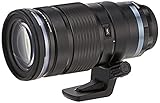
The Sony FE 24-70mm F2.8 GM II suits Sony E-mount photographers and hybrid shooters who want a professional-tier standard zoom with a constant f/2.8 aperture, fast autofocus and a compact, light build for this class, while the Panasonic Lumix S 24-60mm F2.8 suits L-mount owners who want a constant f/2.8 standard zoom designed for their own system. The two lenses are not interchangeable, because they fit different mounts, so the choice is mostly decided by which camera system you shoot.
At a Glance
| Feature | Panasonic Lumix S 24-60mm F2.8 | Sony FE 24-70mm F2.8 GM II |
|---|---|---|
| Best for | L-mount stills and video shooters | E-mount professionals and hybrid shooters |
| Focal range | 24 to 60 mm | 24 to 70 mm |
| Aperture | Constant f/2.8 | Constant f/2.8 |
| Mount | L-mount | Sony E-mount |
| Weight and size | Check the maker’s current specification | Roughly 695 g, 82 mm filter thread (maker lists) |
| Focus motors | Maker lists mirrorless-oriented autofocus | Maker lists linear motors |
| Budget tier | Mid-range to premium | Premium |
| Main limit | Shorter reach at the long end | Premium tier and one system only |
Focal Range and Everyday Use
The Sony reaches 70 mm while the Panasonic stops at 60 mm. That is a small difference in field of view, but it can matter for head-and-shoulders portraits and for events where you cannot always step closer. The 24 mm wide end is identical, which suits landscapes, interiors and group shots. For photographers who rely heavily on the long end, the extra 10 mm on the Sony is a meaningful advantage. For those who mostly work between 24 and 50 mm, the difference is often unnoticeable.
Aperture and Depth of Field
Both lenses keep a constant f/2.8 maximum aperture through the zoom range, which means exposure settings stay consistent when you change focal length. That is useful for video and for events with changing compositions. At f/2.8 on a full-frame body you get moderate subject separation, less than a fast prime but enough for portraits when the subject is at a reasonable distance from the background.
Optical Quality
Sony’s GM line is its premium range, and the 24-70mm F2.8 GM II was introduced as a lighter and sharper update to the first version, according to the maker and review outlets covering it. Reviewers generally praise its sharpness across the frame, control of aberrations and consistent results through the zoom range. The Panasonic lens belongs to the S-series, designed for the L-mount with an emphasis on stills and video, and reviewers who cover Panasonic glass generally describe a consistent, clean rendering. Because the two lenses cover different systems and use different bodies, direct sharpness comparisons are difficult, and the camera sensor and processing affect the final result as much as the lens.
Autofocus and Video Handling
Sony lists the GM II with linear motors designed for fast and quiet focusing, an important factor for video and for tracking moving subjects. The maker also highlights reduced focus breathing and a compact design that suits gimbals. Panasonic’s S-series lenses are designed to pair with its cameras for stills and video use, and the maker positions the lens for hybrid shooting. Autofocus performance depends heavily on the camera body, which in turn depends on the system: Sony’s subject-tracking system is well regarded, and Panasonic’s more recent bodies have improved their autofocus with phase-detection technology. Check each maker’s current information for the body you plan to use.
Size, Weight and Handling
Sony lists the 24-70mm F2.8 GM II at roughly 695 grams with an 82 mm filter thread, a notable reduction compared with its predecessor and a practical weight for a full-day carry. The Panasonic lens is also a full-frame f/2.8 standard zoom, and its dimensions and weight should be confirmed on the maker’s specification page for the exact version you buy. Both have zoom and focus rings and are designed for dust and splash resistance according to their makers, but neither should be treated as waterproof. Gloves, rain covers and careful lens changes in wet weather remain good practice.
System Considerations
The choice between these lenses is also a choice between systems. The Sony E-mount has a very large selection of native and third-party lenses and a wide choice of bodies. The L-mount is smaller in lens choice, but the alliance with Leica and Sigma means lenses from three brands fit the same bodies. Think about your existing camera, the lenses you already own and your preferred brand of body before choosing, since a lens is only as useful as the camera it sits on. Adapters exist between systems, but they can reduce autofocus performance or add bulk, so they are not ideal for a premium zoom.
Stills or Video?
For stills, both lenses provide the focal range most photographers use daily: wide, normal and short telephoto. For video, a constant aperture, smooth zoom and minimal focus breathing are the most valuable features, and both makers promote their lenses for hybrid work. If you shoot video on a gimbal, the weight and balance of the lens on your camera body should be a priority. Since the lenses fit different bodies, compare them within the context of the full camera and lens combination.
Pick X If… Decision Table
| If you… | Pick | Why |
|---|---|---|
| Shoot Sony E-mount | Sony FE 24-70mm F2.8 GM II | Native lens, premium design |
| Shoot an L-mount Lumix, Leica or Sigma body | Lumix S 24-60mm F2.8 | Designed for the system |
| Need reach to 70 mm for portraits | Sony GM II | Slightly longer focal length |
| Prefer a compact travel zoom within the L-mount | Lumix S 24-60mm F2.8 | Smaller range can mean a lighter design; check the maker’s specification |
| Want a lens for gimbal video | Either, based on body | Both emphasise video handling |
| Are choosing a system from scratch | Compare bodies first | The lens follows the system |
Alternatives to Consider
- Sigma 24-70mm F2.8 DG DN Art: an f/2.8 standard zoom for both E-mount and L-mount that generally sits in a lower budget tier than first-party premium options.
- Tamron 28-75mm F2.8 for E-mount: a lighter, more affordable E-mount alternative with a shorter wide end.
- Panasonic Lumix S PRO 24-70mm F2.8 or similar: if you want a longer reach within the L-mount; check the maker’s current line-up.
Frequently Asked Questions
Can I use the Sony lens on a Panasonic camera?
Not directly. The Sony lens uses the E-mount and the Panasonic lens uses the L-mount. Adapters exist for some combinations, but they may limit autofocus and add bulk, so check the adapter maker’s compatibility notes.
Which lens has the longer reach?
The Sony reaches 70 mm and the Panasonic reaches 60 mm, according to the lens names and makers’ listings. The wide end is the same at 24 mm.
Are both lenses weather-resistant?
The makers describe dust and splash resistance for lenses in these premium lines, but neither is waterproof. Follow the manuals, and use appropriate covers in heavy rain or sea spray.
Which is better for video?
Both are marketed for hybrid use with a constant aperture and quiet focusing. The best choice depends on the camera body, since stabilisation, autofocus and recording features are body-dependent.
Is f/2.8 enough for low light?
It is useful but not as fast as an f/1.4 or f/1.8 prime. Modern bodies handle high ISO well, and in-body stabilisation helps for static subjects. For very dim scenes with moving subjects, a fast prime may be a better companion.
Should I buy a prime lens instead?
If you value background blur, low-light speed and low weight, a prime is worth considering. A standard zoom gives flexibility, which suits events, travel and video work where changing lenses is impractical.
More from Amazon
Programs that pair well with the guide above. Offers and eligibility are set by Amazon and may change.
Free shipping on eligible items, Prime Video and more. Eligible new members can start with a free trial.
Start a Prime free trialAd-free music streaming. Eligible new subscribers can start with a free trial.
Try Music Unlimited freeA Prime membership for ages 18-24 with a trial period. Eligibility is set by Amazon.
See Prime for Young AdultsAudiobooks and podcasts to listen to on the go. Eligible new members can start with a free trial.
Try Audible freeAs an Amazon Associate we earn from qualifying purchases.