Key takeaways
- Pro: sizeable woofer for the price tier gives satisfying bass.
- Pro: clear, detailed treble and a clean midrange.
- Pro: easy amplifier match and good with a receiver.
- Con: cabinet and finish are plain compared with the Reserve line.
- Con: Power Port bass can bloom if the speaker sits tight to a wall.
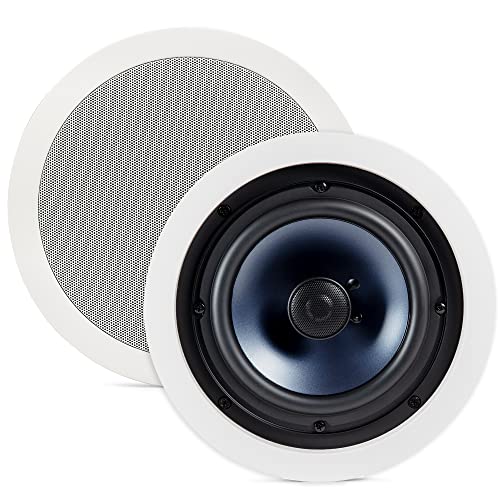
The best Polk Audio speaker for most people is the Signature Elite ES20 bookshelf (or the ES60 tower in a larger room), because it offers hi-res-certified drivers and a Power Port bass design at an entry-to-mid price tier. If you want the most refined Polk sound, step up to the Reserve R200 bookshelf or Reserve towers, and if you are on a tight budget, the Monitor XT20 is the value pick. This guide covers Polk’s real current lineup by series, who each model fits, honest trade-offs and three alternatives, based on manufacturer specifications and published reviews, not on personal listening claims.
Our top picks



As an Amazon Associate we earn from qualifying purchases at no extra cost to you.
Polk lineup at a glance
Polk Audio, founded in 1972 in Baltimore, sells three main speaker series for home audio, and the names tell you the tier. Monitor XT is the budget line, Signature Elite is the mainstream line, Reserve is the premium line, and the Legend series sits above them as the flagship. Within each series Polk offers matched bookshelf, tower, center, surround and Atmos speakers, so you can build a 5.1 or 7.1.4 system from one family.
| Series | Price tier | Typical models | Tweeter | Key design feature | Amp requirement |
|---|---|---|---|---|---|
| Monitor XT | Entry | XT15, XT20 bookshelf, XT60 tower, XT30 center | 1 in. Terylene dome | Dynamic Balance drivers, Power Port | Easy 8 ohm load, 20-100 W typical |
| Signature Elite | Entry to mid | ES15, ES20 bookshelf, ES60 tower, ES35 center | 1 in. Hi-Res Pinnacle dome | Hi-Res Audio certified, Power Port | Easy 8 ohm load, 20-125 W typical |
| Reserve | Mid to upper | R100, R200 bookshelf, R500/R600 towers, R300 center | 1 in. Pinnacle ring radiator | Hi-Res certified, Dolby Atmos models, refined cabinets | 4 ohm loads want 70+ W high-current power |
| Legend | Premium | L200 bookshelf, L600 tower, L400 center | Ring radiator tweeter | Flagship driver and cabinet build | Wants a high-quality amplifier |
Model names and availability vary by region, and Polk occasionally revises numbering. Check the manufacturer’s current spec sheet before ordering, and note that some sellers keep older versions in stock at lower prices.
Best Polk speakers by pick
Polk Signature Elite ES20: best Polk bookshelf for most people
Spec line: 1 in. tweeter, 6.5 in. woofer, Power Port bass venting, Hi-Res Audio certified response, 8 ohm nominal, rated for modest amplifiers.
Best for: first-time hi-fi buyers, TV and music setups and small to medium rooms. Skip if: you need very deep bass without a subwoofer or you want a premium finish.
- Pro: sizeable woofer for the price tier gives satisfying bass.
- Pro: clear, detailed treble and a clean midrange.
- Pro: easy amplifier match and good with a receiver.
- Con: cabinet and finish are plain compared with the Reserve line.
- Con: Power Port bass can bloom if the speaker sits tight to a wall.
Polk Reserve R200: best premium Polk bookshelf
Spec line: 1 in. Pinnacle ring radiator tweeter, mid-bass driver with Dynamic Balance cone, Hi-Res certified, 4 ohm nominal, finish and cabinet are upgraded per Polk’s Reserve line.
Best for: music and home theater fans who want a neutral, spacious sound and who have a high-current amplifier. Skip if: you have a low-power amplifier or an entry-level receiver that struggles with 4 ohm loads.
- Pro: reviewers call the sound neutral with a wide soundstage and good bass for its size.
- Pro: quality cabinet and finish.
- Pro: matching Reserve towers, center and Atmos modules let you build a full system.
- Con: 4 ohm load and a recommended 70 W or more of power.
- Con: higher price tier than the ES20 for a modest bass advantage.
Polk Reserve R100: best compact audiophile Polk
Spec line: compact Reserve bookshelf with a 1 in. ring radiator tweeter and a smaller woofer, Hi-Res certified, 4 ohm, designed for desk and small-room placement.
Best for: near-field desk setups and small rooms where space is limited. Skip if: you want big bass or you do not plan to add a subwoofer.
- Pro: compact cabinet with refined treble.
- Pro: measures well for its size according to reviewer data.
- Pro: pairs with a Reserve subwoofer for a small but full system.
- Con: bass is limited without a sub.
- Con: needs a stable amplifier at 4 ohm.
Polk Monitor XT20: best budget Polk bookshelf
Spec line: 6.5 in. paper-composite woofer, 1 in. Terylene dome tweeter, rated frequency response of roughly 38 Hz to 40 kHz per Polk, Power Port design.
Best for: entry hi-fi systems, bedrooms and TV pairings where cost is the priority. Skip if: you want a tightly controlled bass or you can stretch the budget to an ES20.
- Pro: low price tier with generous bass for its size.
- Pro: simple 8 ohm load that works with most receivers.
- Pro: part of a full Monitor XT family for building a system.
- Con: bass can sound loose or boomy depending on placement.
- Con: less refinement than Signature Elite and Reserve.
Polk Signature Elite ES60: best Polk tower for the money
Spec line: floor-standing tower with dual woofers (6.5 in. class) and a 1 in. Hi-Res tweeter, Power Port venting, 8 ohm nominal, mid-price tier.
Best for: stereo music rooms and home theater fronts where you want fuller bass than a bookshelf gives. Skip if: your room is small, or you prefer a slim profile.
- Pro: larger cabinet and dual woofers deliver stronger bass and dynamics.
- Pro: easy to drive.
- Pro: matches with ES35 center and ES10 surrounds for a unified system.
- Con: footprint is larger than a bookshelf and stands.
- Con: a bit of bass boom in small rooms or near walls.
Polk Reserve towers (R500 and R600 class): best Polk tower for music
Spec line: Reserve floor-standing towers with dual mid-bass drivers, 1 in. ring radiator tweeter, Hi-Res certification, 4 ohm loads, refined finish.
Best for: serious two-channel and home theater listeners who want scale and dynamics. Skip if: you are working with a low-power receiver or limited space.
- Pro: deep bass and large soundstage.
- Pro: premium finish and cabinet.
- Pro: compatible with Reserve Atmos and center speakers.
- Con: 4 ohm load needs a capable amplifier.
- Con: costs more than the ES60 and is bigger.
Polk Reserve R900 Atmos module: best Polk for Dolby Atmos height
Spec line: add-on Dolby Atmos speaker that fires upward, designed to sit on top of Reserve or other front speakers, with matched tuning.
Best for: adding height channels to a Reserve or similar system without cutting ceilings. Skip if: your ceiling is very high or you prefer in-ceiling speakers.
- Pro: easy to add to an existing system.
- Pro: matches the Reserve voicing.
- Pro: no installation work.
- Con: ceiling-reflection effect depends on room height.
- Con: needs an Atmos-capable receiver.
Best Polk speakers by use
Best Polk bookshelf speakers: ES20 for most people, R200 for premium, R100 for compact, XT20 for budget. Best Polk tower speakers: ES60 for value and the Reserve towers for more refined music playback. Best Polk surround speakers: the ES10 or the matching Reserve bookshelf as rears, with Atmos modules for height. Best Polk speakers for music: the R200 and Reserve towers, plus a subwoofer. Best Polk home theater speakers: a Signature Elite 5.1 package (ES60 fronts, ES35 center, ES10 surrounds and a subwoofer) is the value route, while a Reserve system with Atmos modules is the upgrade.
Polk compared with three alternatives
| Brand | Strength | Weakness | Choose it when |
|---|---|---|---|
| Polk Audio | Good bass per dollar, full home theater families | Reserve needs a strong amplifier | You want value and a matched surround system |
| Klipsch Reference Premiere | High sensitivity, dynamic, horn tweeter | Bright treble for some listeners | You have a low-power receiver or like loud movies |
| ELAC Debut or Uni-Fi | Neutral, smooth, well measured | Fewer matching home theater options | Music is the priority |
| Q Acoustics 3000i | Excellent cabinet and finish for the price | Smaller home theater family | You want a compact, stylish stereo system |
Klipsch trades neutrality for efficiency and punch, ELAC trades some bass for accuracy, and Q Acoustics trades range for polish. Polk sits in the middle with a warm, full balance and broad system options.
How to choose a Polk speaker: numbers that matter
| Question | Guideline | Example |
|---|---|---|
| Room size | Under 15 sq m: bookshelf. 15-30 sq m: tower or bookshelf plus sub | Bedroom: ES20. Living room: ES60 |
| Amplifier | 8 ohm entry speakers suit 20-100 W receivers. 4 ohm Reserve speakers want 70 W+ high-current | Pair the Reserve R200 with a solid AV receiver or integrated amplifier |
| Budget limit | Spend on speakers, then a subwoofer, then stands | XT20 plus a sub beats a single expensive bookshelf with no sub |
| Atmos | Ceiling height of 2.4 to 3.5 m suits upward-firing modules | R900 or Signature Elite Atmos module on front speakers |
| Wall placement | Keep Power Port speakers 20-30 cm from walls | ES20 on stands, not on a shelf against a wall |
Three sample Polk systems and what each costs you in decisions
Rather than listing every model, it helps to see how the lineup combines into complete systems. These examples use price tiers, not live prices, because street prices move often.
| System | Speakers | Extras | Amplifier | Who it fits |
|---|---|---|---|---|
| Compact stereo | Signature Elite ES20 pair on stands | Optional compact subwoofer | Stereo receiver, 40-80 W per channel | Apartment living room or bedroom |
| Value 5.1 theater | ES60 towers, ES35 center, ES10 surrounds | Powered subwoofer | Entry AV receiver, 70-100 W per channel | Family room with a 55 to 75 inch TV |
| Premium Atmos theater | Reserve towers or R200s, Reserve center, R200 or R100 rears, R900 Atmos modules | Large powered subwoofer | Mid-range AV receiver with 4 ohm stability | Dedicated media room |
In the compact stereo system, the speakers do the heavy lifting, so spend the savings on stands and speaker cable of 16 gauge. In the value theater, the center channel is the most important speaker because it carries about 70 percent of dialogue, so match it to the towers and place it directly above or below the screen. In the premium system, the amplifier is the limiting factor. Four ohm Reserve speakers pull more current, and a receiver with a weak power supply can sound strained at high volume or even shut down.
Common mistakes when buying Polk speakers
- Buying speakers from different series for the front stage. Mixing a Monitor XT center with Reserve towers creates a tonal mismatch. Keep left, center and right in the same series.
- Ignoring impedance. A Reserve pair on a very cheap receiver can sound hard at higher volumes. If the amplifier’s manual gives only 8 ohm ratings, play safely at moderate levels or choose Signature Elite.
- Placing Power Port speakers in a bookshelf cubby. The port is designed to breathe into the room, and a closed cubby makes bass boomy.
- Skipping the subwoofer. Even the towers benefit from a sub in a movie system, because the lowest effects in modern soundtracks sit below 40 Hz.
- Choosing by wattage on the box. A speaker rated for 100 W does not need 100 W. Sensitivity and impedance are better guides to amplifier match.
Where Polk fits and where it does not
Polk is a good fit if you want a full family of speakers that sound consistent, a warm and full voicing and a price tier that leaves room for an amplifier and subwoofer. It is a weaker fit if you want ultra-neutral studio-style response, extremely compact speakers for a desk or boutique cabinet finishes. In those cases, a brand like ELAC or KEF fits better. For people with an existing Sonos or other wireless ecosystem, Polk’s passive speakers also require a separate amplifier, so factor that cost in. Polk does sell soundbars and wireless products, but this guide is about the passive speaker families, which are the core of its reputation.
Setup and maintenance
- Use stands for bookshelf models. Tweeters at ear height when seated improve imaging, and stands decouple the speaker from furniture.
- Toe in slightly. Aim the speakers at your listening position, 10 to 20 degrees, and adjust to taste.
- Match amplifier and impedance. If you pair a Reserve speaker with a small receiver, avoid high volume to prevent clipping.
- Add a subwoofer. Set the crossover near 80 Hz for most Polk speakers and tune the level after calibration.
- Clean grilles with a soft brush. Avoid household cleaners on cabinet wrap or vinyl.
Ownership is simple. Vinyl-wrapped cabinets resist fingerprints and dust but can scratch, and woofer surrounds are rubber or foam that last for many years in normal use. Keep speakers out of direct sunlight and away from humid spaces.
Frequently Asked Questions
Which Polk series is best for most people?
Signature Elite is the best balance of price and sound for most buyers. It offers hi-res-certified drivers and Power Port bass, and it suits receivers of modest power. Monitor XT suits tight budgets and Reserve suits those with strong amplifiers.
Are Polk speakers good for music?
Yes, especially the Signature Elite and Reserve lines. Reserve speakers give a more neutral, spacious sound that reviewers describe as well suited to music, while the entry line is more bass-forward and fun.
Do Polk Reserve speakers need a powerful amplifier?
Reserve models are 4 ohm loads, and Polk recommends high-current power of 70 W or more. A good AV receiver or integrated amplifier is fine. A cheap receiver may struggle at high volume.
What is the best Polk speaker for home theater?
A Signature Elite 5.1 system using ES60 towers, an ES35 center and ES10 surrounds with a subwoofer is the value choice. For the best results, choose a Reserve system with Atmos modules and a quality subwoofer.
Should I buy Polk or Klipsch?
Choose Polk for balanced, full sound and wide system options. Choose Klipsch for high sensitivity and dynamic punch from a lower-power receiver, accepting brighter treble. Listening at home if you can, or choosing based on amplifier power, is a safe approach.
Do Polk bookshelf speakers need a subwoofer?
Not always. The ES20 and XT20 have 6.5 in. woofers and reach the 40 to 50 Hz range, enough for music. For movies and electronic music, a subwoofer fills in the lowest octave and reduces strain on the speakers.
More from Amazon
Programs that pair well with the guide above. Offers and eligibility are set by Amazon and may change.
Free shipping on eligible items, Prime Video and more. Eligible new members can start with a free trial.
Start a Prime free trialAd-free music streaming. Eligible new subscribers can start with a free trial.
Try Music Unlimited freeA Prime membership for ages 18-24 with a trial period. Eligibility is set by Amazon.
See Prime for Young AdultsAudiobooks and podcasts to listen to on the go. Eligible new members can start with a free trial.
Try Audible freeAs an Amazon Associate we earn from qualifying purchases.