Key takeaways
- Swapping the factory door speakers is the cheapest way to change how a car sounds, and the 5.25-inch size is a common fit in compact cars.
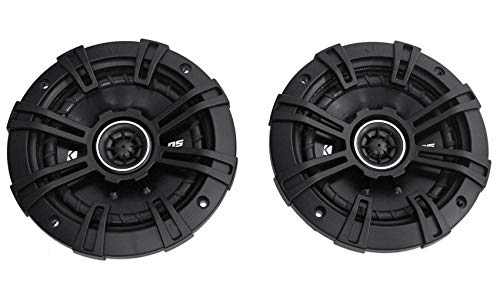
Swapping the factory door speakers is the cheapest way to change how a car sounds, and the 5.25-inch size is a common fit in compact cars, older trucks, and rear doors. The trouble is that small cones are not natural bass makers. Anyone searching for the best 5.25 speakers for bass is really asking which coaxial pair gets the most low-end punch out of a small opening without a separate subwoofer, and which spec numbers deserve trust.
This guide is for drivers who want fuller midbass from a drop-in upgrade. Each speaker below is judged only from its listing: cone material, wattage claims, channel count, impedance, and what the package includes. Wattage figures marked “max” describe peak handling, not everyday output, and bass in a door depends as much on mounting and amplifier power as on the speaker. Treat the list as a way to narrow your search for 2026, then confirm fit for your vehicle on the full page.
Quick Picks
Our top picks




As an Amazon Associate we earn from qualifying purchases at no extra cost to you.
| Product | Best for | Key spec from the title |
|---|---|---|
| Skar Audio RPX525 | Entry-level door upgrades | 150 watt 2-way coaxial pair |
| Pioneer TS-501M | Detail plus midrange body | 4-way coaxial, 300W max |
| DS18 G5.25Xi GEN-X | Dome-tweeter clarity | 135 watts max, 4-ohm, grill included |
| Kicker 43DSC504 | Balanced bass-forward sound | 200W 2-way, 4-ohm |
| Rockford Fosgate P152 Punch | Punchy bass character | 2-way coaxial full range pair |
| RECOIL RCX525 Echo | Budget-minded builds | 5.25-inch coaxial, Echo Series |
| American Bass SQ 5.25 | Sound-quality tuning | Full range, 120, pair |
| TANVSO 5.25 Inch | Midbass-focused cone design | Carbon fiber cone, 800W, 4 ohm |
| Rockford Fosgate Prime R1525X2 | Brand-name everyday upgrade | 2-way full range pair |
| CT Sounds BIO-5-25-COX | Value-priced coaxial pair | 160 watts max, pair |
How to Choose
Read power ratings the right way
Two numbers often appear: peak (max) and continuous (RMS). Peak is a short-burst figure and usually several times higher than the RMS figure that tells you what the speaker handles all day. Match RMS to your amplifier or head unit. A head unit that puts out a modest amount of clean power gains from efficient speakers, while a separate amplifier lets you choose a pair with a bigger continuous rating. Ignore any listing that shows only a huge peak number.
Cone material and surround affect low end
Stiff, light cones such as carbon fiber, polypropylene, or woven composites move air quickly and stay controlled when pushed. Rubber surrounds last longer than foam in hot cabins and help the cone travel farther, which supports bass. Where a title names the cone or magnet, use it; where it does not, treat the claim as unknown.
Impedance, sensitivity, and channel layout
Most car speakers list 4 ohms, which suits factory and aftermarket head units. Sensitivity tells you how loud a speaker plays per watt; higher numbers help low-powered systems. Coaxial speakers combine woofer and tweeter in one unit, which simplifies installation, while a 3-way or 4-way design adds extra tweeters. More drivers do not guarantee more bass, but they can add clarity at the top end.
Fit, mounting depth, and what to ignore
A 5.25-inch label does not guarantee a bolt-in fit. Check the mounting depth, the screw pattern, and how much room sits behind the door panel. Sealed foam baffles or a sound-deadening mat behind the speaker often improve bass more than a pricier cone. Budget speakers cut corners on surround durability and magnet size, so ignore flashy wattage and focus on build details.
The 10 Best Options
Skar Audio RPX525
A 150 watt 2-way coaxial pair with a 5.25-inch size, aimed at drivers who want a simple, louder replacement for factory cones. Because the title is short, the main appeal is the straightforward pairing of a two-way layout and a modest power figure that a typical head unit can drive without strain, which suits a first speaker swap in a daily commuter.
- Strength: a pair is included, so both doors are covered.
- Strength: 2-way coaxial design keeps installation easy.
- Trade-off: the title gives no cone or magnet details.
Skip it if you want proof of material quality in the listing. Shoppers who compare cone, surround, and magnet details before buying will need to look beyond this title.
Pioneer TS-501M
A 4-way coaxial car speaker with a 300W max rating and a black-and-red finish. The four-driver layout aims at extended range, adding extra high-frequency drivers around a main woofer so voices and cymbals keep detail when the music gets busy. That makes it a flexible choice for drivers who listen to a wide mix of genres rather than bass-heavy tracks alone.
- Strength: 4-way coaxial layout adds high-frequency drivers.
- Strength: a major audio brand with wide availability.
- Trade-off: the 300W figure is a peak claim.
Skip it if you only want a plain 2-way pair. A simpler layout is easier to understand and may suit buyers who prefer fewer parts in the door.
DS18 G5.25Xi GEN-X
A 2-way coaxial speaker with dome tweeters, a 135 watts max rating, a 4-ohm load, and a grill in the package. Including the grill matters in doors where the speaker sits exposed, because it protects the cone from kicks and loose items. The modest max figure pairs best with a head unit rather than a large amplifier, which keeps the whole setup affordable.
- Strength: dome tweeters for smoother highs.
- Strength: grill included.
- Trade-off: a lower max rating than several rivals.
Skip it if you plan to feed it a powerful amplifier. Higher-powered systems should look at models with larger stated handling.
Kicker 43DSC504
The D-Series pair lists a 2-way design, 200W max, and a 4-ohm load. Kicker is widely associated with bass-oriented gear, so this pair appeals to buyers who want a name they already trust. The 200W max claim sits in the middle of this group, and the 4-ohm rating matches common car stereos, which keeps wiring and setup uncomplicated for a first-time installer.
- Strength: recognizable brand with a bass-minded reputation.
- Strength: 4-ohm load matches most head units.
- Trade-off: the title does not mention cone material.
Skip it if you want unusual cone construction. This one is a conventional design sold on brand and balance, not on exotic materials.
Rockford Fosgate P152 Punch
A 2-way coaxial full range pair from the Punch line, a name tied to energetic low end in car audio. Drivers who describe a good system as one that thumps rather than whispers will find the positioning easy to understand. Because the listing offers no numbers, the line name and the pair format are the main selling points, so a quick look at the full page is wise.
- Strength: Punch branding points to a bass-friendly tuning.
- Strength: sold as a pair.
- Trade-off: no wattage or impedance appears in the title.
Skip it if you want numbers to compare. A spec-driven shopper will find the title thin.
RECOIL RCX525 Echo
A 5.25-inch coaxial speaker system from the Echo Series. The title is sparse, so it suits buyers who plan to read the full page. The Echo Series name gives you a handle to search for dimensions, sensitivity, and power handling elsewhere. Think of it as a candidate for comparison shopping, not an instant add-to-cart decision, especially if your door has a tight mounting depth.
- Strength: coaxial form for easy fitting.
- Strength: dedicated series name for easy cross-reference.
- Trade-off: no power rating in the title.
Skip it if you need specifics up front. The brief title leaves most important numbers unstated.
American Bass SQ 5.25
A full range pair labeled SQ, which stands for sound quality, with a stated rating of 120. The SQ label suggests tuning for accuracy over sheer volume, which can suit listeners who prefer vocals and acoustic instruments. It is a calmer pick for a daily driver, though anyone seeking hard-hitting bass will find the numbers modest next to the louder claims elsewhere in this group.
- Strength: sound-quality positioning favors balanced tone.
- Strength: full range design needs no extra crossover for basic use.
- Trade-off: the lowest stated figure in the group.
Skip it if raw loudness is the goal. It is built around tone, not volume.
TANVSO 5.25 Inch
A two-pack described as 800W, 4 ohm, with a carbon fiber midbass cone, honeycomb-weave dust cap, and an 80mm Y35 magnet. It states the most construction detail. The carbon fiber cone is meant to stay stiff and light, while the large magnet and dual spider wording point to a design aimed at controlled cone travel. Those facts help a shopper reason about bass, even though the headline wattage should be read with caution.
- Strength: carbon fiber cone and a named magnet.
- Strength: 4-ohm load suits standard head units.
- Trade-off: the 800W number is almost certainly a peak figure.
Skip it if you distrust inflated power claims. The 800W number looks very large for a speaker of this size, so judge it by the construction notes instead.
Rockford Fosgate Prime R1525X2
A 2-way full range pair from the Prime line, aimed at drivers wanting a brand-name upgrade at an approachable tier. The Prime line sits below the Punch series, which makes it a reasonable middle ground for drivers who want a recognizable name without stepping up to the most expensive range. The listing is sparse, so installation depth and impedance need a quick check on the full page.
- Strength: well-known brand and line name.
- Strength: 2-way design pairs well with most dash units.
- Trade-off: no power or material data in the title.
Skip it if you want construction details before buying. The title offers only the line name and the 2-way layout.
CT Sounds BIO-5-25-COX
A 5.25-inch coaxial pair with a 160 watts max rating, a value-oriented option. The coaxial format keeps wiring simple, and the stated peak figure sits close to several mainstream rivals. It is a sensible pick for a rear door, a second pair, or a budget refresh where the goal is a fuller sound than worn factory paper cones can deliver.
- Strength: pair included with a stated 160 watts max.
- Strength: coaxial layout simplifies the install.
- Trade-off: the max figure says little about continuous handling.
Skip it if you need RMS ratings on the title. Continuous power handling is not stated.
Which One Fits Your Situation
You want the safest brand pick
The Kicker 43DSC504 combines a bass-minded brand with a clear 200W 2-way layout.
You care about spec transparency
The TANVSO 5.25 Inch is the only listing naming its cone, dust cap, and magnet.
You want a punchy tuning on a stock head unit
The Rockford Fosgate P152 Punch is built around that sound character.
You want extra tweeters for clarity
The Pioneer TS-501M adds a 4-way layout.
Common Mistakes
- Trusting a giant peak wattage number as proof of loud, deep bass.
- Skipping the mounting depth check and finding the magnet hits the window track.
- Installing speakers without any sealing, so bass leaks into the door cavity.
- Ignoring impedance when pairing with an amplifier.
- Expecting a 5.25-inch speaker to replace a subwoofer.
Related guides
- Wireless Chargers For Iphone And Airpods
- Noise Cancelling Earbuds Under $100
- Mechanical Keyboard For Programming
Frequently Asked Questions
Can 5.25-inch speakers produce real bass?
They produce midbass. Deep, rumbling low notes need a subwoofer, but a well-mounted pair adds punch to kick drums and bass guitar.
Do I need an amplifier?
Not always. Efficient speakers can run from a head unit, but an amplifier gives cleaner output at volume.
What does coaxial mean?
The tweeter sits in front of the woofer in one unit. It simplifies installation compared with separate components.
Is RMS or max power more important?
RMS tells you continuous handling, so it matters more. Max is a short-burst figure.