Key takeaways
- Tight, clean bass that suits both music and film.
- App-based tuning improves the result in any room.
- Compact enough for typical living rooms.
For most home speakers, the best subwoofer is a 12-inch sealed model with app tuning, such as the SVS SB-1000 Pro, because it plays low, stays tight and tolerates imperfect placement. Choose a Klipsch Reference II or Polk Monitor XT 12-inch sub when movie impact per amount spent matters most, a REL T/7x when you mainly play music through hi-fi speakers, and a Sonos Sub Mini or Sub 4 when your speakers are a Sonos system. The wrong size or type for your room matters more than the brand.
This guide compares seven subwoofers that are real and currently sold, then explains driver size, sealed versus ported, crossover settings and placement with numbers. It is based on manufacturer specifications and published reviews, not on personal listening.
Our top picks
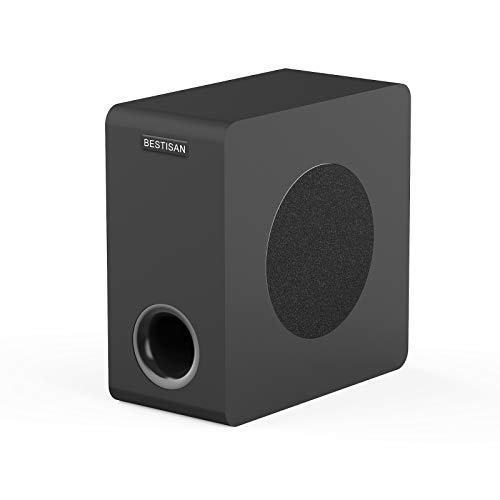

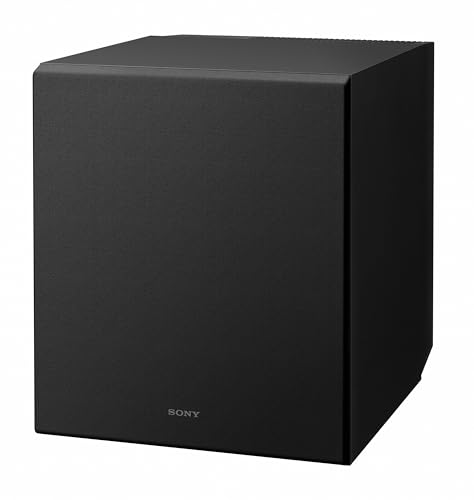
As an Amazon Associate we earn from qualifying purchases at no extra cost to you.
Subwoofer comparison
| Model | Driver and design | Key details (per maker or reviews) | Connection | Price tier | Best for |
|---|---|---|---|---|---|
| SVS SB-1000 Pro | 12-inch, sealed | 325 W RMS amp, bass reported to about 20 Hz, app with parametric EQ | RCA, app control | Mid to premium | All-round music and movies |
| SVS PB-1000 Pro | 12-inch, ported | Larger output at low frequencies than sealed models of similar size, app control | RCA, app control | Mid to premium | Large rooms and movies |
| Klipsch Reference II R-121SW | 12-inch, powered | Successor to the R-120SW (12-inch, 200 W RMS, 29-120 Hz, 116 dB max output) | RCA, LFE input | Mid | Movie impact per amount spent |
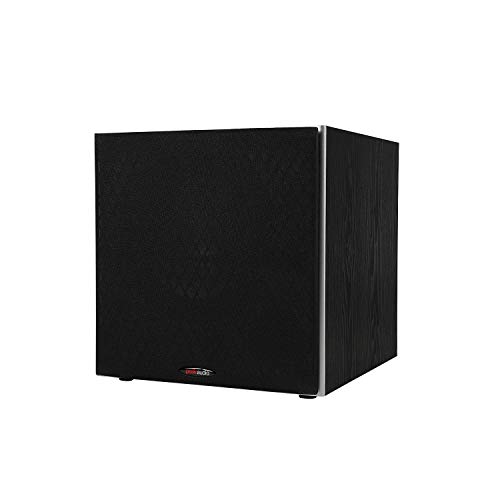
| Polk Monitor XT12 | 12-inch, powered | Mid-range home theater sub, Polk’s Power Port tuned venting | RCA, LFE input | Mid | Budget movie bass |
| REL T/7x | 8-inch down-firing, sealed-style | Designed to add to stereo systems through high-level connection | High-level (Speakon) and LFE | Mid to premium | Music and hi-fi stereo |
| Sonos Sub Mini | Two 6-inch force-cancelling drivers, sealed | Wi-Fi, no wiring, small cabinet | Wireless, Sonos only | Mid | Small rooms with Sonos speakers |
| Yamaha NS-SW100 | 10-inch, compact | Compact cabinet, designed for apartments | RCA, LFE input | Entry to mid | Apartments and neighbors |
Start here: decide the size and type of sub you actually need
Subwoofers are defined by three choices. Make them in this order and the brand shortlist almost writes itself.
- Room size. Bigger rooms need more air moved, which means a larger driver, a bigger cabinet, or two subs.
- Use. Music rewards tight, accurate bass, while action films reward extension and output below 30 Hz.
- Connection. Wired RCA or LFE connections suit receiver-based systems, while a wireless link suits soundbar ecosystems.
| Room size | Suggested driver | Why |
|---|---|---|
| Under 150 sq ft (bedroom, small office) | 8-inch or 10-inch | Smaller rooms pressurize bass naturally |
| 150-300 sq ft (living room) | 10-inch to 12-inch | Balances output and cabinet size |
| 300-500 sq ft (large living room) | 12-inch to 13-inch, or two 10-inch | Needs more output and more even coverage |
| Over 500 sq ft or open plan | Two 12-inch or larger | Open space loses bass energy and has uneven spots |
Sealed versus ported: the trade-off that matters most
A sealed cabinet is closed, so the driver is controlled by the air inside. Bass is tight, decays fast, and is forgiving of where you put the sub, which is why sealed models suit music and small to medium rooms. A ported cabinet adds a tuned vent, which boosts output at the lowest notes and gives a higher peak level, but the bass is looser and the cabinet is larger. Ported subs suit large rooms and explosive movie effects, and they need more careful placement.
| Trait | Sealed | Ported |
|---|---|---|
| Bass character | Tight, accurate | Louder, with more boom |
| Cabinet size for similar output | Smaller | Larger |
| Lowest notes (below 25 Hz) | Gentle roll-off | Strong near the port tuning, then steep drop |
| Placement tolerance | High | Lower, especially near walls |
| Best use | Music, small and medium rooms | Movies, large rooms |
SVS SB-1000 Pro: best all-round subwoofer
Most 2026 roundups pick the SB-1000 Pro as the best overall subwoofer. It uses a 12-inch high-excursion driver with a 325 W RMS amplifier in a sealed MDF cabinet. Published reviews cite bass reaching to about 20 Hz, and the SVS app provides parametric EQ, a phase control and a low-pass filter, which let you smooth the room’s peaks without extra gear. Its sealed design keeps notes tight, which is why it works as well with a bookshelf stereo pair as it does with a home theater.
Spec line: 12-inch sealed, 325 W RMS, app EQ. Best for: living rooms of 150 to 400 square feet. Skip if: you want the loudest low-end effects in a very large room.
- Tight, clean bass that suits both music and film.
- App-based tuning improves the result in any room.
- Compact enough for typical living rooms.
Cons: premium cost compared with other 12-inch subs, and less peak output than a ported model.
SVS PB-1000 Pro: best for big rooms and movies
The PB-1000 Pro is the ported version. It uses a 12-inch driver in a larger ported cabinet, and reviewers describe it as the SVS choice for big rooms, where more output at the lowest notes counts. It shares the app tuning system with the SB-1000 Pro, so the setup is the same.
Spec line: 12-inch ported, app EQ. Best for: rooms from 300 to 600 square feet. Skip if: you have a small room or want the tightest music bass.
- Greater low-frequency output than the sealed model.
- Same app and calibration tools as the SB-1000 Pro.
- Strong for explosions and large-scale film effects.
Cons: larger cabinet, and bass can sound looser on music if placed badly.
Klipsch Reference II R-121SW: best movie impact per amount spent
The Klipsch R-121SW is the Reference II replacement for the R-120SW, a 12-inch powered sub that earned the “best value” label in many guides. The R-120SW is specified at a 12-inch front-firing spun-copper woofer with 200 W RMS and 400 W peak amplification, a 29 to 120 Hz response and a maximum output of 116 dB. The R-121SW follows the same concept, with a revised design, and pairs naturally with Klipsch Reference II speakers. The larger R-101SW is a 10-inch option for smaller rooms.
Spec line: 12-inch powered (R-120SW predecessor rated 29-120 Hz, 116 dB). Best for: action films in medium to large rooms on a mid budget. Skip if: you want measured, music-focused bass.
- High output for the cost.
- Matches Klipsch Reference II speakers.
- Includes LFE and line-level inputs.
Cons: less refined tuning tools than SVS, with fewer adjustments than an app-controlled sub.
Polk Monitor XT12: best budget 12-inch
The Polk Monitor XT12 sits with the Klipsch sub as a mid-range 12-inch choice for typical home theater use. It is a straightforward powered sub with line-level and LFE inputs, and it is a sensible partner for Polk Signature Elite or Monitor XT speakers. Some earlier Polk subs, such as the PSW10, are sold as budget picks with a 10-inch driver for smaller rooms.
Spec line: 12-inch powered. Best for: first subwoofer for a 5.1 system. Skip if: you want app EQ and high-end tuning.
- Low cost for a 12-inch sub.
- Simple setup with LFE or RCA.
- Pairs naturally with Polk speakers.
Cons: fewer tuning controls, and less accurate deep bass than SVS.
REL T/7x: best sub for music and stereo systems
REL builds subwoofers for music, and the T/7x is the common recommendation for hi-fi stereo. It uses an 8-inch down-firing driver, and, unlike most subs, supports a high-level connection that taps the amplifier’s speaker outputs, so the bass blends with the main speakers as if they extended. This approach is favored by stereo listeners, because the sub follows the amplifier’s character instead of a separate line signal.
Spec line: 8-inch down-firing, high-level and LFE inputs. Best for: bookshelf or tower stereo systems that need depth. Skip if: you want maximum home theater output.
- Natural blend with stereo speakers.
- High-level connection avoids a line-out requirement.
- Compact and well finished.
Cons: higher cost per watt than movie-focused subs, and lower peak output than 12-inch models.
Sonos Sub Mini and Sub 4: best wireless subs for Sonos
If your speakers are Sonos, you need a Sonos sub. The Sub Mini uses two 6-inch force-cancelling drivers in a sealed cabinet and connects over Wi-Fi, so it needs only power. It is the right size for rooms up to about 250 square feet. The larger Sub 4 is built for bigger rooms and costs more, and Sonos subs do not work with non-Sonos speakers.
Spec line: Sub Mini, two 6-inch drivers, sealed, Wi-Fi. Best for: Sonos soundbar setups in small or medium rooms. Skip if: you use a non-Sonos system.
- No audio cable required.
- Sealed, force-cancelling design reduces cabinet vibration.
- App control and Trueplay tuning.
Cons: works only in the Sonos ecosystem, and costs more than wired subs of equal output.
Yamaha NS-SW100: best compact sub for apartments
The NS-SW100 is a compact 10-inch sub from Yamaha, designed for smaller rooms where neighbors matter. A small cabinet and controlled output suit apartments. Another compact reviewer favorite is the KEF Kube 8 MIE, a small sealed cabinet with internal correction.
Spec line: 10-inch compact powered. Best for: apartments and small rooms. Skip if: you need loud output in a large room.
- Small footprint.
- Simple setup.
- Measured bass for music and TV.
Cons: limited output below 30 Hz and not enough for large rooms.
Setup numbers that matter more than the model
Crossover and the 80 Hz rule
Set the receiver crossover at 80 Hz for most speakers, which leaves the main speakers to handle sound above 80 Hz and the sub to handle sound below. Small satellites may need 100 to 120 Hz, and large towers may do well at 60 Hz. Set the sub’s own low-pass dial to its highest value or bypass it, so only the receiver filter applies and you do not stack two filters.
Placement by crawl
Place the sub at the main seat, play a bass-heavy track on repeat, then crawl around the room edge and listen where the bass sounds smoothest. Put the sub in that spot. This works because bass peaks and nulls are fixed by room dimensions, and the seat position is a reciprocal of the sub position.
Level and phase
Run the receiver’s auto-calibration, then adjust the sub level by ear. If bass sounds thin at the seat, flip the sub’s phase between 0 and 180 degrees and keep the setting that sounds fuller. For a 20 by 15 foot room, a 12-inch sub in a corner gains about 6 dB over placing it mid-wall, so turn the level down when using a corner.
Two subs are better than one big one
Two subs placed at different points smooth out room peaks and dips more than a single bigger sub. In a room over 400 square feet, two 10-inch subs usually give more even bass than a single 12-inch sub.
Which sub for which situation
| Your situation | Best fit | Reason |
|---|---|---|
| Bookshelf stereo pair for music, 150-250 sq ft | REL T/7x or SVS SB-1000 Pro | Tight, musical bass that blends with the speakers |
| 5.1 home theater, 250-400 sq ft, action films | Klipsch R-121SW or SVS PB-1000 Pro | High output and low extension |
| First sub on a limited budget | Polk Monitor XT12 or PSW10 | Low cost with wired connections |
| Sonos soundbar and rear speakers | Sonos Sub Mini (small room) or Sub 4 (larger) | Only Sonos subs integrate |
| Apartment with shared walls | Yamaha NS-SW100 or KEF Kube 8 MIE | Compact and controlled output |
Ownership realities: what to watch after you buy
Subwoofers are simple devices, but a few habits extend their life and keep the bass clean. Leave at least 4 to 6 inches of space behind a ported sub so the port can breathe, and keep sealed subs away from heat sources because the amplifier is mounted in the cabinet. Check the amplifier’s auto-on setting, since a sub that wakes up on a weak signal can hum or switch on and off. If the sub rattles at high volume, the cause is usually a loose item in the room, such as a shelf or window, not the sub itself. Finally, do not run the level at maximum on the sub dial and compensate with the receiver trim; a sensible starting point is the sub’s gain at about one-third to one-half, which leaves headroom before the amplifier clips.
Cables matter less than people expect. A single shielded RCA or dedicated subwoofer cable is all a powered sub needs, and spending beyond a decent cable buys nothing audible. A longer run of up to 25 feet is fine with a shielded cable, and a sub that hums through the cable is more often a ground loop than a cable fault, fixed by a ground loop isolator on the line or by plugging the sub into the same outlet strip as the receiver.
Frequently Asked Questions
What size subwoofer do I need for my speakers?
A 10-inch sub suits rooms up to about 250 square feet, a 12-inch sub suits rooms up to about 400, and larger rooms benefit from two subs or a 13-inch to 15-inch model. Smaller speakers need a sub that can play up to 100 Hz or more.
Do I need a subwoofer for music?
If your speakers are bookshelf models, a sub extends the lowest octave, from 20 to 50 Hz, which gives the sense of weight in drums and bass. With full-range towers, it is optional.
Can I use any subwoofer with any speakers?
Wired powered subs work with any receiver that has a sub output, regardless of brand. Wireless subs such as Sonos work only with their own system.
Is one subwoofer enough?
For rooms under about 300 square feet, one good sub is enough. For larger rooms or uneven bass, two subs give smoother response at more seats.
Are wireless subwoofers as good as wired ones?
The wireless link itself is fine for bass because the audio is low-frequency, but the sub still needs mains power. The better question is whether the sub’s driver and amplifier suit your room, which matters more than whether a wire connects it.
Why does my subwoofer sound boomy?
Boomy bass usually comes from placement in a corner, a crossover set too high, or a ported sub close to a wall. Move the sub away from the wall, lower the crossover to 80 Hz and use the phase switch.
More from Amazon
Programs that pair well with the guide above. Offers and eligibility are set by Amazon and may change.
Free shipping on eligible items, Prime Video and more. Eligible new members can start with a free trial.
Start a Prime free trialAd-free music streaming. Eligible new subscribers can start with a free trial.
Try Music Unlimited freeA Prime membership for ages 18-24 with a trial period. Eligibility is set by Amazon.
See Prime for Young AdultsAudiobooks and podcasts to listen to on the go. Eligible new members can start with a free trial.
Try Audible freeAs an Amazon Associate we earn from qualifying purchases.