Key takeaways
- The best wireless doorbells for home pair a waterproof push button with a plug-in or portable chime. Compare range, melodies, volume and battery life.
The best wireless doorbells for home are simple chime kits: a battery-powered push button mounts by your door, and a plug-in or portable receiver rings inside the house, with no wiring, no Wi-Fi and no camera involved. If you want a premium portable chime with a light-up alert halo and a sleep mode, the Honeywell Home Series 9 is the strongest pick here. If you need to hear the door from several rooms, the SadoTech Starpoint, AVANTEK D-3B and SECRUI M520+F55 kits bundle two receivers, while the GE 19297 is the straightforward budget option for smaller homes with two doors. Every kit below is a chime-only system, so nothing here records video or needs an app or subscription.
As an Amazon Associate, we earn from qualifying purchases.
Table of Contents
- What a Wireless Doorbell Kit Includes
- The 5 Best Wireless Doorbells for Home
- How to Choose a Wireless Doorbell
- Frequently Asked Questions
- Conclusion
- Product and ASIN Reference
What a Wireless Doorbell Kit Includes
A wireless doorbell kit has two main parts. The transmitter is the push button that mounts outside next to the door, usually with screws or double-sided tape, and it runs on a small coin battery or an A23 battery. The receiver is the chime unit inside the home. Most receivers plug into a standard wall outlet, while portable receivers run on batteries so you can carry them from room to room or out to a patio. The button and receiver are paired at the factory on most kits, so setup is normally just plugging in the chime and mounting the button. Better kits let you add extra buttons for a back door or side gate, add extra receivers for a basement or upstairs hallway, and assign a different melody to each button so you know which door a visitor is standing at.
The 5 Best Wireless Doorbells for Home
Honeywell Home Series 9 Portable Wireless Doorbell (RDWL917AX2000) — Premium
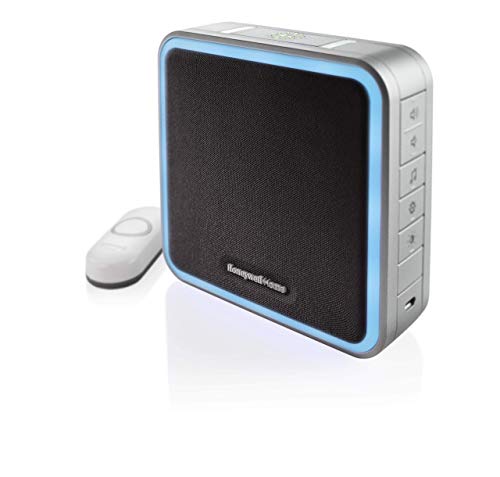
The Honeywell Home Series 9 is the pick for buyers who want a chime they can carry around the house instead of fixing it to one outlet. The receiver is portable and battery powered, and a halo light ring around the unit flashes in a choice of seven colors when the button is pressed, which makes it useful in noisy rooms and for anyone who may not hear a chime across the house. A sleep mode silences the chime for set periods, and a mute option covers shorter quiet stretches, both handy for nap times and night shifts. Honeywell rates the push button battery life at up to five years, so maintenance is minimal, and the system expands with additional Honeywell push buttons and chimes from the Series 3, 5 and 9 families if you later want coverage at more doors.
Specs:
- Kit contents: 1 portable receiver, 1 push button
- Wireless range: up to 450 feet in open air
- Alerts: chime plus halo LED light with 7 colors
- Modes: sleep mode and mute
- Push button battery life: up to 5 years
- Receiver power: batteries (portable, no outlet needed)
- Expandable: works with Honeywell Series 3, 5 and 9 buttons and chimes
- Tier: premium
SadoTech Starpoint Wireless Doorbell Kit — Mid-Range

The SadoTech Starpoint kit is built for larger homes because it bundles two push buttons and two plug-in receivers in one box, so the front door and back door are covered and the chime can be heard on two floors at once. The stated range is over 1,000 feet in open air, and the button is waterproof for exposed door frames. There are 52 chimes to choose from and four volume levels, plus an LED flash on the receivers as a visual backup to the sound. The transmitters run on an included A23 battery, and the system is expandable, so more SadoTech buttons and receivers can be paired in later. Because the receivers plug in, you never have to change receiver batteries, though each one does occupy an outlet.
Specs:
- Kit contents: 2 push buttons, 2 plug-in receivers
- Wireless range: over 1,000 feet in open air
- Melodies: 52 chimes
- Volume: 4 levels
- Alerts: chime plus LED flash
- Push button battery: A23 (included)
- Button rating: waterproof
- Tier: mid-range
AVANTEK D-3B Wireless Doorbell Kit — Mid-Range

The AVANTEK D-3B claims the longest reach in this group, with an operating range of over 1,300 feet in open conditions, which suits long driveways, detached garages and deep lots. The kit pairs one waterproof push button with two plug-in receivers, and it offers 52 melodies with an LED flash on each receiver. The button uses a CR2032 coin battery that is included in the box, along with mounting tape, screws and anchors, so installation needs no extra shopping trip. AVANTEK doorbells with plug-in receivers can be paired with each other across several of the brand’s model lines, which gives this kit a clear expansion path if you want a third receiver or a second button later on.
Specs:
- Kit contents: 1 push button, 2 plug-in receivers
- Wireless range: over 1,300 feet in open air
- Melodies: 52
- Alerts: chime plus LED flash
- Push button battery: CR2032 (included)
- Button rating: waterproof
- Included hardware: adhesive tape, screws, anchors, screwdriver
- Tier: mid-range
SECRUI M520+F55 Wireless Doorbell Kit — Mid-Range

The SECRUI M520+F55 kit is the loudest option here, with five volume levels running from silent up to 120 dB, and a light show to match: the plug-in receivers flash in seven LED colors when the button is pressed. The kit includes two push buttons and two receivers, 58 ringtones, and a memory function that keeps your chosen melody and volume even if a receiver is unplugged or the power goes out. Range is rated at 1,000 feet in open air, and the buttons carry an IP55 waterproof rating for rain-exposed mounting spots. The buttons run on CR2032 batteries that are included, and extra SECRUI transmitters and receivers can be added to the same system.
Specs:
- Kit contents: 2 push buttons, 2 plug-in receivers
- Wireless range: 1,000 feet in open air
- Melodies: 58 ringtones
- Volume: 5 levels, from 0 to 120 dB
- Alerts: chime plus LED flash in 7 colors
- Push button battery: CR2032 (included)
- Button rating: IP55 waterproof
- Memory function: keeps melody and volume settings after power loss
- Tier: mid-range
GE 19297 Wireless Doorbell Kit — Budget

The GE 19297 kit, made by Jasco, is the simple and inexpensive route for a smaller home or apartment. It includes two push buttons and one battery-operated receiver, so both a front and a back door can ring the same chime without any wiring. The range is a modest 150 feet, which is enough for compact layouts but not for sprawling properties. You get eight melodies, including Westminster and Ding Dong, and four volume levels. The receiver runs on three C batteries, which are not included, and that battery power means the chime can sit on a shelf or hang on a wall anywhere rather than tying up an outlet. Each receiver can pair with up to four GE push buttons if you want to add doors later.
Specs:
- Kit contents: 1 battery-operated receiver, 2 push buttons
- Wireless range: up to 150 feet
- Melodies: 8
- Volume: 4 levels
- Receiver power: 3 C batteries (not included)
- Push button battery: CR2032 (pre-installed)
- Expandable: up to 4 push buttons per receiver
- Tier: budget
How to Choose a Wireless Doorbell
Range. Manufacturer range figures are measured in open air, and walls, brick, stucco and metal doors cut the real distance sharply. Treat the headline number as a ceiling and pick a kit rated well beyond the actual distance between your button and the farthest receiver.
Receiver type. Plug-in receivers never need batteries but occupy an outlet and stay in one room. Portable battery receivers, like the Honeywell Series 9 and the GE 19297 chime, can move with you to a home office, workshop or backyard, at the cost of occasional battery changes.
Buttons and receivers. Count your doors first. A two-button kit lets the front and back doors share a system, and a second receiver solves the common problem of not hearing the chime from a bedroom or basement. Kits that let each button play its own melody make multi-door setups easier to live with.
Volume and visual alerts. Large or noisy homes benefit from a loud maximum volume like the SECRUI kit provides. LED flash and halo lights are worth having for hearing-impaired household members, sleeping babies and loud environments such as workshops.
Batteries. Most buttons use a CR2032 coin cell, while some use an A23. Either way, button batteries typically last a year or more, and kits that include the first battery save a separate purchase.
Weatherproofing. A button mounted on an exposed frame should carry a waterproof rating, such as the IP55 rating on the SECRUI buttons, so rain does not shorten its life.
Placement. Where you mount the button and park the receiver matters almost as much as the rated range. Keep the button off metal door frames and away from metal siding where possible, because metal surfaces absorb the radio signal and shrink the working distance. Inside, a receiver placed in a central hallway usually covers more rooms than one plugged in at the far end of the house, and a second receiver is a cheaper fix for dead spots than returning a kit that otherwise suits you.
Frequently Asked Questions
Do wireless doorbells need Wi-Fi or an internet connection?
No. The chime kits in this guide talk directly between the push button and the receiver on their own radio link, so they keep working during internet outages and need no app, account or subscription. That is the main difference between a plain wireless doorbell and a video doorbell, which does need Wi-Fi to send video to a phone.
How far does a wireless doorbell signal really reach indoors?
Expect much less than the open-air rating on the box. Each interior wall shortens the range, and brick, concrete and metal siding shorten it further. As a rough guide, a kit rated at 1,000 feet or more usually covers a typical two-story home comfortably, while a 150-foot kit like the GE 19297 is best kept to small homes and apartments.
Can I add more buttons or receivers to a wireless doorbell kit later?
Usually yes, as long as the extra parts come from the same brand and model family. Honeywell buttons work across its Series 3, 5 and 9 chimes, AVANTEK plug-in models pair with each other, and SECRUI and GE both sell add-on transmitters and receivers. Parts from different brands do not pair with each other.
Which battery does the push button use, and how long does it last?
Most buttons use a CR2032 coin battery, some use an A23, and the Honeywell Series 9 button is rated for up to five years per battery. Typical button batteries last one to three years depending on how often the doorbell is pressed. When range starts to shrink or presses stop registering, a weak button battery is the first thing to check.
Conclusion
For most homes, a two-receiver kit with a long open-air rating, such as the SadoTech Starpoint or the SECRUI M520+F55, gives the fewest missed visitors for the money. Choose the Honeywell Home Series 9 if a portable chime with a light-up halo and sleep mode matters more than raw range, the AVANTEK D-3B if your button sits far from the house, and the GE 19297 if you simply need an inexpensive chime for a small home with two doors. All five kits install in minutes with no wiring, and none of them needs Wi-Fi, an app or a subscription to do its job.
Product and ASIN Reference
| Product | ASIN |
|---|---|
| Honeywell Home Series 9 Portable Wireless Doorbell (RDWL917AX2000) | B01HNSFTBQ |
| SadoTech Starpoint Wireless Doorbell Kit (2 Buttons, 2 Receivers) | B00LFATHKS |
| AVANTEK D-3B Wireless Doorbell Kit (1 Button, 2 Receivers) | B01N06FC8R |
| SECRUI M520+F55 Wireless Doorbell Kit (2 Buttons, 2 Receivers) | B09PTW9V66 |
| GE 19297 Wireless Doorbell Kit (2 Push Buttons) | B00L9O542U |
More from Amazon
Programs that pair well with the guide above. Offers and eligibility are set by Amazon and may change.
Free shipping on eligible items, Prime Video and more. Eligible new members can start with a free trial.
Start a Prime free trialAd-free music streaming. Eligible new subscribers can start with a free trial.
Try Music Unlimited freeA Prime membership for ages 18-24 with a trial period. Eligibility is set by Amazon.
See Prime for Young AdultsAudiobooks and podcasts to listen to on the go. Eligible new members can start with a free trial.
Try Audible freeAs an Amazon Associate we earn from qualifying purchases.