Key takeaways
- OM System M.Zuiko 100-400mm F5-6.3 IS: Much longer reach for wildlife and aviation, with a slower aperture.
- OM System M.Zuiko 150-600mm F5-6.3 IS: Extreme reach for serious bird and wildlife shooters, at higher weight.
- Panasonic Lumix G Vario 100-300mm F4-5.6 II: A lighter, more affordable long zoom, with a slower aperture.
- OM System M.Zuiko 75-300mm F4.8-6.7 II: A budget telephoto for casual use.
- OM System M.Zuiko 90mm F3.5 Macro or 75mm F1.8: Primes for portraits or close-up work if you prefer a single focal length.
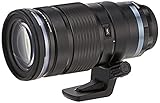
Choose the OM System M.Zuiko Digital ED 40-150mm F2.8 PRO if you want a constant F2.8 aperture, a more compact and well-balanced telephoto zoom, and strong weather sealing on an OM System body, and choose the Panasonic Leica DG Vario-Elmarit 50-200mm F2.8-4 ASPH Power OIS if you want extra reach, to roughly 400mm full-frame equivalent, and a lens designed to work with Panasonic’s dual image stabilization. Both are Micro Four Thirds mount, so either fits bodies from OM System and Panasonic, with some feature differences by body.
At a glance
| Spec (as the makers state) | OM System 40-150mm F2.8 PRO | Panasonic Leica DG 50-200mm F2.8-4 |
|---|---|---|
| Focal length | 40-150mm, about 80-300mm full-frame equivalent | 50-200mm, about 100-400mm full-frame equivalent |
| Maximum aperture | F2.8 constant | F2.8 at the wide end, F4 at the long end |
| Mount | Micro Four Thirds | Micro Four Thirds |
| Stabilization | No optical stabilization in the lens, relies on body IBIS | Power OIS in the lens, works with Panasonic body stabilization |
| Weather sealing | Maker lists dust, splash and freeze resistance | Maker lists dust and splash resistance |
| Weight | Roughly 760 g | Roughly 650 g |
| Teleconverter support | Compatible with OM System MC-14 and MC-20 teleconverters | Compatible with Panasonic’s teleconverter options, refer to the manual |
| Best for | Portraits, events, sports, wildlife at moderate range | Wildlife, field sports, distant landscapes |
Specifications are summarized from the makers’ published pages and review outlets; weights are approximate, so confirm exact figures in the lens manuals.
Focal range and reach
The Panasonic lens reaches 200mm, which is about 400mm in full-frame terms, while the OM System lens stops at 150mm, or about 300mm. Reach matters for birds, distant players and wildlife. The OM System lens begins at 40mm, a little wider than the Panasonic’s 50mm, which makes it more useful for portraits, group shots and event work where you cannot back up far. If you need long reach most often, the Panasonic has the edge. If you often shoot at the short end, the OM System has the edge.
The OM System lens can pair with its teleconverters to extend range, and reviewers at outlets such as DPReview and Photography Life describe the combination as practical on OM bodies, though aperture and autofocus performance change with a converter. Check compatibility lists from OM System and Panasonic before buying a converter.
Aperture and low light
The OM System lens holds F2.8 throughout the range. The Panasonic opens to F2.8 at 50mm but closes to F4 at 200mm. At the long end, the OM System lens at 150mm is F2.8 while the Panasonic at 150mm is somewhat slower, so it lets in less light there. For indoor sport, theatre, evening events and shallow depth of field, the constant aperture is a clear benefit. For daylight outdoor use, the difference matters less, and the Panasonic’s extra reach may be worth more.
Stabilization
The Panasonic includes Power OIS in the lens. On Panasonic bodies with in-body stabilization, the makers describe dual image stabilization that combines both. On OM System bodies, Panasonic lens stabilization may be handled differently than on Panasonic bodies, so check each maker’s stated compatibility. The OM System lens has no lens-based stabilization and depends on in-body stabilization in the camera. OM System bodies are well known for strong in-body stabilization, but results vary by body and focal length. Video shooters should check the stabilization mode that applies to their body and lens combination.
Build, handling and weather resistance
Both lenses are metal-bodied professional-grade designs. The OM System lens is described by the maker as dust-proof, splash-proof and freeze-proof, a rating that suits outdoor and wildlife shooting. The Panasonic lens is listed as dust and splash resistant. Both are sealed against typical field conditions, though neither should be treated as waterproof. The OM System lens is a little heavier and longer in some reviewer comparisons, while the Panasonic is lighter but has a lens hood and tripod collar options depending on version. Check the weights and dimensions on each maker’s page.
Autofocus and body pairing
Autofocus speed depends on both lens and body. Modern OM System bodies such as the OM-1 line and OM-5 are built around subject detection and fast autofocus with their own lenses. Panasonic bodies such as the G9 II and GH series use Panasonic’s autofocus system and lens communication. Reviewers at DPReview and other outlets generally report that either lens works on either brand, but some body-specific features, such as dual stabilization or certain video modes, work best with the same brand. If you shoot an OM System body, the OM lens is the natural pairing. If you shoot a Panasonic body, the Panasonic lens is a natural pairing, particularly for video.
Image quality
Both lenses are highly rated by reviewers for sharpness and contrast across the range. Reviewers generally say the OM System lens is very sharp wide open at F2.8, and the Panasonic is sharp across its zoom range with good control of color fringing. Differences between them are small enough that body, technique and subject usually matter more. Look at published sample galleries and lab tests on the sites you trust, since results vary by sample and body.
Budget and availability
Both lenses sit in the premium tier for Micro Four Thirds. Prices vary by market and promotion, and used examples exist, which can bring either lens into the mid-range. Check that your used copy includes the hood, caps and, where applicable, the tripod collar, and that the weather seals are intact.
Pick X if …
| Pick | If … |
|---|---|
| OM System 40-150mm F2.8 PRO | You shoot portraits, events or indoor sport and want F2.8 across the zoom; you use an OM System body; you want teleconverter options from OM System |
| Panasonic Leica 50-200mm F2.8-4 | You need the extra reach for wildlife or distant subjects; you use a Panasonic body and want in-lens stabilization with dual IS; you want a lighter lens |
| Either lens | You want a pro-grade telephoto zoom in Micro Four Thirds with good weather resistance |
Alternatives
- OM System M.Zuiko 100-400mm F5-6.3 IS: Much longer reach for wildlife and aviation, with a slower aperture.
- OM System M.Zuiko 150-600mm F5-6.3 IS: Extreme reach for serious bird and wildlife shooters, at higher weight.
- Panasonic Lumix G Vario 100-300mm F4-5.6 II: A lighter, more affordable long zoom, with a slower aperture.
- OM System M.Zuiko 75-300mm F4.8-6.7 II: A budget telephoto for casual use.
- OM System M.Zuiko 90mm F3.5 Macro or 75mm F1.8: Primes for portraits or close-up work if you prefer a single focal length.
Decision notes
- Check the lens firmware requirements for your body.
- If you use teleconverters, confirm compatibility with each lens.
- Test the lens at a retailer or rental service if possible, as sample variation exists.
- Consider a tripod collar or monopod for long sessions.
Frequently Asked Questions
Can I use the Panasonic lens on an OM System body?
Yes, both are Micro Four Thirds, so they mount on each other’s bodies. Some features, like dual image stabilization, are designed for matching brands, so check each maker’s compatibility notes.
Which lens is better for wildlife?
The Panasonic reaches 200mm, about 400mm full-frame equivalent, which helps for distant subjects. The OM System lens reaches about 300mm equivalent but can be extended with a teleconverter on supported bodies.
Which has the faster aperture?
The OM System lens is F2.8 throughout. The Panasonic is F2.8 at 50mm and slows to F4 at 200mm, so the OM lens gathers more light at longer settings.
Does the OM System lens have image stabilization?
The lens itself has no optical stabilization. It relies on the in-body stabilization of the camera, which OM System bodies provide.
Which lens is lighter?
The Panasonic is lighter according to the makers’ approximate weights, around 650 g compared with about 760 g for the OM System lens. Confirm exact figures in the manuals.
Are both lenses weather sealed?
Both makers describe dust and splash resistance, and OM System also states freeze resistance. Neither is waterproof, so protect them in heavy rain and wipe them down after wet use.
More from Amazon
Programs that pair well with the guide above. Offers and eligibility are set by Amazon and may change.
Free shipping on eligible items, Prime Video and more. Eligible new members can start with a free trial.
Start a Prime free trialAd-free music streaming. Eligible new subscribers can start with a free trial.
Try Music Unlimited freeA Prime membership for ages 18-24 with a trial period. Eligibility is set by Amazon.
See Prime for Young AdultsAudiobooks and podcasts to listen to on the go. Eligible new members can start with a free trial.
Try Audible freeAs an Amazon Associate we earn from qualifying purchases.