Key takeaways
- Weight capacity. Makers state a maximum load. A 88-key stage piano can weigh far more than a 61-key synth, so compare the instrument’s specified weight against the stand’s rating, and leave a safety margin.
- Bracing. Double-braced X stands have two sets of crossing arms and are more stable than single-braced designs, according to makers and reviewers. Z stands are very stable for their weight but have a different footprint.
- Lock mechanism. Knob, lever, ratchet or pin locks hold the width and height settings. Stage players value tool-free, positive locks that do not slip.
- Width range. Stands list a minimum and maximum width. Ensure your keyboard’s feet or chassis fit within that range.
- Height range. Players who sit or stand have different preferences. A wider height range gives more flexibility.
- Weight and portability. Heavy stands are stable but more tiring to carry. Check the stand’s weight and folded size.
- Rubber feet and pads. Non-slip rubber feet and keyboard support pads protect the stage floor and the instrument.
- Add-ons. Straps, second-tier attachments, sustain pedal holders and carrying bags may be included or sold separately.
For stage use, a double-braced X-style stand from a pro-audio maker such as Quik Lok, On-Stage or Ultimate Support suits most gigging players, a Z-style stand suits those who want a compact, quick setup for lighter keyboards, and a heavy-duty column or tiered stand suits players with stacked rigs. The right stand depends on how much your keyboard weighs, how far you must carry the stand, and how wide your setup is, so check the maker’s stated weight capacity and height range before you buy.
Our top picks


As an Amazon Associate we earn from qualifying purchases at no extra cost to you.
What Matters on a Stage Stand
A keyboard stand has one job: keep an expensive instrument stable while you play, lean and move around a crowded stage. A few features separate stage-ready stands from home stands:
- Weight capacity. Makers state a maximum load. A 88-key stage piano can weigh far more than a 61-key synth, so compare the instrument’s specified weight against the stand’s rating, and leave a safety margin.
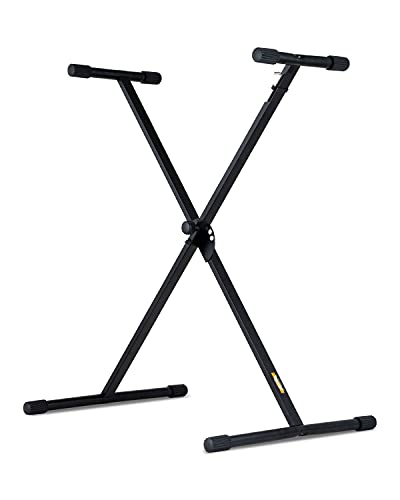
- Bracing. Double-braced X stands have two sets of crossing arms and are more stable than single-braced designs, according to makers and reviewers. Z stands are very stable for their weight but have a different footprint.
- Lock mechanism. Knob, lever, ratchet or pin locks hold the width and height settings. Stage players value tool-free, positive locks that do not slip.
- Width range. Stands list a minimum and maximum width. Ensure your keyboard’s feet or chassis fit within that range.
- Height range. Players who sit or stand have different preferences. A wider height range gives more flexibility.
- Weight and portability. Heavy stands are stable but more tiring to carry. Check the stand’s weight and folded size.
- Rubber feet and pads. Non-slip rubber feet and keyboard support pads protect the stage floor and the instrument.
- Add-ons. Straps, second-tier attachments, sustain pedal holders and carrying bags may be included or sold separately.
At a Glance: Stand Types and Makers
The table compares common stand styles and typical product lines. Capacities and weights vary by model, so use the maker’s published numbers for the exact one you buy.
| Stand type or line | Best for | Maker-stated features | Limits |
|---|---|---|---|
| Quik Lok double-braced X stands (e.g. QL-series) | Gigging players wanting a stable, adjustable X stand | Double bracing, strap or lock systems depending on model | Heavier than lightweight stands |
| On-Stage KS7350 and similar double-X stands | Budget to mid-range stage use | Double-braced X design, adjustable width and height | Capacity lower than top-tier stands; check rating |
| Ultimate Support IQ and AX-48 Pro series | Heavy keyboards, frequent travel, professional rigs | Tiered stand options, high weight ratings stated by maker | Premium cost; larger and heavier |
| K&M Spider Pro and Omega stands | Players who value German build quality and folding design | Strong folding mechanism, compact when stored | Premium tier |
| Z-style stands (e.g. from Gator, Strukture and others) | Light keyboards, quick setup, compact transport | Single frame, quick setup | Less width flexibility; weight rating varies |
| Roland KS and Yamaha-branded stands | Matching stands for specific piano models | Designed around brand’s own keyboards | Limited universal use |
| Column stands (e.g. Quik Lok column stands) | Stacked keyboards, compact footprint | Vertical design, multi-tier options | Complex setup, heavier |
Budget Tier: Light Gigs and Rehearsals
Entry-level double-X stands, such as basic On-Stage models, work for lighter keyboards in rehearsal rooms and small gigs. They are generally easy to carry and adjust. Their limits are lower weight ratings, thinner tubing and less rigid feel on heavy 88-key instruments. Always compare the stand’s stated maximum load with the keyboard’s weight, and avoid leaning heavily on a stand rated near its maximum.
Mid-Range Tier: Regular Gigging
For weekly gigs, mid-range double-braced stands from Quik Lok, On-Stage’s upper models and Gator offer better locks, heavier tubing and a more stable feel. Players choose these for the balance of rigidity and weight. Look for features like integrated safety locks, rubber feet, and a smooth width adjustment.
Premium Tier: Heavy Rigs and Touring
Ultimate Support, K&M and similar premium stands are built for heavy stage pianos, multi-keyboard setups and daily use. Makers cite stronger steel or aluminium construction, refined locking and long service life. Reviewers report that these stands feel more stable under heavy playing and that their adjustments are more precise. The trade-offs are cost, weight and size.
Single, Double and Tiered Setups
- Single keyboard. A double-braced X stand is the common choice. A Z stand also works for lighter keyboards.
- Two keyboards stacked. Tiered stands such as Quik Lok or Ultimate Support models hold a second keyboard above. Check each tier’s stated capacity, since the top tier often has a lower limit.
- Controller on top of a stage piano. Some stands have attachments or accessories. Confirm compatibility in the maker’s documentation.
- Pedal and mixer setups. Many players add pedal holders, laptop trays and small mixer shelves; ensure they do not overload the stand.
Stage Safety and Care Notes
- Load limits. Do not exceed the stated weight capacity, including accessories and gear on tiers.
- Locks. Check that all locks, knobs and pins are fully engaged before putting the keyboard on the stand.
- Surface. Use the stand on a flat, stable surface. Uneven stages and soft carpets can reduce stability.
- Cables. Route cables away from the legs to avoid tripping hazards for you and the crew.
- Transport. Fold the stand according to the manual and protect it from impacts. Check joints, rubber feet and hinges regularly.
Choosing Width, Height and Playing Position
Match the stand to your body and instrument. Measure your keyboard’s width across its end blocks or feet, and compare it with the stand’s stated minimum and maximum arm width. Players who stand need a higher setting than those who sit, and the right height often places the keys near elbow level. Many stands offer a range of heights, but some lock points are fixed, so read the maker’s description of adjustment steps.
Think about stage footprint as well. Wide X stands take space on crowded stages, while Z stands and column stands take less room. If you share a stage, a compact stand makes load-in and load-out easier. Players with a sustain pedal or expression pedal should consider the position of the stand legs so that pedals sit comfortably under the feet.
Accessories That Help on Stage
- Security straps and locks. Straps or locking pins keep the keyboard from sliding off the arms.
- Carry bags. Padded bags protect stands and make transport easier.
- Pedal holders and trays. Hold a sustain pedal, music stand or laptop tray when needed, within the stand’s rating.
- Rubber arm pads. Protect the instrument’s underside and add grip.
Pick X If… Decision Table
| If you… | Pick |
|---|---|
| Play a light 61-key synth at small gigs | Entry double-braced X stand or Z stand with an adequate rating |
| Play an 88-key stage piano weekly | Mid-range or premium double-braced X stand |
| Need a second keyboard above | Tiered stand from Quik Lok, Ultimate Support or similar |
| Travel by public transport | Lightweight Z stand or compact folding model |
| Want a tool-free fast setup | Stands with quick-release locks, as stated by the maker |
| Own a specific brand’s piano | The matching brand stand, if the maker offers one |
Alternatives
- Keyboard table or workstation desk. Offers more space and stability for studio-like setups, but is bulkier.
- Furniture-style stage piano stands. Some brands offer matched stands for home and stage.
- Rack-style and DJ stands. Some players use these for controllers and lighter keyboards, though they are not designed for all instruments.
Frequently Asked Questions
How do I choose between an X stand and a Z stand?
X stands offer adjustable width and are common for gigging, especially in double-braced form. Z stands are quick to set up and compact, but their width range and weight ratings vary by model. Match the choice to your keyboard’s size and weight.
What is a double-braced stand?
It is an X-style stand with two sets of crossing support arms. Makers and reviewers describe it as more stable than a single-braced design under heavier keyboards and energetic playing. It is typically heavier than a single-braced stand.
How much weight can a keyboard stand hold?
Capacity varies widely by model and maker. Always check the stated rating and compare it with your instrument’s weight, plus accessories. Choose a stand with a margin above the instrument’s weight.
Can I stack two keyboards on one stand?
Yes, with tiered stands built for it. Check each tier’s rated load, since the upper tier is often rated lower. Ensure the stand is on a stable surface.
How do I keep a stand from wobbling?
Make sure all locks are tight, the stand is fully opened, the surface is flat and the width setting matches the keyboard’s feet. If wobble continues, the stand may be worn or underrated for the instrument, so consider a heavier model.
Are keyboard stands safe to transport on public transport?
Many fold compactly and some come with carry bags. Choose a lighter model if you carry it far, and check the folded size and weight on the maker’s spec sheet.