Key takeaways
- A woofer of 3 to 5.25 inches, which avoids deep bass that smaller rooms cannot reproduce cleanly.
- A front-firing port or sealed design, so you can place the speakers close to the wall without muddy bass.
- A volume range that sounds balanced at low listening levels, helped by loudness compensation or a quiet-listening mode.
- Near-field performance: clear sound at 1 to 2.5 metres rather than at 4 metres.
- Input flexibility: Bluetooth, USB or optical, so you can connect a TV, a phone and a computer.
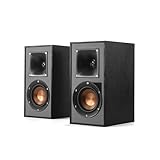
The best speakers for an apartment or small room are compact, well-controlled bookshelf or powered speakers that sound full at low volume, such as the Edifier MR4, Audioengine A2+, Q Acoustics 3020i or a pair of Sonos Era 100. Small rooms reward balance and clarity over raw power, because bass builds up quickly in a confined space and loud volumes annoy neighbours. A pair of 4- to 5-inch two-way speakers with a front port or sealed cabinet is usually enough for rooms up to about 20 square metres.
This guide is based on manufacturer specifications and published reviews, not personal testing claims. Prices are described as entry, mid or premium tiers.
Our top picks


As an Amazon Associate we earn from qualifying purchases at no extra cost to you.
What Makes a Speaker Good for a Small Room
Small rooms have two enemies: boomy bass and reflections. A speaker that sounds rich in a large room can overwhelm a bedroom. Look for these traits:
- A woofer of 3 to 5.25 inches, which avoids deep bass that smaller rooms cannot reproduce cleanly.
- A front-firing port or sealed design, so you can place the speakers close to the wall without muddy bass.
- A volume range that sounds balanced at low listening levels, helped by loudness compensation or a quiet-listening mode.
- Near-field performance: clear sound at 1 to 2.5 metres rather than at 4 metres.
- Input flexibility: Bluetooth, USB or optical, so you can connect a TV, a phone and a computer.
Quick Comparison of the Best Small-Room Speakers
| Model | Type | Key specs | Price tier | Best for |
|---|---|---|---|---|
| Edifier MR4 | Powered monitors | 4-inch woofer, 1-inch silk dome tweeter, balanced and RCA inputs | Entry | Desk, dorm, small bedroom |
| Edifier R1280DBs | Powered bookshelf | 4-inch woofer, Bluetooth, optical, coaxial | Entry | Dorm room, TV and music |
| Audioengine A2+ Wireless | Powered desktop | 2.75-inch woofer, Bluetooth, USB, RCA | Entry to mid | Desk and compact rooms |
| Klipsch The Fives | Powered with HDMI | HDMI eARC, phono input, Bluetooth | Mid to premium | TV and music in one pair |
| Q Acoustics 3020i | Passive bookshelf | 5-inch woofer, 22 mm tweeter, about 87 dB sensitivity | Mid | Bedroom or small lounge with an amp |
| Sonos Era 100 pair | Wi-Fi speakers | Stereo pair, Wi-Fi, Bluetooth, AirPlay 2 | Mid to premium | Apartments without a receiver |
| KEF LSX II | Active wireless pair | Uni-Q drivers, HDMI eARC, Wi-Fi | Premium | Hi-fi sound in a small space |
Check current availability and exact specifications on the manufacturer’s site, since lineups change and some listed models are replaced periodically.
Best Powered Speakers for Small Rooms
Edifier MR4: Best Budget Studio-Style Speakers
Spec line: 4-inch woofer, 1-inch silk dome tweeter, balanced TRS, RCA and XLR inputs, studio-style flat tuning options with a switchable high-frequency and low-frequency adjustment.
Best for: Desks, small bedrooms and dorm rooms where you want clear, neutral sound at an entry price tier.
Skip if: You want Bluetooth, since the MR4 is a wired model.
- Pro: Clean and flat sound with adjustable tuning.
- Pro: Plenty of inputs for the price.
- Pro: Small enough for a desk or shelf.
- Con: No Bluetooth or wireless streaming.
- Con: Limited bass depth, though that suits small rooms.
Edifier R1280DBs: Best for Dorm Rooms and TV Use
Spec line: 4-inch woofer, Bluetooth, optical and coaxial digital inputs, RCA input, remote control.
Best for: A dorm room or small apartment where the speakers connect to a TV, laptop and phone with one remote.
Skip if: You want a more neutral or refined sound.
- Pro: Entry price tier.
- Pro: Wood-effect cabinets and a remote.
- Pro: Digital and wireless inputs.
- Con: Bass is a bit emphasised.
- Con: Plastic remote and basic finish.
Audioengine A2+ Wireless: Best Compact Desktop Speakers
Spec line: Compact powered pair with a 2.75-inch woofer, Bluetooth with aptX HD, USB audio, RCA inputs, a built-in DAC and a subwoofer output.
Best for: Desk-based listening in a studio apartment or home office, particularly where space is tight.
Skip if: You want to fill a living room.
- Pro: Very small yet a polished sound.
- Pro: Subwoofer output lets you expand later.
- Pro: Easy desktop placement.
- Con: Low-volume limit in larger rooms.
- Con: Entry to mid price tier for a small speaker.
Klipsch The Fives: Best for TV and Music With HDMI
Spec line: Powered bookshelf speakers with HDMI eARC, a phono input with a built-in preamp, Bluetooth, USB and optical inputs.
Best for: A small living room where one pair handles a TV, a turntable and streaming without a receiver.
Skip if: You want a subtle appearance or the lowest cost.
- Pro: HDMI eARC makes TV integration simple.
- Pro: Phono input suits vinyl fans.
- Pro: Strong, lively sound.
- Con: Mid to premium price tier.
- Con: Horn tweeter can sound bright at close distance.
Best Passive Bookshelf Speakers for Small Rooms
Q Acoustics 3020i: Best Balanced Passive Pair
Spec line: 2-way bookshelf with a 5-inch woofer and 22 mm tweeter, roughly 87 dB sensitivity, 6 ohm nominal impedance, about 6 kg each, sealed-and-ported layout with a rear port plugs supplied for close-wall placement.
Best for: A bedroom or small lounge with a modest amplifier. The included port bungs let you tame bass when speakers sit near a wall.
Skip if: You do not own an amplifier and want an all-in-one speaker.
- Pro: Smooth, controlled sound and a well-made cabinet.
- Pro: Mid price tier.
- Pro: Works with budget amplifiers.
- Con: Needs a separate amp.
- Con: Sensitivity is modest, so very small amps may struggle in loud use.
Best Wireless Speakers for Apartments
Sonos Era 100 Pair: Best No-Receiver Setup
Spec line: Two Wi-Fi speakers, each with two angled tweeters and a woofer, Wi-Fi, Bluetooth, AirPlay 2, about 2 kg each, stereo pairing in the Sonos app.
Best for: Renters and apartment dwellers who want good stereo without wires or a receiver. They can also join a Sonos soundbar later.
Skip if: You want the cheapest route to a stereo pair or a wired desktop system.
- Pro: No amplifier needed and simple setup.
- Pro: Pairs for real stereo imaging.
- Pro: Easy to expand to a multi-room system.
- Con: Mid to premium price tier for a pair.
- Con: Depends on the Sonos app and Wi-Fi.
KEF LSX II: Best Hi-Fi Pair for a Small Space
Spec line: Active pair using Uni-Q coaxial drivers, Wi-Fi, Bluetooth, AirPlay 2, HDMI eARC, optical and USB inputs, with a wireless link between speakers on the standard model.
Best for: Listeners who want a precise stereo image and a refined sound in a studio apartment or small living room.
Skip if: You are on a tight budget or need a long-range multi-room ecosystem.
- Pro: Excellent stereo imaging in near-field positions.
- Pro: HDMI eARC for TV use.
- Pro: Elegant design in several finishes.
- Con: Premium price tier.
- Con: Bass reaches a limit without a subwoofer.
Best Speakers for a Bedroom, Dorm and Small Stereo Setups
For a bedroom, the priorities are low-volume clarity and a simple connection. A pair of Edifier R1280DBs or an Era 100 handles music and a TV with minimal setup. For a dorm room, strict rules about noise and power outlets favour small powered speakers with a USB or Bluetooth input and a headphone output. For a small stereo system with a record player, the Klipsch The Fives or the Audioengine A2+ with a phono preamp keeps the cable count low. Always check dorm rules about speaker size and quiet hours before buying large drivers.
Worked Example: Fitting Speakers Into a Studio Apartment
Imagine a 4 by 5 metre studio with a sofa against one wall and a TV opposite. The sofa is 2.5 metres from the TV. A pair of 5-inch bookshelf speakers placed on either side of the TV would be about 1.8 to 2.2 metres apart, forming a near-equilateral triangle with the sofa. Putting them on stands at ear height, about 0.9 to 1.0 m from the floor for a seated listener, makes the sound clearer than placing them on a low cabinet. If the speakers must go on a shelf, use the sealed or plugged-port setting and place the speaker 5 to 10 cm from the wall to limit boom. The result is a stereo image that fills the room at 50 to 60 dB in the listening seat, which is quiet enough that a neighbour in the next apartment will usually not hear it through standard walls.
Neighbour-Friendly Listening Tips
- Decouple the speakers from furniture with foam pads so bass does not travel through the floor or the wall.
- Avoid placing speakers against shared walls, where vibration transfers more easily.
- Use a small subwoofer only if needed, and set its level low. Bass is what neighbours hear most.
- Choose speakers with a night or low-volume mode, or use loudness compensation on the amplifier.
- Place speakers closer to you instead of turning them up, since halving the listening distance gains about 6 dB for free.
How to Choose: A Decision Guide
| Your situation | Room size | Best choice | Why |
|---|---|---|---|
| Desk or dorm | Under 12 sq m (130 sq ft) | Edifier MR4 or Audioengine A2+ | Near-field clarity and small footprint |
| Small bedroom with TV | 12 to 16 sq m (130 to 170 sq ft) | Edifier R1280DBs or Era 100 pair | Digital inputs and simple control |
| Studio apartment | 16 to 25 sq m (170 to 270 sq ft) | KEF LSX II or Klipsch The Fives | Fuller sound without a receiver |
| Small lounge with an amp | 16 to 25 sq m | Q Acoustics 3020i | Balanced passive speakers |
Why Small Rooms Sound Different and What to Do About It
In a small room, sound waves bounce between walls so quickly that reflections blend with the direct sound. The result is stronger bass at certain notes and thinner bass at others, known as room modes. A 3 by 4 metre room has its lowest modes around 43 Hz and 57 Hz, which means notes near those frequencies may boom or disappear depending on where you sit. Moving the seat by a half metre, or the speaker by 20 cm, can change the bass more than any equaliser setting.
Simple treatments help more than expensive speakers. A thick rug reduces floor reflections, a bookshelf on a side wall scatters sound, and heavy curtains soften high-frequency echo. If your room has bare walls opposite each other, a pair of panels at the first reflection points can sharpen the stereo image. You do not need to cover the whole room: even four to six square metres of absorption can change the sound noticeably.
Bluetooth, Wi-Fi or Wired: Connection Choices for Small Spaces
- Wired USB or optical is the lowest latency option for a TV or computer and avoids lip-sync lag.
- Bluetooth is convenient for phones, but compressed audio and a small delay make it a poor fit for video unless the speakers support low-latency codecs.
- Wi-Fi speakers give the best sound for streaming and need no phone near the speaker, but they require a stable network.
- Analog RCA or 3.5 mm inputs are useful for older gear such as a turntable preamp or a game console.
Small Room Speaker Mistakes to Avoid
- Buying large floor-standing speakers for a room under 15 square metres. The bass overloads the room and the extra drivers rarely get a chance to work.
- Pushing speakers into a corner or a bookshelf alcove, which raises bass by several decibels and clouds vocals.
- Choosing speakers by watt rating alone. A 100 W claim means little if the speakers are tuned for large rooms.
- Ignoring the listening distance. Near-field speakers designed for desks can sound thin from a sofa 3 metres away, and large speakers can sound harsh at 1 metre.
- Forgetting stands. Speakers placed too low aim at your chest instead of your ears and lose clarity.
Ownership Realities in Rented Homes
Renters should favour solutions that leave no marks: stands, shelf pads and adhesive-free isolation feet instead of wall mounts. Wireless pairs avoid cable runs across floors, while powered speakers with a single power cord make moving day easier. Keep original boxes if you can, since bookshelf speakers are fragile and resale value stays higher when the packaging is intact. Finally, check the speaker’s warranty terms for relocation, as some makers only cover the original country of purchase.
Frequently Asked Questions
What size speakers are best for a small room?
Speakers with 3- to 5-inch woofers are usually best. They deliver clear mids and controlled bass without overloading the room. Larger woofers can sound boomy unless you place them carefully.
Do I need a subwoofer in an apartment?
Usually not. Small speakers already produce enough bass for a small room, and a subwoofer can annoy neighbours through walls and floors. Add one only if you watch action films and can keep the level low.
Are powered speakers better than passive speakers for small rooms?
Powered speakers include the amplifier, so they save space and wiring. Passive speakers need an amp or receiver but allow future upgrades. For a compact apartment setup, powered or wireless speakers are the simpler path.
Can I use bookshelf speakers on a desk?
Yes, but tilt them toward your ears and add isolation pads. A desk surface can boost bass and cause rattles, so choose near-field monitors such as the Edifier MR4 or Audioengine A2+ when possible.
How loud can I play speakers in an apartment?
Aim for 50 to 65 dB at the listening seat for most listening and keep late-night levels below 45 dB. Thin walls transmit bass more than treble, so keeping bass restrained matters more than the overall volume.
What are the best speakers for a dorm room?
Small powered speakers with Bluetooth or USB input and a headphone jack are best, since they are compact and easy to move. The Edifier R1280DBs and Audioengine A2+ are common picks for that use.
More from Amazon
Programs that pair well with the guide above. Offers and eligibility are set by Amazon and may change.
Free shipping on eligible items, Prime Video and more. Eligible new members can start with a free trial.
Start a Prime free trialAd-free music streaming. Eligible new subscribers can start with a free trial.
Try Music Unlimited freeA Prime membership for ages 18-24 with a trial period. Eligibility is set by Amazon.
See Prime for Young AdultsAudiobooks and podcasts to listen to on the go. Eligible new members can start with a free trial.
Try Audible freeAs an Amazon Associate we earn from qualifying purchases.