Key takeaways
- Nikon has two lens families, and the first question for any macro buyer is which one your camera belongs to.
Nikon has two lens families, and the first question for any macro buyer is which one your camera belongs to. Owners of Z-series mirrorless bodies need a Z-mount lens or an F-mount lens used through an adapter, while owners of F-mount DSLRs need AF-S glass. Beyond that, macro photography is a trade between working distance, magnification, and cost: a short lens lets you get close to a flower but also close enough to scare off the insect, while a longer one keeps you back at the price of weight.
This guide is for hobbyists shooting flowers, coins, stamps, jewelry, and bugs, as well as small-product sellers who need clean close-ups. It lists nine macro options across both Nikon families and a few third-party choices, with duplicate listings of the same lens (including a renewed copy) merged into one entry. Everything is judged from the listed titles, so confirm the mount against your body before ordering in 2026.
Quick Picks
Our top picks




As an Amazon Associate we earn from qualifying purchases at no extra cost to you.
| Product | Best for | Key spec from the title |
|---|---|---|
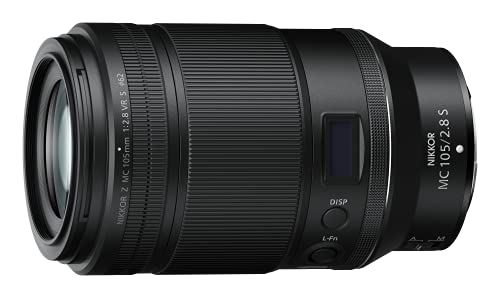
| Nikon NIKKOR Z MC 105mm f/2.8 VR S | Professional Z-mount macro | 105mm f/2.8, VR, S-line |
| Nikon AF-S DX Micro-NIKKOR 40mm f/2.8G | Budget DX DSLR macro | 40mm f/2.8, 1:1 magnification, SWM motor |
| Nikon AF-S VR Micro-NIKKOR 105mm f/2.8G | Full-frame DSLR macro with stabilization | 105mm f/2.8G IF-ED, VR |
| Sigma 105mm F2.8 EX DG OS HSM | Third-party 105mm for DSLRs | 105mm f/2.8, OS, HSM |
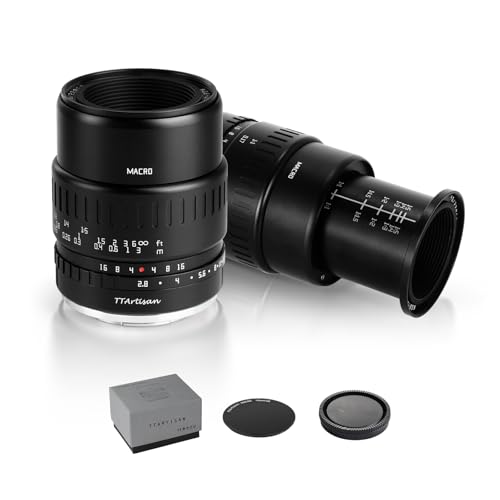
| TTARTISAN 40mm F2.8 Macro | Manual-focus Z-mount on a budget | 40mm f/2.8, 1:1, APS-C Z mount |
| Nikon NIKKOR Z DX MC 35mm f/1.7 | Compact Z DX macro and everyday lens | 35mm f/1.7, DX format |
| Nikon AF-S FX Micro-NIKKOR 60mm f/2.8G ED | Standard macro for full-frame DSLRs | 60mm f/2.8G ED, FX |
| Tamron AF 90mm f/2.8 Di SP | Classic 90mm macro for DSLRs | 90mm f/2.8, 1:1, AF/MF |
| Nikon NIKKOR Z MC 50mm f/2.8 | Compact Z-mount macro prime | 50mm f/2.8, Z series |
How to Choose
Mount and sensor format
Match the mount first. Z-mount lenses are for mirrorless Z cameras, AF-S lenses fit F-mount DSLRs, and the DX label means the lens is designed for the smaller APS-C sensor. A DX lens on a full-frame body crops the picture and lowers resolution. An F-mount lens can be adapted to a Z body, but a Z-mount lens cannot be used on a DSLR, so do not assume the compatibility runs both ways. Autofocus with adapted lenses also depends on the specific motor in the lens.
Focal length and working distance
Short macro lenses of 35 to 60mm are easy to carry and good for flat subjects such as documents and coins, but you end up very close to the subject, and your own shadow may fall across it. Lenses around 90 to 105mm provide more breathing room for insects and shy subjects. The true measure is magnification: look for 1:1 in the title for life-size reproduction, and treat anything unlabeled with caution.
Stabilization and autofocus
Stabilization (VR on Nikon, OS on Sigma) helps for handheld macro work, although at high magnification a tripod and focusing rail are far more effective. Manual focus is normal in macro since autofocus tends to hunt at close range, so a good focus ring matters more than motor speed. Budget manual lenses are perfectly usable for static subjects like coins, stamps, and circuit boards.
What to ignore and where budget lenses cut corners
Ignore claims about creamy bokeh for macro work; at high magnification depth of field is razor thin whatever the aperture. Cheap lenses usually cut corners on stabilization, weather sealing, and focus mechanism smoothness. Also confirm that the lens does 1:1, since some “macro” labels only reach half life-size, and check whether the lens extends physically as it focuses, which affects how close you sit.
The 9 Best Options
Nikon NIKKOR Z MC 105mm f/2.8 VR S
This is the top-tier Z-mount macro, an S-line 105mm f/2.8 with vibration reduction. It is for serious macro and product photographers on Z bodies who want comfortable working distance and professional build. It handles insects, jewelry, and food, and it doubles as a short-telephoto portrait lens when you step back from the close-up work.
- Strength: the 105mm length gives generous working distance for skittish subjects.
- Strength: VR helps with handheld shots in less than ideal light.
- Trade-off: it occupies the premium tier and is heavy for travel.
Skip it if you only shoot macro occasionally or want a compact kit.
Nikon AF-S DX Micro-NIKKOR 40mm f/2.8G
This DX-format DSLR lens offers 1:1 magnification, an f/2.8 aperture, and a silent wave motor. The title mentions it as a macro, portrait, and general close-up lens. It suits crop-sensor DSLR owners who want an affordable first macro that doubles for everyday work, from product shots on a desk to casual portraits of family around the house.
- Strength: true 1:1 magnification at a modest price.
- Strength: compact and light for a macro lens, easy to keep in a bag.
- Trade-off: short focal length means you must work very close to subjects.
Skip it if you shoot insects or use a Z-series body without an adapter.
Nikon AF-S VR Micro-NIKKOR 105mm f/2.8G
This is the full-frame DSLR macro with IF-ED glass and vibration reduction, listed both new and renewed. It remains a favorite for DSLR owners who shoot flowers, insects, and portraits with one lens. The renewed copy is the same design, so the choice between them comes down to condition and return terms rather than features.
- Strength: 105mm length plus VR suits handheld work.
- Strength: also useful as a short-telephoto portrait lens.
- Trade-off: it is larger and heavier than the 60mm choices.
Skip it if you own a Z body and do not want to carry an adapter.
Sigma 105mm F2.8 EX DG OS HSM
The Sigma is a third-party 105mm macro for Nikon DSLRs with optical stabilization and a hypersonic focus motor. It targets buyers who want 105mm performance from a different brand and sometimes a different price tier, and who want stabilization built in for handheld flower shots in a garden.
- Strength: OS stabilization and an HSM motor are listed.
- Strength: same popular 105mm focal length as the Nikon version.
- Trade-off: it is a DSLR design, so mirrorless buyers need an adapter.
Skip it if you want first-party warranty handling and native Z-mount fit.
TTARTISAN 40mm F2.8 Macro
This manual-focus APS-C lens offers 1:1 magnification and lists a long run of Z-mount bodies from the Z5 through the Z9. It is for tinkerers and budget-minded buyers who want to try macro on a Z camera without a large outlay, and who are comfortable setting aperture and focus themselves on a tripod.
- Strength: 1:1 magnification at a budget tier.
- Strength: compact and simple to use for static subjects.
- Trade-off: manual focus only and no stabilization is listed.
Skip it if you want autofocus or electronic communication with the camera.
Nikon NIKKOR Z DX MC 35mm f/1.7
This compact lens for DX-format Z cameras pairs a bright f/1.7 aperture with macro capability. It is a flexible pick for Z DX owners who want one small lens for everyday scenes, low light, and close-ups of objects on a table. It reads as a walk-around lens first and a macro lens second.
- Strength: the f/1.7 aperture is bright for the category.
- Strength: small and light for walking around.
- Trade-off: short focal length requires close working distance.
Skip it if you need long reach for insects or use a full-frame Z body.
Nikon AF-S FX Micro-NIKKOR 60mm f/2.8G ED
The standard macro for FX DSLRs, this 60mm f/2.8G ED is compact and sharp. It suits product photographers and hobbyists shooting coins, documents, and small items at a comfortable size, and it works as a normal-length lens for portraits and street scenes when you step away from close-ups.
- Strength: moderate size and weight make it easy to carry.
- Strength: versatile for flat subjects and general use.
- Trade-off: no stabilization is listed in the title.
Skip it if you shoot nervous insects or work handheld in dim light.
Tamron AF 90mm f/2.8 Di SP
This third-party 90mm offers 1:1 macro with AF and MF modes for Nikon DSLRs. It is a longtime favorite for owners who want working distance without the heft of a 105mm, and the switch between autofocus and manual focus is useful when you alternate between close-ups and ordinary portraits.
- Strength: 90mm length balances working distance and size.
- Strength: 1:1 magnification and dual focus modes.
- Trade-off: the title does not mention stabilization.
Skip it if you want built-in stabilization or Z-mount fit.
Nikon NIKKOR Z MC 50mm f/2.8
This compact Z-series macro prime is aimed at mirrorless owners who want a lightweight macro for product, hobby, and food photography. It sits below the 105mm in size and weight, which makes it the easier companion for travel and for shooting in tight indoor spaces such as a kitchen or workshop.
- Strength: compact Z-mount design that balances well on mirrorless bodies.
- Strength: a standard focal length that handles general shooting too.
- Trade-off: short working distance for living subjects.
Skip it if you plan to shoot insects at a respectful distance.
Which One Fits Your Situation
You shoot insects and flowers on a Z body
Choose the Nikon NIKKOR Z MC 105mm f/2.8 VR S for working distance and stabilization. The longer focal length keeps your shadow off the subject.
You own a crop-sensor DSLR and want a first macro
The AF-S DX Micro-NIKKOR 40mm f/2.8G offers 1:1 at a modest tier and works as an everyday close-focus lens.
You sell small products online
The Nikon NIKKOR Z MC 50mm f/2.8 or the AF-S 60mm f/2.8G ED gives compact framing for flat lays and consistent product shots on a tabletop.
You want to try macro cheaply on a Z camera
The TTARTISAN 40mm F2.8 gives 1:1 for experimenting, provided you accept manual focus and the lack of electronic communication.
Common Mistakes
- Buying an F-mount lens for a Z body without planning for an adapter.
- Assuming every lens labeled macro reaches 1:1.
- Using a short macro on skittish insects and scaring them away.
- Shooting handheld at high magnification instead of using a tripod.
- Choosing a DX lens for a full-frame body and losing resolution to the crop.
Related guides
- Wireless Chargers For Iphone And Airpods
- Noise Cancelling Earbuds Under $100
- Mechanical Keyboard For Programming
Frequently Asked Questions
What does 1:1 mean?
It means the subject is projected on the sensor at life size. A coin that measures 25mm will occupy 25mm on the sensor, which is why 1:1 lenses are the benchmark for true macro work.
Is 105mm better than 60mm?
For living subjects, yes, because you can stay farther away. For flat objects and tight spaces, a 60mm lens is lighter and easier to handle.
Can I use DSLR lenses on Z cameras?
With Nikon’s adapter, many AF-S lenses can work, but autofocus support varies by lens and motor, so check the lens notes before relying on it.
Do I need stabilization for macro?
It helps handheld, but a tripod is better at high magnification. Treat VR or OS as a bonus rather than a requirement.