Key takeaways
- The best 3D printers for most home users in 2026 are the Bambu Lab A1 for affordable everyday printing, the Bambu Lab P1S for fast enclosed printing, the Prusa MK4S for dependable long-term ownership, and the Bambu Lab X1 Carbon…
The best 3D printers for most home users in 2026 are the Bambu Lab A1 for affordable everyday printing, the Bambu Lab P1S for fast enclosed printing, the Prusa MK4S for dependable long-term ownership, and the Bambu Lab X1 Carbon for demanding engineering materials.
Your choice should depend less on headline speed than on the combination of print quality, build volume, enclosure requirements, material compatibility, setup effort, and ongoing maintenance. A printer that is excellent for decorative models may be a poor fit for functional parts, a cramped office, or a small business producing dozens of items each week.
Our top picks
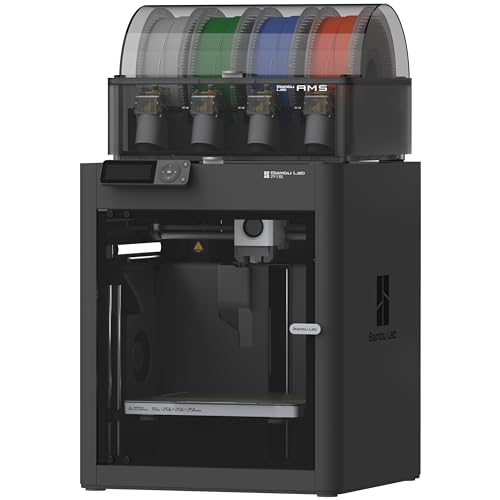


As an Amazon Associate we earn from qualifying purchases at no extra cost to you. Ratings are shown as listed on Amazon.
Best 3D printers at a glance
| Printer | Best for | Build volume | Typical materials | Typical market range |
|---|---|---|---|---|
| Bambu Lab A1 | First-time buyers and multicolor hobby printing | 256 × 256 × 256 mm | PLA, PETG, TPU; limited compatibility with enclosed-chamber materials | $300–$500, depending on bundle |
| Bambu Lab P1S | Fast general-purpose printing in a home workspace | 256 × 256 × 256 mm | PLA, PETG, TPU, ABS, ASA; some fiber-filled materials with suitable hardware | $550–$750 |
| Prusa MK4S | Reliability, repairability, and an open ecosystem | 250 × 210 × 220 mm | PLA, PETG, TPU, PC, nylon and other materials with suitable profiles | $800–$1,200, depending on kit or assembled version |
| Bambu Lab X1 Carbon | Engineering parts and demanding small-business workflows | 256 × 256 × 256 mm | PLA, PETG, ABS, ASA, PC, nylon and fiber-reinforced filaments | $1,000–$1,500 |
| Creality K1C | High-speed printing at a comparatively low price | 220 × 220 × 250 mm | PLA, PETG, ABS, ASA and selected carbon-fiber filaments | $400–$650 |
Prices are broad market ranges rather than fixed prices. Bundles, regional taxes, sales, and automatic material systems can change the total significantly.
Best 3D printer for most beginners: Bambu Lab A1
The Bambu Lab A1 is the easiest recommendation for a first printer if your projects are mainly organizers, toys, display models, replacement parts, and prototypes made from PLA or PETG. Its automatic calibration reduces the usual bed-leveling and first-layer adjustment work, while the 256 mm cubed build volume is large enough for most household projects.
The optional AMS Lite system enables multicolor printing, although color changes increase print time and material waste. A four-color object can use a purge tower or purge lines throughout the job, so the amount of filament consumed may be substantially higher than the model’s calculated weight.
The A1 is an open-frame printer. That makes it easier to access and generally simpler to ventilate, but it is not the right choice for regular ABS, ASA, or other materials that benefit from a warm, stable chamber. It also needs more protection from drafts, dust, and curious pets than an enclosed printer.
Best enclosed all-rounder: Bambu Lab P1S
The Bambu Lab P1S is a stronger choice when speed, enclosure, and broad household usefulness matter more than the lowest purchase price. It retains a 256 mm cubed build volume and supports common materials such as PLA and PETG while offering a more suitable environment for ABS and ASA.
Compared with the A1, the P1S is better suited to functional parts that must tolerate heat or outdoor exposure. Its enclosed design also helps contain drafts and makes the printer easier to place in a busy room, although it should still be used with sensible ventilation, particularly with materials that produce noticeable odors or emissions.
The trade-off is a more involved ownership routine. The enclosed motion system, fans, belts, and panels create more parts to inspect, and high-speed printing can expose problems with loose belts, damp filament, or an incorrectly prepared build plate. The P1S is quick to start, but quick printing does not eliminate maintenance.
Best for long-term ownership: Prusa MK4S
The Prusa MK4S is the best fit for buyers who value repairability, documentation, an open hardware philosophy, and predictable results over the shortest setup time. Its build area is slightly narrower than the 256 mm class, but 250 × 210 × 220 mm remains practical for most functional and hobby projects.
Prusa’s ecosystem is particularly attractive to schools, makerspaces, and small businesses that want access to replacement parts, detailed maintenance guidance, and well-established print profiles. The printer can also be upgraded and repaired rather than treated as a sealed appliance.
It is not as hands-off as the most automated competing machines. Assembly, profile selection, filament storage, and occasional manual checks remain part of the experience. The optional enclosure is worth considering if you expect to print ABS, ASA, nylon, or other temperature-sensitive materials regularly.
Best for engineering materials: Bambu Lab X1 Carbon
The Bambu Lab X1 Carbon earns its higher price through material flexibility, automation, and hardware designed for abrasive or technically demanding filaments. It is a sensible choice for jigs, brackets, fixtures, machine components, and prototypes that need more than the basic PLA workflow.
Its hardened components are better suited to carbon-fiber- or glass-fiber-reinforced filaments than a standard brass-nozzle printer. These materials can improve stiffness, but they also accelerate wear in nozzles and other filament-contact components. The printer’s enclosed design is helpful for ABS, ASA, polycarbonate, and nylon, but successful results still depend on dry filament and appropriate chamber conditions.
For occasional decorative printing, the X1 Carbon is difficult to justify. Its advantages become clearer when failed parts cost time, when material changes are frequent, or when the printer runs several times a week for practical work.
Best value for speed: Creality K1C
The Creality K1C offers a fast, enclosed CoreXY-style platform and a smaller 220 × 220 × 250 mm build area than the Bambu and Prusa alternatives above. It is appealing when print speed and purchase price are priorities, especially for users comfortable with making occasional adjustments.
It can handle common filaments and selected abrasive materials with the right nozzle and settings. However, buyers should budget time for tuning profiles, checking hardware, and resolving the occasional first-layer, extrusion, or adhesion issue. It is a better fit for a technically confident hobbyist than for someone who wants every job to feel appliance-like.
Decision matrix: which printer fits your situation?
| Your situation | Recommended choice | Why |
|---|---|---|
| Under $500, mostly PLA, limited experience | Bambu Lab A1 | Low setup friction, large build volume, strong everyday results |
| Want an enclosure and frequent printing | Bambu Lab P1S | Fast, enclosed, and more versatile with ABS and ASA |
| Prefer repairability and offline control | Prusa MK4S | Strong documentation, replaceable parts, and an open ecosystem |
| Need nylon, polycarbonate, or fiber-filled parts | Bambu Lab X1 Carbon | Enclosure, hardened components, and broader engineering-material support |
| Want speed at the lowest reasonable cost | Creality K1C | Fast enclosed design, with more user tuning likely |
Print quality, workspace, and material considerations
All of these printers can produce attractive 0.2 mm-layer-height parts with correctly prepared filament and a clean build surface. Differences become more visible in dimensional accuracy, overhangs, surface consistency, vibration control, and how reliably the printer repeats a result after sitting unused.
Measure the complete installation area, not just the stated machine footprint. Leave room to open the door or lid, remove the build plate, access the rear connections, and spool filament. A 256 mm build volume also does not mean every 256 mm-wide object will fit: brims, skirts, supports, and clearance around the model require additional space.
For PLA and PETG, an open printer can be perfectly adequate. ABS and ASA generally benefit from an enclosure and stable ambient temperature. Nylon and polycarbonate are more demanding still: moisture control, suitable build surfaces, a warm environment, and carefully chosen profiles matter more than the printer’s advertised maximum speed.
Running costs: a realistic example
Suppose a printer produces a functional bracket using 120 g of filament. A $22, 1 kg spool costs approximately:
$22 ÷ 1,000 g × 120 g = $2.64
Add an estimated $0.20–$0.60 for electricity, depending on print time and local rates. If the model needs supports and a brim, the slicer may report 145 g instead of 120 g, raising the material cost to about $3.19. A failed print doubles the consumed material and adds wear without producing a usable part.
Budget separately for replacement nozzles, build plates, lubricant, desiccant, and storage containers. Abrasive filaments wear nozzles faster, while damp nylon and PETG can cause poor surfaces, stringing, popping sounds, and weak layers.
Setup and maintenance that prevent most problems
- Choose a stable location. A rigid table reduces vibration and ringing on tall parts.
- Prepare the build surface. Clean it with the manufacturer-recommended method; fingerprints are a common cause of adhesion failures.
- Dry and store filament. Keep moisture-sensitive materials in sealed storage with desiccant, and use a filament dryer when needed.
- Run a small test print. A calibration cube or small bracket reveals adhesion and dimensional issues before a long job.
- Inspect after every few jobs. Remove stray filament, check the nozzle, examine belts, and confirm that fasteners have not loosened.
- Replace wear parts proactively. Nozzles, build sheets, wiper components, and PTFE tubes eventually wear; waiting for a major failure can damage a larger print.
Final buying advice
Choose the Bambu Lab A1 if you want the simplest low-cost route into PLA and PETG. Choose the P1S if you want an enclosure and faster all-purpose printing. Choose the Prusa MK4S when long-term serviceability and control matter most. Choose the X1 Carbon for demanding materials and frequent production, and the K1C when speed and value outweigh a greater willingness to tune the machine.
The best 3D printer is ultimately the one whose enclosure, materials, maintenance demands, and running costs match the space and projects you actually have—not the one with the highest advertised speed.