Key takeaways
- A two-year-old sits in an odd spot between baby gear and preschool gear. Hands are steady enough to drop a ball down a chute.
A two-year-old sits in an odd spot between baby gear and preschool gear. Hands are steady enough to drop a ball down a chute, legs are strong enough to push along a balance bike, and language is exploding, yet attention spans still run in two-minute bursts. The toys that earn shelf space at this age do one of three jobs: they teach cause and effect, they build words, or they burn off energy. This guide sorts eight toys that fit that window, judged only from what each listing states.
It is written for parents, grandparents, and anyone buying a birthday or holiday gift for a toddler turning two in 2026. If your child already loves crayons, ramps, or hopping around the living room, you can jump to the matching pick. If you are shopping blind, the How to Choose section explains which features matter at this age and which are marketing noise.
Quick Picks
Our top picks




As an Amazon Associate we earn from qualifying purchases at no extra cost to you.
| Product | Best for | Key spec from the title |
|---|---|---|
| Airbition Talking Flash Cards | Early vocabulary | 224 words, ages 1-4 |
| Grarain Busy Board | Travel and quiet time | Montessori sensory board, ages 1-3 |
| Stay Fun Ball Drop and Car Ramp | Cause-and-effect play | 2-in-1 hammer ball plus race car track |
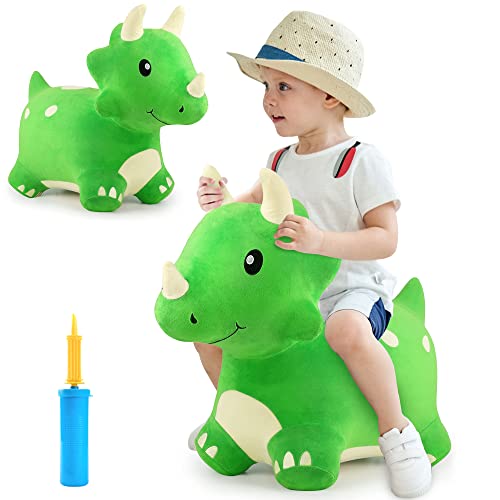
| Bouncy Pals Dinosaur Hopper | Burning energy outdoors | Inflatable plush ride-on triceratops |
| SEREED Balance Bike | First wheels | No pedals, adjustable, 2-5 years |
| iPlay, iLearn Press to Go Cars | Gentle first vehicles | Push-and-go friction cars, ages 1-3 |
| Kikidex Magnetic Drawing Board | Mark-making without mess | Doodle pad for ages 1-3 |
| Wooden Montessori Sensory Set | Screen-free tabletop play | Montessori sensory toys for ages 1-3 |
How to Choose
Match the age band printed on the listing
Look for a stated range that includes age two, such as 1-3 or 1-4. Items labeled only for infants will be outgrown within months, while items starting at age three or higher often contain small parts. A useful rule: any loose piece that fits inside a toilet paper tube is a choking risk for a child who still mouths objects.
Favor open-ended over one-trick toys
A ball drop, a drawing pad, or a set of vehicles can be used a dozen ways. A single-button toy that plays one song is usually abandoned by week three. Ask whether the toy invites the child to do something, or merely does something in front of them. Also consider storage: a toy that needs a dedicated corner of the room often ends up unused, while a board or card set slides into a drawer.
Check the active versus quiet balance
A strong toy shelf at this age holds one gross-motor item such as a ride-on or balance bike, one fine-motor item such as a board or ramp, and one language item such as cards. If your home is small, lean toward the fine-motor and language categories, which store easily.
Know where budget models cut corners
Budget versions of ride-ons and bikes tend to skimp on adjustability, which matters because toddlers grow quickly; look for height adjustment in the listing. Cheaper boards and cards may use thin printing or flimsy hinges. Mid-range wooden items usually earn their place with sturdier joints and smoother finishes. Ignore claims about genius-building; no toy does that. Instead, judge each item by how many different ways a toddler can play with it in the first week.
The 8 Best Options
Airbition Talking Flash Cards
This set lists 224 words and targets ages 1-4, with Montessori-style language learning and a pocket speech therapy angle. It suits parents who want a structured way to name objects during a car ride or waiting room visit, and the wide age band means a sibling can share it. Parents who work on speech goals often like that the cards give a predictable routine: point, name, repeat. Short sessions of five minutes work better than long drills at this age.
- Strength: the large word count gives months of new vocabulary before cards feel repetitive.
- Strength: pocket-sized format travels easily.
- Trade-off: it is a device-style learning toy, so it only works when an adult sits down and plays along.
Skip it if your child is already reading or if you want something that entertains independently.
Grarain Busy Board
Marketed as a Montessori educational toy for 1-3 year olds, this board promises travel-friendly sensory learning. It is aimed at families who fly, drive long distances, or need a calm activity for restaurant tables. Because everything is attached to one board, nothing rolls under a car seat, which is a quiet advantage on long drives.
- Strength: the travel-friendly design keeps everything in one portable piece.
- Strength: sensory tasks like latches and switches train finger strength at the right age.
- Trade-off: busy boards are fixed in layout, so a determined toddler may master them quickly.
Skip it if you want a toy that grows into pretend play or group play.
Stay Fun 2-in-1 Ball Drop and Car Ramp Race Track
This toy combines a hammer-and-rolling-ball station with a launch-and-race car track, and the listing leans on cause and effect, sensory, and STEM learning. It fits active toddlers who love banging things and watching what happens next. Dropping a ball, hearing it travel, and then chasing a car down a ramp teaches sequence without a single instruction.
- Strength: two play modes mean a longer shelf life than a single-function toy.
- Strength: the hammer action builds hand-eye coordination.
- Trade-off: a two-part toy can scatter balls and cars around a room.
Skip it if you live in a small apartment where noise and floor clutter are a concern.
Bouncy Pals Dinosaur Hopper
An outdoor ride-on bouncing animal in an inflatable plush triceratops style. It is meant for toddlers who need a place to put boundless energy, especially in a yard or on a patio. Supervision matters, since toddlers can tip sideways when they bounce too enthusiastically, so keep it on grass or a soft surface.
- Strength: bouncing and hopping gives a full-body workout that stairs and sofas cannot safely provide.
- Strength: the dinosaur theme encourages imaginative play.
- Trade-off: inflatable items need inflating, and punctures are a real risk on rough concrete.
Skip it if you have no outdoor space or if your toddler is wary of unsteady surfaces.
SEREED Balance Bike
Aimed directly at a 2 year old, with an adjustable frame and a no-pedal design that lasts through ages 2-5. It also comes with customizable plate stickers, a small touch that kids enjoy. Parents of reluctant movers sometimes find that personalizing the bike makes the child feel ownership and want to ride it.
- Strength: adjustability stretches its usefulness across several years.
- Strength: the no-pedal design teaches balance first, which many parents find eases the later move to a pedal bike.
- Trade-off: a two-year-old may need weeks of walking beside it before gliding begins.
Skip it if your child is not yet steady walking or you have no safe pavement for rolling.
iPlay, iLearn Press to Go Cars
A set of press-and-go friction cars for toddlers ages 1-3, described as an infant play vehicle set. It targets families who want an inexpensive, gentle introduction to vehicles that requires no batteries. The press-down motion is also a nice lead-in to later push toys and car mats.
- Strength: press-and-go action is easy for small hands to master, which gives quick wins.
- Strength: multiple cars support sorting, racing, and pretend traffic scenes.
- Trade-off: simple friction toys offer little for a child who has moved on to complex play.
Skip it if your child already prefers building sets or puzzle-style toys.
Kikidex Magnetic Drawing Board
A doodle pad for ages 1-3 that frames drawing as an educational toy. It is for parents who want to introduce mark-making without crayon marks on walls. Using a finger or stylus-style tool to draw a line is a milestone that precedes holding a crayon correctly.
- Strength: erasable drawing means endless reuse and no paper waste.
- Strength: it fits in a bag for travel.
- Trade-off: no permanent record of the drawing, so there is nothing to put on the refrigerator.
Skip it if your toddler loves real crayons and paper, or if you want a family keepsake.
Wooden Montessori Sensory Set
A wooden Montessori sensory toy marketed for ages 1-3 with birthday gift positioning. It suits buyers who prefer natural materials and a screen-free shelf. Wooden toys also tend to look better in a living room than bright plastic, which matters to some households.
- Strength: wood generally feels more substantial than thin plastic and tends to survive drops.
- Strength: the Montessori style centers on direct exploration of shapes and textures with the fingers.
- Trade-off: the listing offers less detail than some competitors, so confirm the exact contents before buying.
Skip it if you want lights, sounds, or motion.
Which One Fits Your Situation
You have a long trip coming up
Pair the Grarain Busy Board with the Kikidex Magnetic Drawing Board. Both are quiet and portable, and together they cover finger skills and creativity. Add the iPlay cars if you want a third activity that fits in a coat pocket.
Your toddler never stops moving
The SEREED Balance Bike or the Bouncy Pals Dinosaur Hopper channels that energy outdoors. The bike lasts longer; the hopper is simpler to start and suits a child who is not yet confident walking. Many families begin with the hopper and add the bike a few months later.
You want to boost speech
The Airbition Talking Flash Cards are the clearest language-focused option here, with 224 words to name together. Pair it with daily reading for the best effect, and let the child pick which card to study next.
You want a gift that works for a small budget
The iPlay, iLearn Press to Go Cars are an easy budget-tier pick that needs no batteries. Wrap three or four with a small gift bag for a party favor-style present, or let siblings share them.
Common Mistakes
- Buying for the age printed on the box without checking small parts against a toilet-paper-tube test.
- Choosing a toy with a single function that will bore a toddler by next month.
- Skipping adjustability on bikes and ride-ons, then watching the child outgrow them quickly.
- Assuming a toy labeled educational replaces conversation and reading together.
- Buying several similar toys instead of mixing active, quiet, and language categories.
Specs and Terms Explained
Cause and effect
This phrase means the toddler does something and sees an immediate result: a ball drops down a chute, a car rolls out of a ramp. Toys built on it, such as the Stay Fun 2-in-1 Ball Drop and Car Ramp Race Track, hold attention because the child controls the outcome.
Montessori-style
On a listing this usually signals natural materials, a single clear purpose and no flashing lights. It is a marketing label, not a certification, so judge the toy on materials and simplicity, as with the Wooden Montessori Sensory Set.
Sensory and busy boards
A busy board packs latches, switches and zippers onto one panel to practice finger skills. Make sure every latch and knob is firmly fixed, since a loose part on a panel like the Grarain Busy Board becomes a hazard.
Standover height and inseam
For a balance bike like the SEREED Balance Bike, the key numbers are the lowest seat height and the child’s inseam. A child should be able to sit with both feet flat on the ground and knees slightly bent. If the seat does not go low enough, the bike will frustrate rather than help.
Sizing and Space Checklist
- Measure your toddler’s inseam from crotch to floor in bare feet before shopping for any ride-on or balance bike.
- Compare that figure with the minimum seat height in the listing, not the maximum.
- Pick a clear play zone and check that a hopping toy such as the Bouncy Pals Dinosaur Hopper has room to bounce without meeting furniture.
- Confirm the age label on flash cards, since cards with small punch-outs or dense text may suit a slightly older child.
- Look at the pen and any accessories on the Kikidex Magnetic Drawing Board and make sure nothing small comes loose.
Setup and Care Tips
- Introduce one toy at a time and rotate the rest out of sight; toddlers often engage longer with fewer options.
- Sit with your child for the first few sessions of the Kikidex Magnetic Drawing Board or the Airbition Talking Flash Cards, then step back.
- Wipe plastic ramps and cars with a damp cloth; avoid strong cleaners that leave residue a toddler may lick.
- Store loose cars from the iPlay, iLearn Press to Go Cars set in a lidded tub so they stay together.
Who Should Skip These
If your toddler is still mostly in the mouthing stage, skip anything with detachable parts for now. Families with very little floor space may find a hopper and a balance bike hard to use indoors. And if your child is not yet speaking much, the Airbition Talking Flash Cards will usually do more good with a parent sitting alongside than as a solo toy.
Related guides
- Wireless Chargers For Iphone And Airpods
- Mechanical Keyboard For Programming
- Black Friday And Cyber Monday Deals
Frequently Asked Questions
What skills should toys for a 2 year old build?
Look for toys that support gross motor movement, fine motor control, early language, and cause-and-effect thinking. A balanced shelf with one of each beats a pile of duplicates.
Are balance bikes appropriate at age two?
Many listings, including the SEREED model here, are marketed for two-year-olds. Adjustable seat height and a child who can walk steadily are the key requirements. Always pair a balance bike with a properly fitted helmet and keep rides on flat, smooth ground.
Is a busy board better than flash cards?
They serve different goals. A board trains fingers and focus, while cards support vocabulary and need an adult partner. Many households eventually own both.
How many toys does a toddler need?
Fewer than most people think. A small rotating set of open-ended toys tends to hold interest longer than a crowded toy chest. Try putting half of the toys away and swapping every couple of weeks.