Key takeaways
- Shopping for Star Wars Lego sets is rarely about finding any box with a Stormtrooper on it.
Shopping for Star Wars Lego sets is rarely about finding any box with a Stormtrooper on it. The real decision is who the set is for and what it will do once it is built: sit on a shelf as a display model, hold up to rough play on a bedroom floor, or serve as a first small build for a young fan. The same galaxy spans a 701-piece starship for ages 9 and up, a 349-piece collectible bust built for adults, and a pocket-sized microfighter, and those are very different purchases.
This guide sorts seven current options by that decision. It is written for gift buyers working through a holiday list, for adult collectors looking for a display piece, and for parents choosing between a poseable battle set and a quiet shelf model. Every point below comes from what the product titles state: age ranges, piece counts, included figures, and set type. As 2026 shopping gets underway, use the table to shortlist and the sections that follow to match a set to a real person.
Quick Picks
Our top picks




As an Amazon Associate we earn from qualifying purchases at no extra cost to you.
| Product | Best for | Key spec from the title |
|---|---|---|
| LEGO R2-D2 | Play-or-display droid fans | Ages 10+, 25th Anniversary tie-in |
| LEGO Millennium Falcon 25th Anniversary | Adult collectors | Ages 18+, A New Hope model with display stand |
| LEGO Anzellan Starship 75445 | A mid-size build for kids | 701 pieces, ages 9+ |
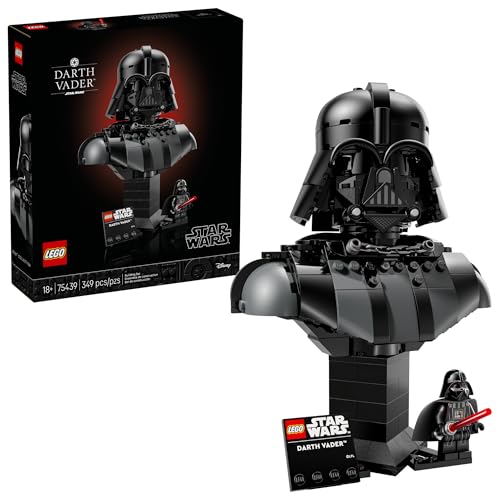
| LEGO Darth Vader Bust 75439 | Desk or bookshelf display | 349 pieces, ages 18+ |
| LEGO Imperial Star Destroyer | Birthday gift for ages 10+ | Includes Darth Vader among its figures |
| LEGO AT-TE Walker | Poseable battle play | 3 212th Clone Troopers, Dwarf Spider, Battle Droid |
| LEGO Plo Koon’s Jedi Starfighter | A small, low-commitment gift | Microfighter, Clone Wars playset |
How to Choose
Start with the age label, not the artwork
The age rating on the title tells you more about build difficulty than the picture on the box. A label of 7 or 9 and up points to chunkier builds meant for younger hands, while 10 and up suggests more intricate assembly, and 18 and up signals a display model aimed at collectors. A child who is only just inside the range may need an adult nearby, so size the set to the builder rather than the character they love. Gifting an 18-plus set to a young child usually ends with the adult doing the building.
Decide between display and play before anything else
Display sets, such as a bust or an anniversary model with a stand, are designed to be looked at; their value is shape, detail, and how they sit on a shelf. Play sets, such as a walker with several clone troopers or a battle pack, are meant to be swooshed around, posed, and rebuilt. Titles that mention words like poseable, pretend play, or battle point toward the second group. Titles that mention display, collectible, or decor point toward the first. Mixing the two is where gifts go wrong.
Use piece count and included figures as a value check
Where a title lists a piece count, such as 349 or 701, you can compare sets on a rough pieces-per-tier basis. Where it lists figures, such as three clone troopers plus a droid and a creature, weigh how many characters you actually get. A larger starship with a single pilot may offer more building time, while a smaller battle set with several figures offers more play. Ignore claims about being collectible unless the set is clearly a display or anniversary edition.
Measure the space and plan the build
Large ships and walkers take more shelf area than their box suggests, and busts need a stable surface at eye level. Before buying a ship, clear the spot where it will live and think about whether it needs to be moved for cleaning. Also plan for the build itself: a set with several hundred pieces usually fills an afternoon, and a bigger one can run across several sessions. Budget models in the lineup, such as a microfighter, are quick builds that suit a short attention span.
The 7 Best Options
LEGO R2-D2
This droid set is marketed as play-or-display for ages 10 and up and carries a 25th Anniversary tie-in. It suits a fan who wants one recognizable character rather than a large vehicle, and works as a gift for either a young builder or an adult who wants something on a desk. Because the character is small enough to fit almost anywhere, it also suits a household where shelf space is already crowded.
- Strength: flexible use, since the title pitches it for both play and display.
- Strength: a single iconic character makes gift choice easy.
- Trade-off: no minifigure crew or vehicle, so play scenarios are limited.
Skip it if the recipient wants a ship or a battle set with several figures.
LEGO Millennium Falcon 25th Anniversary
Aimed at adults, this A New Hope model is labeled for ages 18 and up and comes with a display stand. It is the clear pick for a collector who wants the best-known ship in the franchise as a centerpiece and treats it as a showcase object rather than a toy. The anniversary branding makes it a natural milestone gift for a long-time fan who grew up with the original film.
- Strength: the display stand makes it ready for a shelf.
- Strength: the anniversary edition has built-in collectible appeal.
- Trade-off: the adult label means it is not a casual kid’s gift.
Skip it if the buyer plans for rough play or has limited display space.
LEGO Anzellan Starship 75445
With 701 pieces and a label of ages 9 and up, this set sits in the middle of the range. The title pitches it as a build-and-display set that works as kids bedroom and desk decor, so it fits a young builder who wants a substantial project that still looks good afterward.
- Strength: 701 pieces give a meaningful, multi-step build.
- Strength: the 9-plus label opens it to younger fans.
- Trade-off: a less famous ship, so it may lack instant recognition for casual gift recipients.
Skip it if the recipient only wants classic characters from the original films.
LEGO Darth Vader Bust 75439
This 349-piece collectible is built for adults, labeled for ages 18 and up, and pitched for display on a bedroom or bookshelf. It suits someone who wants a striking, compact piece of Star Wars decor without clearing a large shelf for a ship. A bust also reads well from across a room, so it works in an office as easily as in a bedroom.
- Strength: a compact form for desks and bookshelves.
- Strength: 349 pieces make a focused, display-ready build.
- Trade-off: it is a static model with no play features.
Skip it if the recipient wants a toy to pose, swoosh, or rebuild into something else.
LEGO Imperial Star Destroyer
Labeled for ages 10 and up and marketed as a build-and-display set and birthday gift, this ship brings Darth Vader into the box alongside other figures. It fits a young fan who likes the Imperial side and wants a ship large enough to be the centerpiece of a collection.
- Strength: an iconic Imperial ship with Darth Vader included.
- Strength: the build-and-display pitch suits both shelf and play.
- Trade-off: the title does not list a piece count, so scale is harder to judge.
Skip it if you need a clearly quantified build or a smaller footprint.
LEGO AT-TE Walker
This poseable walker comes from the Revenge of the Sith era and includes three 212th Clone Troopers, a Dwarf Spider, and a Battle Droid. It suits a child who likes staging battles, since the figure count supports a scene right out of the box. The Revenge of the Sith link also gives the set a clear story hook for kids who already know the clone troopers by name.
- Strength: poseable design is made for active play.
- Strength: three clone troopers plus a droid and a creature offer a full battle scene.
- Trade-off: more small parts and figures to keep track of.
Skip it if the goal is a clean display piece.
LEGO Plo Koon’s Jedi Starfighter
This Microfighter is a small Clone Wars playset pitched for pretend play and room decor. It is a low-commitment gift for a young fan, a stocking filler for a holiday list, or an add-on to a larger present. It also makes sense as a classroom or party-favor style gift when several children need something of equal size.
- Strength: a compact build that suits shorter attention spans.
- Strength: easy to pair with a larger set as a second gift.
- Trade-off: small scale, so less display presence than the ships.
Skip it if you want a showpiece or a long building project.
Which One Fits Your Situation
You are buying for an adult collector
The LEGO Millennium Falcon 25th Anniversary is the headline pick for a large display, and the LEGO Darth Vader Bust 75439 is the compact alternative for a desk or bookshelf.
You are buying for a child who loves action
The LEGO AT-TE Walker supports staged battles thanks to its poseable design and its three clone troopers, droid, and creature.
You need a small add-on for a holiday list
The LEGO Plo Koon’s Jedi Starfighter is easy to wrap alongside a bigger gift, and the LEGO R2-D2 works when you want a recognizable character in a larger form.
You want a substantial build for a young fan
The LEGO Anzellan Starship 75445 gives 701 pieces at a 9-plus label, while the LEGO Imperial Star Destroyer suits a 10-plus fan who prefers the Imperial side.
Common Mistakes
- Buying an 18-plus display set for a young child and expecting a play toy.
- Ignoring the age label, which leads to frustrated builders or bored ones.
- Skipping shelf measurements before ordering a large ship.
- Assuming every set includes a full crew of figures, when some are single-character builds.
- Treating collectible wording as a guarantee, rather than reading what the set actually contains.
Specs and Terms Explained
Piece count
The number on the box totals every element, including the tiny studs, tiles and 1×1 parts. It predicts how long a model takes better than it predicts how big the model is, because a set packed with small detailing parts takes far longer per piece than one made from large plates. As a rough rule, a few hundred pieces suits one afternoon, while sets well past a thousand pieces are multi-evening projects.
The age label
A 9+ or 10+ label means the design is meant to survive normal handling by that age group. An 18+ label signals a display-first design: more delicate joins, more small decorative parts, and instructions that assume patience. It is not a safety warning aimed at adults, but it is a hint that rough play will shed pieces.
Minifigure scale versus display scale
Some starships are scaled so included minifigures can sit inside or beside them. Others are shaped purely as detailed models, and any figures are an afterthought. Busts and droids belong to that second group. If a child wants to act out scenes, look for a set with room for figures and moving parts, not just a good silhouette.
Stickers versus printed parts
Many sets use sticker sheets for panels, screens and markings, while pricier ones print the design straight onto the element. Stickers look excellent when applied straight, but they are permanent once pressed down and can lift at the edges over the years. Anyone who dislikes fiddly sticker work should read the product description for a mention of printed parts.
Setup and Care Tips
- Open one numbered bag at a time and keep the rest sealed, so small parts do not go missing mid-project.
- Use a shallow tray or baking sheet as a work surface so rolling pieces stay contained.
- Apply stickers with the edge of a brick separator or a pair of tweezers, lining up one corner first and smoothing outward.
- Keep finished models out of direct sunlight, since long exposure tends to fade stickers and yellow white and light-grey plastic.
- Dust with a soft makeup brush or a burst of compressed air rather than a damp cloth, which can catch small parts and pull them loose.
- Store the instruction booklet in a flat folder; it is the easiest way to repair or rebuild a set later.
Who Should Skip These
- Anyone short on shelf space. The bigger starships need a dedicated surface, and wall-mounting is rarely practical.
- Parents of very young children. Small elements and thin antenna-style parts are not toddler-friendly, whatever character is on the box.
- Buyers who dislike repetitive assembly. Large models repeat the same sub-assembly several times, which some builders find tedious rather than relaxing.
- Shoppers hunting for a quick gift. A big set handed over unbuilt can feel like a chore, so match the size to the time the recipient has.
Related guides
- Wireless Chargers For Iphone And Airpods
- Mechanical Keyboard For Programming
- Black Friday And Cyber Monday Deals
Frequently Asked Questions
Which Star Wars Lego set suits a first-time builder?
The microfighter is the gentlest starting point because it is small and quick. For a bit more challenge, the sets labeled 9 and up offer a longer build without jumping to the adult tier.
What is the difference between display and play sets?
Display sets are designed to be looked at and usually carry an adult age label. Play sets are poseable, include several figures, and are meant to be handled.
How should I judge the size of a set?
Use the piece count where the title gives one, such as 349 or 701. When no count is listed, look at the product photos and the type of set, then confirm dimensions in the description.
Do the anniversary editions matter?
They matter mainly to collectors, who value the commemorative tie-in. For play value, the set type and included figures count for more than the anniversary label.