Key takeaways
- Searching for Play-Doh sets usually starts with a birthday invitation, a holiday gift list or a rainy-day plan.
Searching for Play-Doh sets usually starts with a birthday invitation, a holiday gift list or a rainy-day plan, and it ends in a confusing wall of kitchens, cafes, ice cream shops and tubs. The decision is really about what kind of play you want to encourage. A pretend-kitchen set turns modeling compound into pizza, waffles and donuts. A starter tote with plain cans keeps things open-ended and cheap. Which one fits depends on the child's age, the amount of table space, and whether the adult has patience for a cleanup routine.
This guide is for parents, grandparents and teachers shopping for children around age three and up, which is the age printed on every listing in this group. We compare five Play-Doh sets using only what their titles state: the number of accessories, the themes, the sounds, and the included storage. Look for small parts warnings, check that the child has no dough or wheat sensitivities, and treat anything shipped for the 2026 gift season as worth ordering early, since popular playsets sell out as holidays approach.
Quick Picks
Our top picks


As an Amazon Associate we earn from qualifying purchases at no extra cost to you.
| Product | Best for | Key spec from the title |
|---|---|---|
| Play-Doh Super Sizzlin' Kitchen Playset | Kids who love pretend cooking | Realistic cooking sounds, 25+ play foods, ages 3+ |
| Play-Doh Rainbow Swirl Ice Cream Playset | Ice cream shop role play | 7 pretend play kitchen accessories, ages 3+ |
| Play-Doh Crazy Waffle Cafe Playset | Breakfast and cafe themes | 8 play kitchen accessories, ages 3+ |
| Play-Doh Starter Set | Open-ended play and tidy storage | 9-piece kit, storage tote, 4 modeling compound cans |
| Play-Doh Donut Drop Shop Playset | A compact gift for sweet-treat fans | Play food toy, arts and crafts, ages 3+ |
How to Choose
Match the set to the age and the attention span
Every set here lists ages 3 and up, but a three-year-old and a six-year-old play very differently. Younger children enjoy squishing, stamping and pressing dough through simple tools, so a set with fewer accessories avoids frustration. Older kids like multi-step builds, such as creating a whole breakfast with several toppings. As a rule, count the accessories: around seven or eight tools suits a compact session, while a set promising twenty-five or more play foods gives a school-age child a project that lasts several afternoons.
Decide between themed playsets and plain cans
Themed playsets turn dough into pretend food, so they encourage storytelling and role play with siblings or friends. Plain starter tubs offer more color and less structure. If a child already owns a few molds, a can-based starter set adds fresh color without duplicating tools. If this is the first Play-Doh purchase, a themed set is more fun out of the box, because the child has something specific to make from the first minute.
Count what is included and what is missing
Read titles for the number of dough cans, because it varies and the title does not always say. A set with only a few small tubs will run dry quickly, especially if the child blends colors. Check for features such as storage totes, lids that seal, and sound effects, which add batteries to the equation. Many sets sold under this name include additional compound in small cans, but the exact color count is on the product page, so verify it if you want a rainbow range. If you are buying for a group, such as a classroom or a party table, plan on at least one can per child per color family, and keep a few extra sealed cans in reserve for replacements.
Plan for mess, storage and safety
Modeling compound dries out when left open, so airtight storage matters more than extra accessories. Work on a washable mat or tray, and keep dough away from carpet and upholstery. Check the label for allergen information, because many compounds contain wheat, and keep small tools away from children under three. A set with a storage tote earns extra value because loose tools tend to disappear within a few weeks. A quick rule for tidy play: roll the dough back into one ball, wipe the tools with a damp cloth, and return every piece to the same container before dinner.
The 5 Best Options
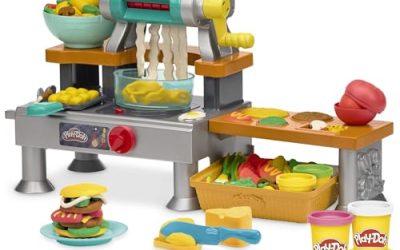
Play-Doh Super Sizzlin' Kitchen Playset
This is the largest themed set in the group, with realistic cooking toy sounds and more than 25 play foods to create. The sounds turn the kitchen into a pretend stove, and the long list of foods keeps a child busy for a long session. It is aimed at kids who want to play restaurant, grill or breakfast, and it works well for a child who likes to narrate what they are cooking while they shape each item. Parents of two or more kids can use it as a shared project on a weekend morning.
- Strength: 25+ play foods give a lot of creative variety.
- Strength: realistic cooking sounds add a pretend-play layer that quiet sets lack.
- Trade-off: the sounds likely need batteries and can be loud for shared spaces.
Skip it if you want a quiet, compact set or a small gift for a classroom exchange.
Play-Doh Rainbow Swirl Ice Cream Playset
This ice cream shop playset includes seven pretend play kitchen accessories for children age three and up. The theme invites kids to swirl, scoop and top their own creations, which makes it a good fit for summer-flavored role play any time of year. It is positioned as an arts and crafts toy for both girls and boys. The pastel swirl look also makes it a sensible pick for a child who gravitates toward bright colors and dessert themes, and the compact accessory count keeps the table setup short and the cleanup quick.
- Strength: an ice cream theme is instantly understandable for young children.
- Strength: seven accessories are enough for variety without overwhelming a three-year-old.
- Trade-off: the theme is narrower than a full kitchen, so older kids may outgrow it faster.
Skip it if you want a set with sound effects or a broader cooking theme.
Play-Doh Crazy Waffle Cafe Playset
The Crazy Waffle Cafe comes with eight play kitchen accessories and targets kids who enjoy an arts and crafts afternoon with a breakfast theme. The cafe concept suits role play with a parent or sibling as the customer, and eight accessories give a slightly larger toolset than the ice cream shop. Kids who like to build stacked or layered creations, such as a tall waffle with several toppings, will find the cafe format a natural fit, and it pairs easily with other kitchen-style sets.
- Strength: eight accessories give a bit more variety for creating different treats.
- Strength: the cafe theme encourages customer-and-server pretend play.
- Trade-off: the title mentions no sound effects or storage extras.
Skip it if the child already has several food-themed sets, since the tools may overlap.
Play-Doh Starter Set
The 9-piece kit comes with a storage tote and four modeling compound cans, for ages three and up. The title warns that the presentation may vary, so the packaging you receive could differ from the photo. Its main appeal is simplicity: open-ended dough, a handful of tools and a container to keep everything together. It is also the easiest set to carry to a grandparent's house or a classroom corner, since everything returns to one tote at the end of play.
- Strength: the storage tote keeps tools and cans together between sessions.
- Strength: a plain, unthemed kit works for any imaginative project.
- Trade-off: four cans will not satisfy a child who wants many color choices.
Skip it if you want a themed playset with built-in role play.
Play-Doh Donut Drop Shop Playset
A play food toy aimed at kids three and older, the Donut Drop Shop is built around creating donuts, and it is marketed as an arts and crafts gift. It is the narrowest set here in theme, which also makes it a clear, easy-to-wrap present for a donut-loving child. Fans of a sweet-treat theme will find it simple and appealing, and the tidy theme leaves room for a child to invent flavors, sprinkles and toppings of their own.
- Strength: a single clear theme makes the play instantly understandable.
- Strength: it is easy to give as a stand-alone present or add to a birthday bundle.
- Trade-off: the title lists no accessory count, so buyers should check what is included.
Skip it if you want the widest range of foods or a set with sound effects.
Which One Fits Your Situation
You are buying for a four-year-old who loves pretend cooking
The Super Sizzlin' Kitchen Playset suits this child best, with its sound effects and more than 25 play foods that can sustain pretend restaurant games.
You need a small birthday party gift
The Donut Drop Shop Playset or the Rainbow Swirl Ice Cream Playset wrap up neatly and give a clear theme the guest can start using right away.
You want to keep clutter under control
The Starter Set with a storage tote is the tidy choice. The tote helps keep cans and tools in one place, which matters in small apartments and classrooms.
You are building a collection over time
Begin with the Crazy Waffle Cafe Playset for its eight accessories, then add the ice cream shop later so the child has complementary tools for combined cafe games.
Common Mistakes
- Assuming a bigger set always means more dough, when some playsets focus on accessories.
- Skipping the age label and buying a set with small parts for a child under three.
- Leaving cans open overnight, which dries the compound and wastes the set within days.
- Buying several themed sets with overlapping tools instead of mixing themes and a starter tote.
- Forgetting to check the allergen label if the child has a wheat or gluten sensitivity.
Specs and Terms Explained
Age grading
Play-Doh packaging carries an age recommendation, typically starting at three years. That label reflects small parts and tool shapes, not the child’s cleverness. Playsets with tiny accessories such as sprinkles, toppings, and cutters should stay out of reach of younger siblings who still put things in their mouths.
Can size and net weight
Sets list the number of compound cans and the weight of each. Small cans are party-favor sized, and they dry out quickly with heavy use. A starter tote with several plain cans gives more total compound than a themed playset with a few tiny pots, so check the weight if what you want is raw material rather than accessories.
Compound ingredients
Play-Doh is a salt-and-flour-based modeling compound, and the manufacturer states that it contains wheat. Households managing wheat or gluten sensitivities should read the packaging carefully and remember that it is meant for play, not eating, even though it is labeled non-toxic.
Playset versus plain cans
Playsets include molds and tools that guide a child toward a specific result, such as a swirl cone or a waffle. Plain cans leave everything open. Younger kids tend to enjoy guided sets, and older ones often prefer the open-ended approach.
Sizing and Compatibility Checklist
- Count the compound cans and note the colors; a set with only a few shades limits mixing.
- Check whether the playset needs batteries or extra supplies. Most are manual, but read the description.
- Match the theme to the child: the Play-Doh Super Sizzlin’ Kitchen Playset suits pretend cooking, while the Play-Doh Donut Drop Shop Playset and Play-Doh Crazy Waffle Cafe Playset lean toward bakery and breakfast play.
- Think about workspace: a washable placemat or tray protects tables and carpets.
- If you are mixing brands of modeling dough, keep each in separate containers, since the colors blend into a muddy gray.
Setup and Care Tips
Close each lid firmly after play, because the compound dries when exposed to air. Wipe the rim of a can before closing it so crumbs do not prevent a seal. If the dough starts to stiffen, kneading in a few drops of water often brings it back, though badly dried pieces are better replaced. Store tools and compound in a zip bag or lidded box to keep them together. Keep the dough off carpet and upholstery, since ground-in pieces are tough to remove; let a stray piece dry and brush it away rather than rubbing it in.
Who Should Skip These
Families with wheat allergies or a toddler who still mouths toys should hold off or supervise closely. A parent who dislikes mess may prefer a plain set to an accessory-heavy theme like the Play-Doh Rainbow Swirl Ice Cream Playset, since every extra tool and topping is one more small piece to track. Skip themed sets if you want a general-purpose gift for a child who already owns a large collection of cans; for that situation, the Play-Doh Starter Set adds colors without duplicating accessories.
Related guides
- Wireless Chargers For Iphone And Airpods
- Mechanical Keyboard For Programming
- Black Friday And Cyber Monday Deals
Frequently Asked Questions
What age are Play-Doh sets for?
The sets in this guide are labeled for ages three and up. Supervise younger siblings, since the accessories can be small enough to be a choking hazard.
How do I keep the dough from drying out?
Press the dough back into its can, wipe the rim, and close the lid firmly after every session. A storage tote helps keep everything together, but sealing individual cans is what prevents drying.
Are themed sets worth it over a basic starter pack?
If the child enjoys role play, a themed set gives more reasons to play. If the child likes free-form sculpting, a starter pack with several cans and a tote can be more flexible.
Can I mix colors between sets?
Yes, but heavily mixed dough turns muddy and loses its brightness. Keep favorite colors separate, and let children blend only small portions. A good habit is to give each child a small tray with two or three colors per session, which reduces blending and speeds cleanup noticeably. Rotating colors every few days also keeps the same set feeling new for much longer.