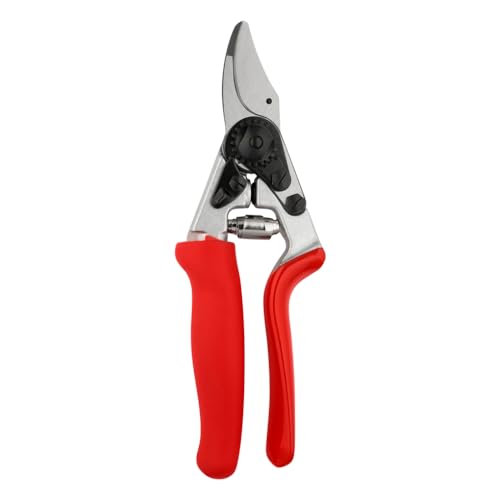
The best pruning shears for most gardeners in 2026 are bypass pruners such as the Felco F-2 for lasting professional quality, the Fiskars bypass pruner for budget-friendly comfort and the Okatsune 103 for a sharp, simple Japanese design. Use bypass blades for live green wood, anvil pruners for dry dead wood and ratchet pruners if hand strength is a limit. This guide compares seven proven options with cutting capacity, weight and who each suits.
Our top picks



As an Amazon Associate we earn from qualifying purchases at no extra cost to you.
Quick Comparison of the Best Pruning Shears
| Pick | Best for | Type | Cut capacity | Approx. weight | Price range |
|---|---|---|---|---|---|
| Felco F-2 | Best overall, professional | Bypass | about 1 in (25 mm) | about 8 oz | Upper-mid |
| Felco F-8 | Larger hands, rotating handle option | Bypass | about 1 in (25 mm) | about 9 oz | Upper-mid |
| Fiskars Bypass Pruner | Best budget | Bypass | about 5/8 to 3/4 in | about 7-9 oz | Budget |
| Okatsune 103 | Sharp Japanese precision | Bypass | about 3/4 in (20 mm) | about 7 oz | Mid to upper-mid |
| Corona ClassicCUT bypass pruner | Solid mid-range workhorse | Bypass | about 3/4 in | about 8 oz | Budget to mid |
| Anvil pruner (spec class, e.g., Corona or Fiskars anvil) | Dry deadwood | Anvil | about 3/4 in | about 8-10 oz | Budget |
| Ratchet pruner (spec class) | Reduced hand strength | Ratchet anvil | about 3/4 to 1 in in stages | about 9-11 oz | Budget to mid |
Capacities and weights are approximate and come from manufacturer descriptions. They vary by version.
Best Overall: Felco F-2
The Felco F-2 is a Swiss-made bypass pruner that professionals have used for decades. Replaceable blades, a forged aluminum handle, an adjustable cutting action and available spare parts make it repairable. It cuts live stems up to about an inch thick, according to the maker.
The trade-off is cost, and hand sizes at the extremes may prefer other Felco models.
Best for Larger or Smaller Hands: Felco F-8
The F-8 shares the F-2’s blade quality and adds a slightly different handle shape, which many gardeners find comfortable for longer sessions. It’s a good alternative if the F-2 feels tight.
It is similarly priced and heavier than lightweight alternatives.
Best Budget: Fiskars Bypass Pruner
Fiskars sells a family of bypass pruners with coated blades and ergonomic grips, often at low prices. They handle garden roses, perennials and small shrubs well and are light enough for casual use.
The blades dull faster than premium steel, and the bolt or spring parts are less easily replaced.
Best Precision: Okatsune 103
Okatsune’s Japanese pruner has sharp, high-carbon steel blades and a simple design. It is liked by those who prune houseplants, bonsai and fruit trees where clean cuts matter.
The steel can rust if left wet, and the capacity is smaller than heavier pruners.
Best Mid-Range Workhorse: Corona ClassicCUT Bypass Pruner
Corona’s pruners offer a reliable bypass action with comfortable grips at a sensible price. They are common in home gardens for roses, hedges and fruit bushes.
They don’t match professional-grade blade steel, and heavy daily use will wear them faster.
Best for Dead Wood: Anvil Pruners
Anvil pruners press a straight blade against a flat anvil, which crushes the stem slightly but handles dry, hard wood well. Use them on dead branches rather than live growth.
On green stems, they may crush tissue, which makes plants slower to heal.
Best for Weaker Hands: Ratchet Pruners
Ratchet pruners cut in stages by squeezing repeatedly, cutting force needed per squeeze by a large amount. They suit gardeners with arthritis or limited grip strength, or anyone cutting many thick stems.
They are slower for fast pruning and need regular cleaning of the ratchet.
Bypass vs Anvil vs Ratchet
| Type | Best on | Cut quality | Hand effort | Main drawback |
|---|---|---|---|---|
| Bypass | Live green stems | Clean, sharp cut | Moderate | Can jam on dry wood |
| Anvil | Dry dead wood | Crushing cut | Moderate | Damages live stems |
| Ratchet | Thicker or hard wood | Clean, slower | Low | Slower, more parts |
How to Choose Pruning Shears
Blade type
For most gardening, choose bypass. They work like scissors, leaving a clean cut that heals well on living plants.
Cutting capacity
Match capacity to branch size. For stems thicker than 3/4 to 1 inch, use loppers or a pruning saw instead of forcing hand pruners, which damages the blades.
Hand size and grip
The span should let your fingers close comfortably; if your hand is small, look for a compact model or one with an adjustable grip width. Left-handed models exist.
Blade material and coating
High-carbon steel stays sharp but needs oiling. Non-stick coatings reduce sap build-up, and stainless steel resists rust.
Replaceable parts
Models with replaceable blades, springs and bolts last decades and save money over time.
Sharpening and Care
Wipe blades after use, especially when cutting sappy or diseased plants. Disinfect with rubbing alcohol between plants to avoid spreading disease. Sharpen the beveled edge of the cutting blade with a diamond file at its original angle, usually around 20 degrees, a few strokes in one direction. Oil the pivot every few uses.
Worked Example: Cost Over Time
A 15-dollar budget pruner replaced every 2 years costs about 75 dollars over 10 years. A 60-dollar professional pruner with replaceable blades lasting a decade, plus 15 dollars of parts, costs about 75 dollars over the same period but cuts better for longer.
When Hand Pruners Are the Wrong Tool
Use hand pruners for stems up to about 3/4 inch, loppers for branches up to roughly 1.5 to 2 inches, and a pruning saw beyond that. Twisting pruners to force a cut is the fastest way to spring the blades or chip the edge. For thick branches, make a three-cut sequence: an undercut a few inches from the trunk, a top cut further out, then a final clean cut outside the branch collar.
Best Time to Prune Common Plants
| Plant | Typical timing | Blade type |
|---|---|---|
| Roses | Late winter to early spring | Bypass |
| Fruit trees (apple, pear) | Dormant season, late winter | Bypass, loppers for thicker wood |
| Spring-flowering shrubs | Right after blooming | Bypass |
| Dead branches | Any time | Anvil or ratchet |
| Houseplants and herbs | Any time of active growth | Small precision bypass |
Timing varies by climate and species, so check local extension guidance.
Safety Tips
Wear gloves, cut away from your body and lock the pruner when carrying it. Disinfect blades when cutting diseased wood, and never cut wire, which can chip the edge.
Frequently Asked Questions
Are bypass or anvil pruners better?
Bypass pruners are better for live plants, giving a clean cut. Anvil pruners are fine for dry deadwood. Most gardeners need a bypass pair.
How thick a branch can pruning shears cut?
Most hand pruners cut up to about 3/4 to 1 inch. For thicker branches, switch to loppers or a pruning saw.
How often should I sharpen pruners?
Once or twice per season for regular use, or whenever cuts look torn rather than clean.
Why do my pruners get sticky?
Sap builds up on blades. Clean with a cloth and rubbing alcohol or a mild solvent, then oil lightly.
Are expensive pruning shears worth it?
For frequent gardeners, yes, because better steel stays sharp and parts can be replaced. Occasional users can do well with a budget bypass pair.