The best camping tent in 2026 depends on how you travel: the Big Agnes Copper Spur HV UL2 and MSR Hubba Hubba lead for backpacking, the REI Co-op Half Dome SL 2+ is the best all-round car-camping two-person tent, and the Coleman Sundome and Eureka Copper Canyon LX lead for budget and family use. Match tent capacity, weight and season rating to your trip before comparing features. This guide covers seven tent picks, a sizing table and setup tips.
Our top picks


As an Amazon Associate we earn from qualifying purchases at no extra cost to you.
Quick Comparison of the Best Camping Tents
| Pick | Best for | Capacity | Approx. trail weight | Season rating | Price range |
|---|---|---|---|---|---|
| Big Agnes Copper Spur HV UL2 | Lightweight backpacking | 2 person | about 3 lb | 3-season | Premium |
| MSR Hubba Hubba NX | Durable backpacking | 2 person | about 3.5-4 lb | 3-season | Premium |
| REI Co-op Half Dome SL 2+ | Best all-round 2-person | 2 person | about 5 lb | 3-season | Mid to upper-mid |
| Marmot Tungsten | Roomy mid-weight | 2-4 person options | about 5-8 lb depending on size | 3-season | Mid to upper-mid |
| NEMO Dagger OSMO | Comfort backpacking, vestibules | 2 or 3 person | about 3.5-5 lb | 3-season | Premium |
| Coleman Sundome | Budget car camping | 2-6 person options | about 5-14 lb depending on size | 3-season | Budget |
| Eureka Copper Canyon LX | Family car camping | 4-8 person options | heavy, car-camp only | 3-season | Mid to upper-mid |
Weights are approximate and from manufacturer spec sheets. Packaged and trail weights differ, and sizes and versions vary.
Best Lightweight Backpacking: Big Agnes Copper Spur HV UL2
The Copper Spur HV UL2 uses pre-bent poles for steeper walls, giving more headroom and livable space at a weight around 3 pounds. Two doors and two vestibules mean easy entry and gear storage.
The fabrics are thin and need careful care, and the price sits at the high end.
Best Durable Backpacking: MSR Hubba Hubba NX
The Hubba Hubba is a long-running favorite of backpackers who want reliability. It balances weight, weather resistance and interior volume, and has a stable pole structure.
It is a little heavier than ultralight rivals, and the floor area is compact for taller sleepers.
Best All-Round Two-Person: REI Co-op Half Dome SL 2+
The Half Dome SL 2+ has extra floor space compared to a standard two-person tent, a rainfly with good coverage and a simple setup. At about 5 pounds, it fits casual backpackers as well as campers who drive in.
It lacks the ultralight weight of premium tents, and ventilation is adequate rather than great.
Best Roomy Mid-Weight: Marmot Tungsten
The Tungsten line gives generous interior space, large doors and sizes ranging from two to four people, which suits couples with gear and small families.
The weight is heavier than backpacking tents, and the fly is less breathable in humid conditions.
Best Comfort Backpacking: NEMO Dagger OSMO
The Dagger OSMO combines a roomy interior with large vestibules, plus a fabric designed for durability and low water absorption, which is helpful in rain.
It costs more and is heavier than the lightest tents in this class.
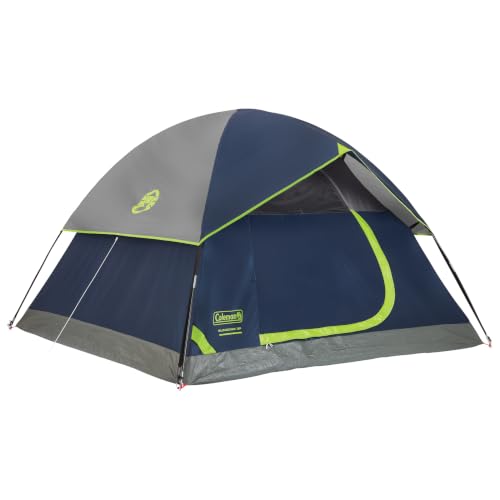
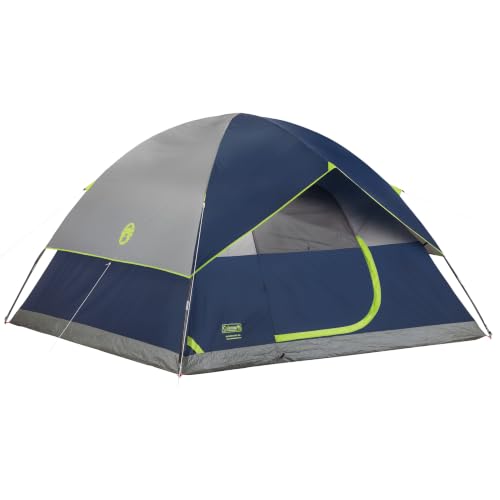
Best Budget Car Camping: Coleman Sundome
The Sundome is a cheap dome tent that sets up fast, with a vented rainfly and a simple pole system. It is a good first tent for fair-weather weekends and festival camping.
It is heavy for its size and less durable in strong wind and sustained rain.
Best Family Tent: Eureka Copper Canyon LX
This cabin-style tent has near-vertical walls for standing room, large windows and often room dividers on bigger sizes. It suits families who camp from the car.
It packs bulky and heavy, and tall walls catch wind.
Choosing Tent Size by Group
| Group | Tent capacity to buy | Floor area per person | Reasoning |
|---|---|---|---|
| 1 person, backpacking | 1-2 person | about 20 sq ft | Extra room for gear |
| 2 adults, backpacking | 2 person | about 14-17 sq ft each | Snug but light |
| 2 adults, car camping | 3-4 person | about 20-25 sq ft each | Space for bags and gear |
| Family of four | 6 person | about 15-20 sq ft each | Extra room for kids and bags |
How to Choose a Camping Tent
Capacity and the add-one rule
Tent capacities assume sleepers lying shoulder to shoulder. For comfort, buy one size above your group, such as a three-person tent for two adults.
Season rating
Three-season tents cover spring through fall, with mesh for ventilation. Four-season tents are heavier with stronger poles and less mesh for snow and strong wind.
Weight and packed size
For backpacking, aim for around 2-3 pounds per person. For car camping, weight matters less than space and ease of setup.
Waterproofing and ventilation
Look for a rainfly rated at 1,200 mm or more and seams that are taped. Good ventilation reduces condensation, which is the usual cause of wet tent interiors.
Setup time
Freestanding tents with color-coded poles go up in minutes. Practice at home before your trip.
Worked Example: Cost Per Night
A 450-dollar premium tent used 20 nights a year for 8 years is 160 nights, about 2.80 dollars per night. A 90-dollar budget tent used for 3 years at 10 nights per year costs about 3 dollars per night, but with less weather protection.
Tent Care and Common Mistakes
Always dry your tent fully before packing, or mold will form. Use a footprint to protect the floor, stake the tent out properly even in calm weather, and avoid storing it compressed for months. A common mistake is skipping the seam check; seal any leaking seams with seam sealer before a trip.
How to Pitch a Tent Correctly
Choose flat, well-drained ground and clear sharp stones and sticks. Lay down the footprint, assemble the poles, clip the tent body to them, then stake out the corners before attaching the rainfly. Stake guy lines at about 45 degrees away from the tent so the fly stays taut, and orient the narrowest end toward the wind. Practicing once in the backyard saves frustration at a dark campsite.
Reducing Condensation
Wet tent interiors usually come from breath and ground moisture rather than leaks. Open the vents, leave doors partly mesh-only in dry weather, avoid camping in low, damp hollows, and wipe the inside with a cloth in the morning before packing. Dry the tent fully when you get home.
Which Tent for Which Trip
| Trip | Priority | Best match |
|---|---|---|
| Multi-day hike | Under about 2 lb per person | Copper Spur HV UL2 or Hubba Hubba |
| Weekend with a car | Space and easy setup | Half Dome SL 2+ or Marmot Tungsten |
| First camping trip on a budget | Low cost | Coleman Sundome |
| Family of four or more | Standing room | Eureka Copper Canyon LX |
| Rainy climates | Vestibule space, rain protection | NEMO Dagger OSMO |
Frequently Asked Questions
How many people fit in a 4-person tent?
Realistically two to three adults with gear. Manufacturers measure capacity by sleeping pads side by side, with little room for bags.
What is a 3-season tent?
A tent designed for spring, summer and fall with good ventilation and moderate wind and rain resistance. It is not built for heavy snow.
How do I keep a tent dry?
Use a footprint, pitch on high ground, tension the rainfly and open vents to reduce condensation. Seal seams if needed.
Do I need a footprint?
It is optional but helps protect the tent floor and adds a layer of insulation against moisture. A cheap tarp cut to size can work.
How long do camping tents last?
Budget tents often last a few seasons, while quality tents can last ten years with care. UV and storing the tent wet are the biggest threats.