Key takeaways
- Initial activation force: how lightly you can press before a stroke registers. Under 3g is excellent for fine sketching; XPPen’s X3 Pro stylus and Wacom’s Pro Pen 3 both perform well here.
- EMR vs. battery pens: Wacom, Huion, and XPPen all use battery-free EMR pens now — no charging, lighter pen weight (typically 10–16g).
- Tilt support: ±60 degrees is standard on mid-range and up; it matters for shading with pencil-style brushes.
- Parallax: on pen displays, the gap between the pen tip and the actual pixels. Fully laminated screens (Artist Pro 16, Cintiq Pro) reduce this to under ~1mm visual offset; cheaper bonded designs show a visible gap near screen edges.
The best graphics tablets for most digital artists in 2026 are mid-size non-display models like the Wacom Intuos Pro Medium for pure stylus work, or 13–16-inch pen displays like the Wacom Cintiq 16 or XPPen Artist Pro 16 (Gen 2) if you draw directly on screen — the right pick depends on your desk space, budget, and whether hand-eye disconnection bothers you.
Our top picks
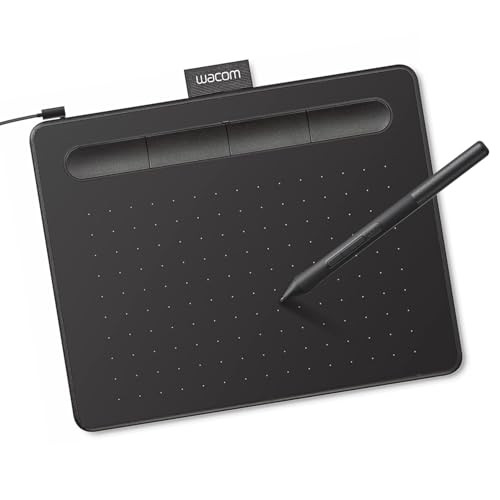
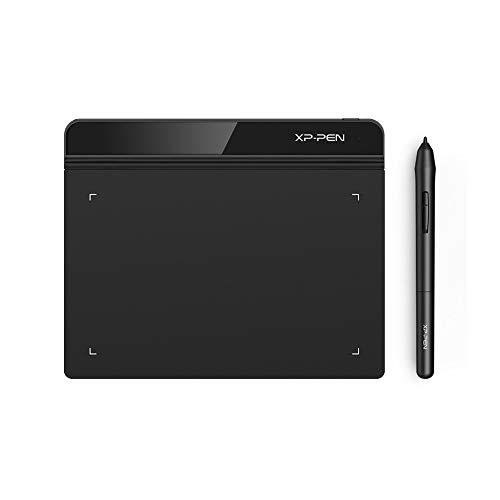


As an Amazon Associate we earn from qualifying purchases at no extra cost to you. Ratings are shown as listed on Amazon.
Display vs. Non-Display: The Core Decision
A non-display (screenless) tablet sits flat on your desk while you look at your monitor. It takes practice to coordinate, but it costs far less, never needs cables beyond a single USB connection, and lasts for years because there’s no screen or backlight to degrade. A pen display puts the screen under your pen — natural for sketching and line work — but adds cost, cable clutter, heat, and a display panel that will eventually show wear.
If your work is primarily photo retouching, line-art cleanup, or 3D texturing, a screenless tablet often serves you better. If you do illustration, comics, or concept art where stroke placement feels critical, a display is worth the money.
Comparison at a Glance
| Model | Type | Active Area | Pressure Levels | Shortcut Controls | Approx. Price Range |
|---|---|---|---|---|---|
| Wacom Intuos Pro Medium | Non-display | 224 × 148 mm | 8,192 | 8 ExpressKeys + Touch Ring | $350–$400 |
| Huion Inspiroy 2 M | Non-display | 266 × 165 mm | 8,192 | 8 keys + scroller | $70–$100 |
| Wacom Cintiq 16 | Display | 15.6″ (344 × 194 mm) | 8,192 | None on device | $600–$700 |
| XPPen Artist Pro 16 (Gen 2) | Display | 16″ (345 × 194 mm) | 16,384 | Separate shortcut remote | $500–$600 |
| Huion Kamvas Pro 19 | Display | 18.4″ (409 × 230 mm) | 16,384 | Remote + touch strip | $700–$900 |
| Wacom Cintiq Pro 22 | Display | 21.5″ (476 × 268 mm) | 8,192 | 8 rear ExpressKeys | $2,400–$3,000 |
Stylus Accuracy: What the Numbers Actually Mean
Pressure level marketing has inflated — 16,384 levels sounds better than 8,192, but beyond roughly 4,000 levels the difference is imperceptible in real strokes. What matters more:
- Initial activation force: how lightly you can press before a stroke registers. Under 3g is excellent for fine sketching; XPPen’s X3 Pro stylus and Wacom’s Pro Pen 3 both perform well here.
- EMR vs. battery pens: Wacom, Huion, and XPPen all use battery-free EMR pens now — no charging, lighter pen weight (typically 10–16g).
- Tilt support: ±60 degrees is standard on mid-range and up; it matters for shading with pencil-style brushes.
- Parallax: on pen displays, the gap between the pen tip and the actual pixels. Fully laminated screens (Artist Pro 16, Cintiq Pro) reduce this to under ~1mm visual offset; cheaper bonded designs show a visible gap near screen edges.
Active Area: Bigger Isn’t Always Better
Active area determines how much arm movement maps to your screen. A common mistake is buying a large tablet for a small monitor — oversized mapping makes cursor movement exhausting. Rough guidance:
- 24-inch monitor or smaller: a small/medium tablet (200–270mm wide active area) is ideal.
- 27-inch or dual monitors: medium to large (300mm+), or use driver-level screen mapping to restrict the area.
- Pen displays: the active area IS the screen, so size becomes a budget and desk-space question, not a mapping one.
Most drivers (Wacom, Huion, XPPen) let you map a portion of the tablet to a portion of the screen, so a large tablet can emulate a small one — the reverse isn’t possible.
Shortcut Controls and Software Compatibility
Physical shortcuts save more time than any spec upgrade. Non-display tablets put buttons on the bezel (8–10 keys plus a ring or dial). Many pen displays have moved controls off-device entirely — XPPen and Huion ship standalone shortcut remotes, which is actually better ergonomically since you place the remote wherever your non-drawing hand rests.
All the tablets above work with Photoshop, Clip Studio Paint, Krita, Blender, and Affinity apps on Windows and macOS. Linux support is real but uneven: Wacom’s open driver is solid, while Huion and XPPen require community drivers or third-party configuration. If you run Linux as your main OS, Wacom is the safe choice.
Desk Space and Ergonomics
Measure your desk before choosing. A 16-inch pen display needs roughly 400mm of width plus clearance for its stand, and most bundles include cables (HDMI + USB or a single USB-C) that need routing. A Cintiq Pro 22 effectively becomes your second monitor — plan around it.
Screenless tablets can sit in your lap or off to the side, and a medium model fits in a laptop bag. If you travel or work from a couch, non-display wins by default.
Decision Matrix
| Your Situation | Best Pick | Why |
|---|---|---|
| Beginner, under $150 | Huion Inspiroy 2 M or XPPen Deco M | Full stylus quality at lowest cost; learn before investing in a display |
| Retoucher / photo editor | Wacom Intuos Pro Medium | No screen needed; keyboard stays within reach |
| Illustrator, $500–$700 | XPPen Artist Pro 16 (Gen 2) | Laminated screen, low parallax, strong pen at mid-range price |
| Studio / full-time professional | Wacom Cintiq Pro 22 or 27 | Color-accurate 4K panels, best driver stability, longest support lifecycle |
| Small desk or frequent travel | Small non-display tablet | Fits in a laptop bag, works in your lap, one cable |
| Linux user | Wacom (any line) | Mature kernel-level driver support |
Ownership Realities
- What wears first: pen nibs (replace every 3–12 months depending on pressure; spares usually ship in the box, replacements cost a few dollars), then screen protectors on displays, then USB cables.
- Textured screen film: most pen displays ship with anti-glare film that adds paper-like friction — it also wears nibs roughly twice as fast. Matte glass models wear nibs slower but reflect more light.
- Cleaning: microfiber cloth only; alcohol-free cleaner on screens. Oil from your hand degrades the anti-glare coating if cleaned with harsh solvents.
- Common mistake: running a display at a non-native resolution for a “sharper” UI — always run native and adjust OS scaling instead, or strokes will jitter slightly off-tip.
- Cable check: single-cable USB-C setups require your laptop’s port to support DisplayPort alt mode and adequate power delivery — verify before buying, as it’s the most common setup failure.
FAQ
Is 16,384 pressure levels worth paying extra for?
No — it’s primarily marketing at this point. Prioritize low activation force, tilt accuracy, and laminated screens over pressure-level counts.
Can I use a graphics tablet without a computer?
No. These are input devices, not standalone computers — they need a PC or Mac to function. Standalone drawing devices are a different category (tablets like the iPad Pro).
How long does a graphics tablet last?
Non-display models routinely last 7–10 years since there’s no panel to degrade. Pen displays typically last 5–7 years before brightness or color shift becomes noticeable under daily use.