Key takeaways
- Resolution: A 15.6-inch 2560 × 1440 display produces noticeably sharper interface text and brush edges than a 1920 × 1080 panel. A 4K display is useful for detailed work but demands more graphics performance.
- Color coverage: Look for at least 100% sRGB coverage for general digital art. Wider-gamut screens can show more saturated colors, but your software, operating system, and export profile must be managed correctly.
- Lamination: A laminated screen places the display layer closer to the glass, reducing the gap between the pen tip and cursor. This reduces parallax near the edges.
- Brightness and reflections: Around 200–300 nits is common for pen displays. A matte surface reduces reflections but may add slight grain to the image.
- Viewing angle: IPS panels are preferable for shared critiques and color work because their colors change less when viewed off-axis.
The best drawing tablets depend on whether you value a natural screen-based workflow, a compact pen pad, or a portable all-in-one setup: the Wacom Intuos Pro Medium is the safest professional screenless choice, the Huion Kamvas Pro 16 (2.5K) is a strong value display tablet, and the iPad Pro with Apple Pencil Pro is the most mobile option.
Our top picks

As an Amazon Associate we earn from qualifying purchases at no extra cost to you. Ratings are shown as listed on Amazon.
Best drawing tablets by workflow
| Best for | Recommended product | Why it fits | Typical market range in 2026 |
|---|---|---|---|
| Professional desktop illustration | Wacom Intuos Pro Medium | Reliable drivers, precise pen tracking, eight shortcut keys, and a generous 8.7 × 5.8-inch active area | $300–$400 |
| Affordable screen drawing | Huion Kamvas Pro 16 (2.5K) | 15.6-inch laminated display, 2560 × 1440 resolution, and low parallax for direct-on-screen drawing | $350–$500 |
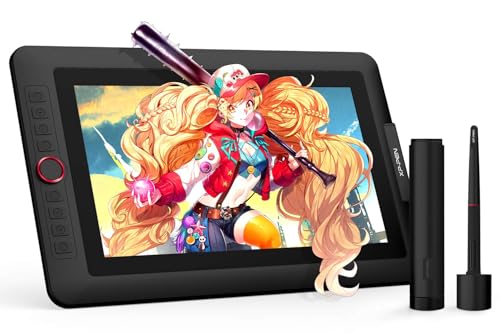
| High-resolution display illustration | XP-Pen Artist Pro 16 Gen 2 | 16-inch display options, strong color coverage, 16,384 pressure levels, and a battery-free stylus | $450–$650 |
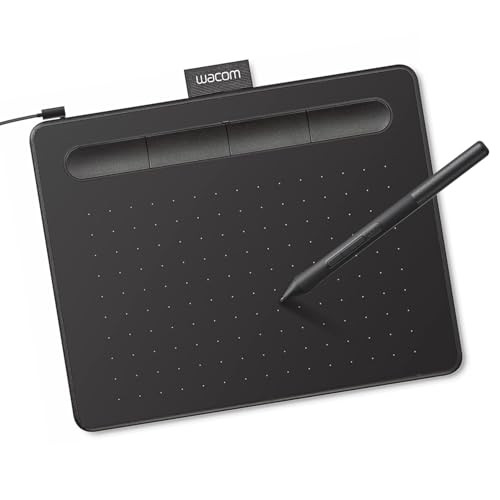
| Beginners and small desks | Wacom Intuos Small | Compact 6.0 × 3.7-inch active area, simple setup, and a low learning cost | $70–$110 |
| Travel and sketching away from a computer | iPad Pro with Apple Pencil Pro | Self-contained tablet, excellent screen, strong app support, and roughly 10 hours of typical battery use | $1,000–$1,700 for tablet and pencil |
Screen tablet or pen tablet?
A screen tablet lets you draw directly on the image. That feels immediately familiar to traditional artists and is especially useful for painting, masking, line art, and sculpting. The trade-off is cost, desk space, cable clutter, and a display that can become warm or reflective during long sessions.
A screenless pen tablet places the artwork on your monitor while your hand works on a separate surface. It takes several days to develop hand-eye coordination, but it is often more ergonomic because you can keep your head upright and your drawing hand relaxed. Screenless tablets also have fewer parts to fail and generally offer better value at the same active-area size.
For occasional editing or lettering, a small screenless tablet is sufficient. For several hours of daily illustration, choose a medium or large model unless your desk is unusually cramped. A tablet that is too small forces frequent wrist movements; one that is too large can make shoulder movement tiring.
Pressure sensitivity, latency, and pen feel
Pressure sensitivity
Most current drawing tablets advertise between 8,192 and 16,384 pressure levels. This figure matters less than the quality of the pressure curve. A well-tuned 8,192-level pen can feel more controllable than a poorly calibrated 16,384-level pen.
Beginners should look for adjustable pressure curves and a pen that responds to light strokes without requiring excessive force. Illustrators who use opacity or brush-size modulation will notice pressure behavior more than the headline number. Tilt support is also valuable for pencil, charcoal, and shading brushes, but it does not replace pressure sensitivity.
Pen latency
Latency is the delay between pen movement and the visible stroke. Modern wired display tablets and pen tablets are usually responsive enough for illustration, but latency can increase when a computer is overloaded, a display is connected through a poor adapter, or a drawing application is using a large, complex brush.
For a direct comparison, prioritize a laminated display, a stable driver, and a high-quality connection over small differences in advertised response time. A 60 Hz screen can still feel responsive, while a higher-refresh display is most noticeable during fast strokes and navigation rather than slow painting.
Display quality: what numbers matter?
- Resolution: A 15.6-inch 2560 × 1440 display produces noticeably sharper interface text and brush edges than a 1920 × 1080 panel. A 4K display is useful for detailed work but demands more graphics performance.
- Color coverage: Look for at least 100% sRGB coverage for general digital art. Wider-gamut screens can show more saturated colors, but your software, operating system, and export profile must be managed correctly.
- Lamination: A laminated screen places the display layer closer to the glass, reducing the gap between the pen tip and cursor. This reduces parallax near the edges.
- Brightness and reflections: Around 200–300 nits is common for pen displays. A matte surface reduces reflections but may add slight grain to the image.
- Viewing angle: IPS panels are preferable for shared critiques and color work because their colors change less when viewed off-axis.
The Huion Kamvas Pro 16 (2.5K) is a sensible middle ground: its 15.6-inch 2560 × 1440 IPS display offers more workspace detail than a basic Full HD pen display without the computer demands of 4K. The XP-Pen Artist Pro 16 Gen 2 is better suited to artists who want a sharper, wider-gamut display and are willing to spend more.
Decision matrix: match the tablet to your situation
| Your situation | Best tablet type | Useful target specifications | Reason |
|---|---|---|---|
| Under $120, learning digital art | Small screenless tablet | 6 × 3.7 inches or larger, 8,192 pressure levels, battery-free pen | Lowest cost without buying a display that may be outgrown |
| Daily desktop illustration | Medium screenless tablet | 8.5 × 5.5 inches or larger, shortcut keys, tilt support | Good balance of hand movement, desk space, and precision |
| Traditional painter moving to digital | 15.6-inch pen display | 2560 × 1440, laminated glass, 8,192 or more pressure levels | Direct drawing and enough resolution for detailed brushwork |
| Small apartment or shared desk | Portable screenless tablet or iPad | Under 1 kg for a pen tablet, or 11-inch tablet display | Easy to store and less dependent on a permanent workstation |
| Client sketches, travel, and classes | Standalone tablet | At least 128 GB storage and about 10 hours typical battery life | Works without a computer, display cable, or wall outlet nearby |
Head-to-head: the main recommendations
Wacom Intuos Pro Medium versus Huion Inspiroy 2 M
Both are screenless tablets with medium-sized work areas, but they target different buyers. The Wacom Intuos Pro Medium costs more because of its mature driver ecosystem, refined pen behavior, dial and shortcut controls, and broad compatibility with professional applications. It is the safer choice for a studio where interruptions are expensive.
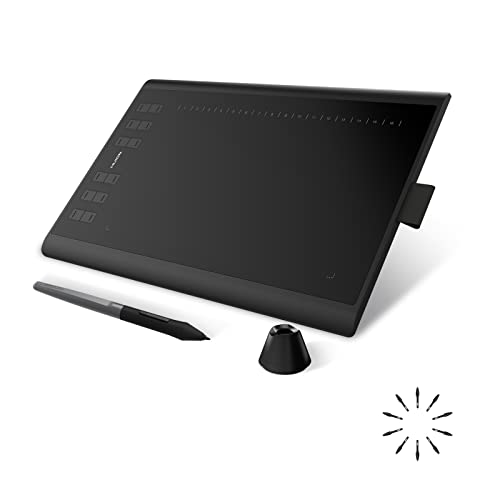
The Huion Inspiroy 2 M is more affordable and still provides a roughly 10 × 6.25-inch active area, 8,192 pressure levels, tilt support, and programmable controls. It is a better value for students and hobbyists who want a generous surface but do not need Wacom-specific workflow features.
Huion Kamvas Pro 16 versus XP-Pen Artist Pro 16 Gen 2
The Kamvas Pro 16 (2.5K) is usually the value pick. It offers a sharp 15.6-inch display, laminated construction, and a comfortable direct-drawing experience at a moderate price. The XP-Pen Artist Pro 16 Gen 2 is the more ambitious option, with higher pressure-resolution claims and display configurations aimed at artists who care more about color and fine detail.
Neither is truly portable in the iPad sense. Both need a computer, video connection, USB power, a stand or case, and several cables. Check your computer’s available USB-C and display outputs before buying; a single USB-C port does not always support video, power, and data simultaneously.
iPad Pro with Apple Pencil Pro versus a computer-connected tablet
The iPad Pro wins for portability, instant wake, and sketching in places where carrying a laptop and pen display is impractical. It also provides a high-quality color display and apps such as Procreate. A computer-connected tablet remains better for some desktop workflows, specialized plug-ins, large file management, and applications that depend on keyboard shortcuts or multi-monitor setups.
Calculate the real price, not just the tablet price. If a $1,200 standalone setup is used four times each week for three years, it works out to approximately $1,200 ÷ 624 sessions, or $1.92 per session before software and accessories. If you only sketch once a month, a $90 screenless tablet may be the more rational purchase.
Ownership costs and maintenance
Replacement pen nibs are the first consumable for many artists. A rough matte surface wears nibs faster than smooth glass, and pressing hard accelerates both nib and surface wear. Keep a few spare nibs, replace them when they become visibly shortened or catch on the surface, and avoid using a damaged tip.
- Clean the surface with a soft, dry microfiber cloth; use a lightly dampened cloth only when the manufacturer permits it.
- Do not spray cleaner directly onto a display or allow liquid near buttons and ports.
- Store the stylus in its holder rather than loose in a bag, where the tip can be bent.
- Install driver updates only from the manufacturer’s official support page.
- Back up custom shortcuts and pressure profiles before changing computers or reinstalling drivers.
- Use a proper stand for a pen display; balancing it on books can block vents and strain the cable.
The most common buying mistake is choosing by pressure-level count alone. Match the active area to your drawing posture, confirm compatibility with your operating system and preferred applications, then compare screen quality or portability based on how often you will actually use those features. For most desktop artists, the Wacom Intuos Pro Medium is the dependable long-term choice; for direct drawing on a budget, the Huion Kamvas Pro 16 (2.5K) offers the strongest balance of size, sharpness, and price.