Key takeaways
- For a student carrying a laptop all day: Acer Chromebook Spin 514, if you want a convertible touchscreen, or a lighter 14-inch Chromebook Plus model if weight matters more than tablet flexibility.
- For office work and lots of browser tabs: Acer Chromebook Plus Spin 714. Look for a configuration with 8GB or more of memory and a high-resolution screen.
- For home browsing on a larger screen: Lenovo IdeaPad Flex 5i Chromebook Plus, whose 14-inch convertible design balances screen space and portability.
- For a tighter budget: Choose a basic 14-inch Chromebook with a Full HD display, 8GB of memory if available, and a clearly stated automatic update expiration date—not simply the lowest-priced model.
Best Chromebooks for Students, Work, and Everyday Browsing
The best Chromebooks for most students and everyday users are 14-inch models with 8GB of memory, at least 128GB of storage, a 1080p-or-better display, and enough battery capacity for a full day away from an outlet. Choose a lighter 13- or 14-inch laptop for commuting, a 15- or 16-inch model for desk use, and a Chromebook Plus configuration when you regularly keep many tabs or apps open.
Chromebook models and configurations change frequently, so compare the exact screen, memory, processor, and update-support details before buying. The models below are established product lines; availability and specifications can vary by region and configuration.
Our top picks


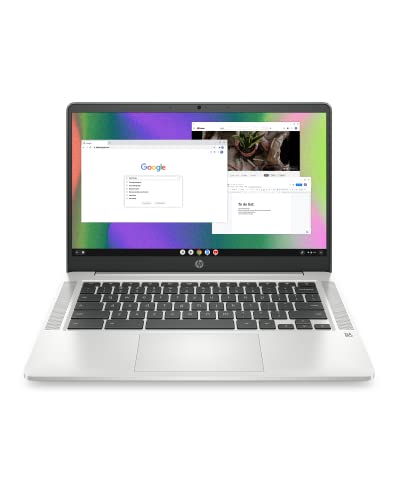
As an Amazon Associate we earn from qualifying purchases at no extra cost to you. Ratings are shown as listed on Amazon.
Quick picks by situation
- For a student carrying a laptop all day: Acer Chromebook Spin 514, if you want a convertible touchscreen, or a lighter 14-inch Chromebook Plus model if weight matters more than tablet flexibility.
- For office work and lots of browser tabs: Acer Chromebook Plus Spin 714. Look for a configuration with 8GB or more of memory and a high-resolution screen.
- For home browsing on a larger screen: Lenovo IdeaPad Flex 5i Chromebook Plus, whose 14-inch convertible design balances screen space and portability.
- For a tighter budget: Choose a basic 14-inch Chromebook with a Full HD display, 8GB of memory if available, and a clearly stated automatic update expiration date—not simply the lowest-priced model.
Compare the options that matter
The figures below describe common configurations or product-line characteristics, not every regional version. Manufacturers can change components between generations. Check the specific listing for weight, display type, memory, and update expiration before purchasing.
| Model or category | Screen and format | Typical weight | Memory and storage to seek | Best fit |
|---|---|---|---|---|
| Acer Chromebook Plus Spin 714 | 14-inch convertible; touchscreen; higher-resolution configurations exist | About 1.5 kg (3.3 lb), depending on generation | 8GB or more of memory; 128GB or more of storage | Work, multitasking, and note-taking |
| Lenovo IdeaPad Flex 5i Chromebook Plus | 14-inch convertible touchscreen | About 1.5 kg (3.3 lb), depending on configuration | 8GB memory; 128GB or more of storage | Home, school, and mixed use |
| Acer Chromebook Spin 514 | 14-inch convertible touchscreen | Roughly 1.4–1.6 kg (3.1–3.5 lb), depending on generation | Prefer 8GB memory; 128GB storage is a practical target | Students who value a flexible hinge |
| Basic 14-inch Chromebook | 14-inch clamshell; Full HD (1920 × 1080) is a useful target | Often around 1.4–1.8 kg (3.1–4.0 lb) | Choose 8GB memory when possible; 64GB may feel limiting offline | Browsing, video, and light schoolwork on a budget |
“Chromebook Plus” identifies a class of Chromebooks with minimum hardware and software capabilities, but it does not guarantee a premium keyboard, bright display, or long battery life. Check those separately.
Choose by how you will use it
For school and daily commuting
Prioritize weight, keyboard comfort, battery endurance, and a sturdy hinge over a very large screen. A 13- or 14-inch laptop is easier to carry and fits more classroom desks than a 15- or 16-inch model. A touchscreen is useful for annotating PDFs or using the laptop in tent mode, but it adds little if you mostly type and browse.
For essays, video calls, and several open tabs, 8GB of memory is a better target than 4GB. If the student works without reliable Wi-Fi, confirm that school tools support offline use and leave room for downloaded files; many entry-level Chromebooks have limited storage.
For remote work and office apps
ChromeOS handles browser-based email, documents, spreadsheets, and video meetings well. A comfortable keyboard and trackpad matter more over a long workday than a convertible hinge. Look for full-size keys, a firm space bar, and a layout that places frequently used keys where you expect them. If spreadsheets are central to your job, a larger 15- or 16-inch screen can reduce scrolling, though it is less convenient to carry.
Check compatibility before replacing a Windows or Mac computer. Specialized desktop software, some business VPNs, and advanced spreadsheet workflows may not have equivalent ChromeOS versions. Android and Linux apps can fill some gaps, but they are not automatic substitutes for every desktop program.
For browsing, streaming, and family use
A basic Chromebook can be a sensible home laptop for web browsing, streaming, online forms, and video calls. A Full HD display is noticeably more useful for reading and watching video than a low-resolution panel. If several people will share it, check whether the keyboard is spill-resistant and whether the chassis feels sturdy; these features vary by model and should not be assumed from the brand alone.
What specifications change everyday use?
- Screen: Full HD is a good baseline at 14 inches. An IPS or similar wide-viewing-angle panel is preferable for shared viewing. Brightness matters if you work near windows; resolution alone does not tell you whether a screen is bright or color-rich.
- Keyboard and trackpad: Read the layout and inspect the key dimensions when possible. A shallow keyboard can be tiring for long assignments, while a cramped trackpad is frustrating for work without a mouse.
- Memory: 8GB is a practical target for multitasking. With 4GB, a Chromebook may still handle a few simple tasks, but switching between many tabs and video calls can feel less smooth.
- Storage: 128GB gives more breathing room for offline files and apps. Cloud storage can reduce local storage needs, but it does not help when you are offline or have a slow connection.
- Battery: Treat manufacturer battery estimates as best-case guidance. Screen brightness, video meetings, Wi-Fi, and age all affect runtime. If you cannot find independent measurements for the exact configuration, plan to carry the charger on long days.
- Updates: Check Google’s automatic update expiration information for the exact model or platform. Support dates differ even among devices from the same manufacturer, and a newer purchase date does not necessarily mean a newer update-support window.
Battery life and ownership: plan for the real day
Estimate battery needs using your routine rather than a headline figure. For example, if classes and commuting keep you away from an outlet for eight hours, and you expect to use the screen actively for six of those hours, seek a model with credible independent reports of around eight hours or more of mixed use. That buffer helps account for brighter screens, calls, and battery aging; it is not a guarantee that the laptop will last a full day under every workload.
The parts most likely to show wear are the battery, keyboard, hinge, and charging port. Avoid carrying the laptop loose with heavy books pressing on the screen, and do not force a 360-degree hinge past its intended position. Clean the display with a soft, lightly dampened microfiber cloth, and keep liquids away from the keyboard even if a listing describes it as spill-resistant. Battery capacity declines over time, and Chromebook battery replacement options depend on the model and local repair availability.
Before you buy
- Compare the exact configuration, not just the model name: processor, memory, storage, screen resolution, and weight can differ.
- Confirm the automatic update expiration date and the laptop’s expected years of use.
- Check port selection. USB-C charging is convenient, but you may still need USB-A, HDMI, or an adapter for school and office accessories.
- Choose a 14-inch, 8GB-memory Chromebook for the safest balance of portability and everyday performance; move up to a larger screen for mostly desk-based work or down to a lighter chassis for frequent commuting.