Key takeaways
- Best overall for running: Shokz OpenRun. It is light, stable, sweat-resistant, and has a simple control layout that is easy to use while moving.
- Best for long sessions and everyday use: Shokz OpenRun Pro 2. Its longer battery life and fuller sound make it more versatile, although it costs more and is not the strongest choice for heavy rain.
- Best budget option: Shokz OpenMove. It offers the core open-ear experience at a lower general market price, with shorter battery life and a less refined fit.
- Best for very wet training: Mojawa Run Plus. Its high water-resistance rating is attractive for rain and poolside use, but availability, app support, and call performance may vary by region.
- Best alternative for runners wanting extra safety features: Suunto Wing. It combines open-ear audio with features such as integrated lights and head-motion controls, but its greater weight and higher price are not necessary for everyone.
The best bone conduction headphones for most runners are the Shokz OpenRun, while the Shokz OpenRun Pro 2 is the better choice for longer training, the Shokz OpenMove suits tighter budgets, and the Mojawa Run Plus is worth considering when maximum water resistance matters.
Bone conduction headphones leave the ear canal open, which makes them useful for road running, commuting, and everyday awareness. The trade-off is that they usually sound less full than sealed earbuds, leak some audio in quiet places, and cannot create the same passive noise isolation. The right choice depends less on headline volume than on how securely the headset stays put, how clearly it handles calls, and how often you will recharge it.
Our top picks


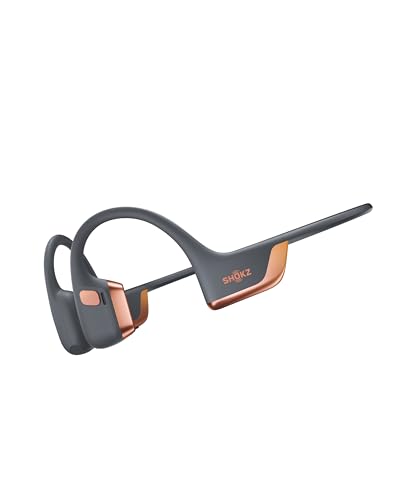

As an Amazon Associate we earn from qualifying purchases at no extra cost to you. Ratings are shown as listed on Amazon.
Best bone conduction headphones by situation
- Best overall for running: Shokz OpenRun. It is light, stable, sweat-resistant, and has a simple control layout that is easy to use while moving.
- Best for long sessions and everyday use: Shokz OpenRun Pro 2. Its longer battery life and fuller sound make it more versatile, although it costs more and is not the strongest choice for heavy rain.
- Best budget option: Shokz OpenMove. It offers the core open-ear experience at a lower general market price, with shorter battery life and a less refined fit.
- Best for very wet training: Mojawa Run Plus. Its high water-resistance rating is attractive for rain and poolside use, but availability, app support, and call performance may vary by region.
- Best alternative for runners wanting extra safety features: Suunto Wing. It combines open-ear audio with features such as integrated lights and head-motion controls, but its greater weight and higher price are not necessary for everyone.
Head-to-head comparison
| Model | Approx. weight | Advertised battery | Water resistance | Charging and useful extras | General market price |
|---|---|---|---|---|---|
| Shokz OpenMove | 29 g | Up to 6 hours | IP55 | USB-C charging; multipoint Bluetooth | About $70–$90 |
| Shokz OpenRun | 26 g | Up to 8 hours | IP67 | Magnetic charging cable; quick-charge support | About $100–$130 |
| Shokz OpenRun Pro 2 | About 30 g | Up to 12 hours | IP55 | USB-C charging; improved low-frequency system; multipoint Bluetooth | About $180–$200 |
| Mojawa Run Plus | About 29 g | Up to 8 hours | IP68 | Built-in storage on some versions; magnetic charging | About $130–$170 |
| Suunto Wing | About 33 g | Up to 10 hours | IP67 | Integrated safety lights; head-motion controls; optional charging powerbank | About $170–$200 |
Battery figures are manufacturer maximums measured under controlled conditions. Higher volume, cold weather, frequent phone calls, and multipoint connections can reduce real-world runtime. Water-resistance ratings also describe exposure limits, not permanent waterproofing; charging ports and seals still need care.
Comfort and fit while moving
Bone conduction headsets rest on the cheekbones just in front of the ears, with a band passing behind the head. There are no ear tips to seal or fall out, which is a major advantage for runners who dislike pressure inside the ear. They are also less affected by sweat loosening an earbud seal.
The main fit issue is the rear band. It should sit close to the back of the head without pressing into the neck or collar. If the transducers slide away from the cheekbones, voices and music become quieter and bass loses impact. A headset that feels comfortable while standing can bounce during intervals, so check fit with head turns, stairs, and arm movement rather than only during a short walk.
The OpenRun is particularly easy to recommend for smaller and average-sized heads because of its low weight and restrained band tension. The OpenRun Pro 2 adds hardware and may feel slightly more noticeable during long runs. Suunto Wing is more substantial, but its safety lights can be useful for early-morning or evening training. People who wear glasses should try the headset with their usual frames: the arms of glasses and the rear band can compete for the same space.
Sound leakage and the open-ear trade-off
Open-ear listening is not private listening. At moderate volume, someone sitting close by may hear parts of speech or music, especially in a quiet office, train carriage, or bedroom. Leakage becomes more noticeable when the headset is turned up to overcome traffic or wind.
In return, you retain awareness of cars, cyclists, announcements, and conversation. That makes these headphones a sensible option for outdoor routes, but it does not make them a substitute for paying attention to traffic. In noisy streets, the open design can also become a disadvantage: increasing volume improves audibility but increases leakage and may make the listening experience tiring.
Among these options, the OpenRun Pro 2 generally produces a fuller presentation at moderate levels, while the OpenMove is more obviously limited in bass. No bone conduction model matches the isolation or low-end impact of a well-sealed in-ear headphone. Choose bone conduction for awareness and comfort, not for the strongest music immersion.
Call clarity, controls, and daily convenience
Call quality depends on microphone placement and the surrounding wind. The OpenRun and OpenRun Pro 2 are practical for short calls in calm conditions, but a windy run can still make speech difficult for the other person. The Pro 2 is the stronger everyday choice when calls and podcasts matter frequently, while the OpenMove is better treated as a basic music-and-call headset.
Physical buttons are preferable during exercise because they can be located by touch. Before a run, pair the headset, set a comfortable volume, and learn the play, pause, skip, and call controls. Multipoint Bluetooth is useful if you regularly switch between a phone and a laptop, but devices connected to two sources can use more battery and occasionally reconnect unpredictably.
Some models offer onboard storage, allowing compatible audio files to play without a phone. This can reduce distractions on a run, but it is less convenient for streaming services and may require manufacturer software to transfer music.
How much battery life do you really need?
Suppose you run four times per week for 45 minutes and use the headset for two 30-minute calls on weekdays. That is:
4 × 0.75 hours + 5 × 0.5 hours = 5.5 hours per week.
An advertised six-hour headset would theoretically last about one week, but volume and call use reduce the margin. The OpenRun’s eight-hour rating gives a more comfortable weekly buffer, while the OpenRun Pro 2’s 12 hours can cover roughly two weeks for this pattern before charging. If your longest session is several hours, the Pro 2 or Suunto Wing makes more sense than choosing solely by purchase price.
Durability and ownership realities
- Clean the contact areas: Wipe the transducers and band after sweaty workouts with a slightly damp cloth, then let the headset dry before charging.
- Do not charge it wet: Water resistance protects against specified exposure; it does not make a wet charging connection safe.
- Protect the band: Repeatedly bending or storing the headset under heavy objects can stress the internal wiring and the flexible neck section.
- Expect the battery to age: Like other small rechargeable devices, capacity declines with cycles. The built-in battery is generally not a user-replaceable consumable.
- Keep sweat salts off the controls: Dried residue can make buttons feel stiff and may shorten the life of charging contacts.
- Check the rating before swimming: An IP rating does not automatically mean the headset is approved for swimming, underwater audio, or hot showers.
For a simple cost-per-use comparison, a $120 headset used three times per week for two years provides about 312 sessions. That is roughly $0.38 per session before considering charging, maintenance, or replacement. A cheaper headset is not better value if its fit causes you to stop using it; the model that stays comfortable and charged is usually the economical one.
Which one should you buy?
Choose the Shokz OpenRun if running stability, low weight, and a proven everyday design matter most. Choose the OpenRun Pro 2 if you will use the headset for long workdays, frequent calls, podcasts, and extended training, and you accept its higher price and lower water-resistance rating. Choose the OpenMove if you want to spend less and can live with six-hour battery life and less powerful sound. Pick the Mojawa Run Plus when high water resistance is the deciding factor, and consider the Suunto Wing if integrated visibility features are worth its extra weight and cost.
If you have ear pain, unusual sensitivity to vibration, hearing concerns, or symptoms that persist while using any headphones, stop using them and seek advice from a qualified healthcare professional. For everyone else, keep volume moderate, leave enough awareness for your surroundings, and treat open-ear headphones as a comfort-and-safety compromise rather than a replacement for attentive running.