Key takeaways
- Best all-rounder: JBL Boombox 3. A practical balance of output, battery life, and weather protection for patios, parks, and rooms where a conventional home speaker is too restrictive.
- Best for bass and outdoor gatherings: Sony ULT FIELD 7. Its ULT bass modes emphasize low frequencies, and its mic/guitar input makes it more adaptable for casual performances. It is substantial to carry, so it suits planned outings better than daily commuting.
- Best for maximum outdoor volume: Soundboks 4. Built as a large, high-output battery speaker, it is the pick when a crowd or open space matters more than compact size. Its weight makes it a two-handed carry for many people.
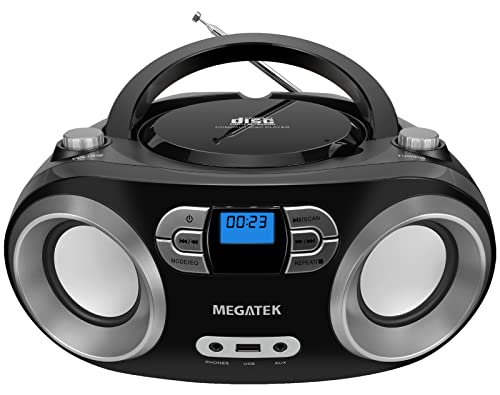
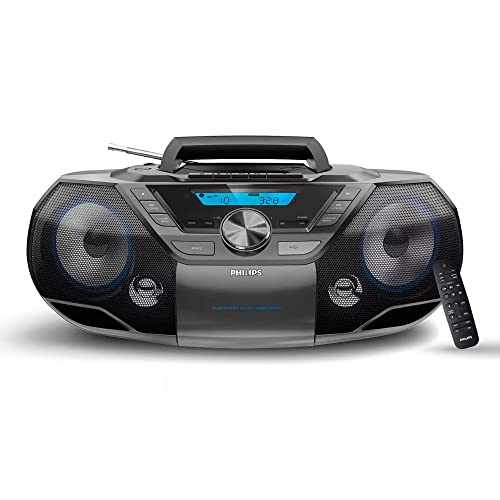
- Best traditional, budget-friendly option: Panasonic RX-D55. It plays CDs and radio and can run from mains power or batteries. It is better suited to kitchens, garages, and sheltered outings than wet or dusty environments.
Best Boomboxes for Big Sound at Home and on the Go
The best boombox for most people is the JBL Boombox 3: it combines powerful, bass-forward sound, a stated 24-hour battery life, and an IP67 dust- and water-resistance rating in a portable design. Choose the Sony ULT FIELD 7 for more bass and a guitar/mic input, the larger Soundboks 4 for sustained outdoor volume, or the Panasonic RX-D55 for an affordable, plug-in-first CD and radio system.
Best boomboxes by situation
- Best all-rounder: JBL Boombox 3. A practical balance of output, battery life, and weather protection for patios, parks, and rooms where a conventional home speaker is too restrictive.
- Best for bass and outdoor gatherings: Sony ULT FIELD 7. Its ULT bass modes emphasize low frequencies, and its mic/guitar input makes it more adaptable for casual performances. It is substantial to carry, so it suits planned outings better than daily commuting.
- Best for maximum outdoor volume: Soundboks 4. Built as a large, high-output battery speaker, it is the pick when a crowd or open space matters more than compact size. Its weight makes it a two-handed carry for many people.
- Best traditional, budget-friendly option: Panasonic RX-D55. It plays CDs and radio and can run from mains power or batteries. It is better suited to kitchens, garages, and sheltered outings than wet or dusty environments.
Size, battery, and weather protection compared
Dimensions and weights below are approximate manufacturer specifications; configurations and regional versions can differ. Battery figures are stated maximums, not guaranteed play times. Loud playback, bass boost, temperature, and battery age can reduce runtime.
Our top picks


As an Amazon Associate we earn from qualifying purchases at no extra cost to you. Ratings are shown as listed on Amazon.
| Model | Approx. size (W × H × D) | Approx. weight | Battery / power | Weather or use notes |
|---|---|---|---|---|
| JBL Boombox 3 | 48.2 × 25.7 × 20.0 cm | 6.7 kg | Up to 24 hours | IP67; dust-tight and suitable for temporary immersion under specified conditions |
| Sony ULT FIELD 7 | 51.2 × 22.4 × 22.2 cm | About 6.3 kg | Up to 30 hours | IP67; includes mic/guitar input and bass modes |
| Soundboks 4 | 66.0 × 43.0 × 32.0 cm | About 16.1 kg | Up to 40 hours at moderate volume | Large, rugged enclosure; not a substitute for an immersion-rated waterproof speaker |
| Panasonic RX-D55 | About 52.9 × 14.6 × 29.0 cm | About 4.3 kg | Mains or batteries, depending on setup | CD, radio, and cassette features; keep sheltered from rain and splashes |
What the specs mean in everyday use
Sound output and bass
Maximum loudness is not the same as useful sound quality. In a living room, a speaker that stays clear at moderate volume is often more enjoyable than one selected solely for maximum output. Outdoors, sound disperses without walls to reflect it, so a larger speaker needs more headroom to sound equally present across a group.
The JBL and Sony are portable, bass-capable options, but their voicing differs: the Sony’s ULT modes make bass a feature you can emphasize, while the JBL is a more general-purpose choice. The Soundboks is designed for higher output over a larger area. For any of these, strong bass uses more power and can become boomy near a wall or corner; move the speaker away from boundaries before turning up the bass setting.
Battery endurance: plan for the loudest hour
Manufacturers’ maximum runtimes are usually measured at moderate settings. If a trip lasts eight hours and you want a safety margin for louder moments, target at least 12 hours of realistic playback rather than treating a 24-hour claim as a full-day guarantee. For a battery-powered speaker used frequently, check whether its battery is replaceable: that can matter more to long-term ownership than a few extra hours in the initial specification.
Weather resistance and carrying comfort
An IP67 rating on the JBL and Sony indicates tested dust protection and water immersion under defined laboratory conditions; it does not mean every port can be left open or that salt water, detergents, or high-pressure spray are harmless. Close covers as directed, rinse off salt or sand with clean water when the manufacturer permits, and dry the unit before charging. The Soundboks’ rugged build helps with outdoor use, but its size and weight still make transport a real trade-off.
For carrying comfort, consider the whole route: stairs, public transit, uneven ground, and how far you must walk from a car. A handle does not make a 6–16 kg speaker feel lightweight. If you expect frequent long walks, a smaller portable speaker may be a better choice than a full-size boombox, even if it gives up some bass and output.
Choose by listening situation
| Your priority | Best fit | Why | Compromise |
|---|---|---|---|
| One speaker for home, patio, and occasional trips | JBL Boombox 3 | Strong mix of battery life, bass, and IP67 protection | Still heavy for long-distance carrying |
| Bass-forward music or plugging in a mic/guitar | Sony ULT FIELD 7 | Bass modes and performance-friendly input | Large footprint; loud bass reduces practical battery life |
| Outdoor gatherings where volume is the priority | Soundboks 4 | High-output format and long stated moderate-volume runtime | Bulky and heavy; check weather guidance before outdoor exposure |
| CDs, radio, and home use on a tighter budget | Panasonic RX-D55 | Traditional disc and radio playback without relying on Bluetooth | Not designed for wet outdoor use; older media-focused feature set |
Ownership details worth checking before you buy
Prices vary by country, sales, and product age. As a broad market guide, compact legacy-style CD boomboxes tend to sit in the lower price range, while large Bluetooth models with long battery life and weather protection generally cost several hundred dollars. High-output party speakers such as the Soundboks occupy a premium tier. Compare current local pricing alongside warranty and battery-service options rather than paying extra for a headline runtime alone.
Common wear points are the battery, charging port covers, control buttons, and handle or strap contact areas. Sand and grit can work into seams; wipe the enclosure with a soft damp cloth rather than abrasive cleaners, and do not charge a wet device. For battery longevity, avoid storing a rechargeable speaker fully depleted for months, and follow its manual for storage and charging temperatures.
Finally, check the inputs you will actually use. Bluetooth is convenient, but a CD player, radio tuner, wired audio input, or instrument connection can extend a boombox’s usefulness. If the speaker will live mostly indoors near an outlet, paying a premium for maximum battery endurance may make less sense than choosing better connectivity or a simpler mains-powered model.