Speakers that fill a large room or a house party are chosen by output, bass and coverage, not by how they look on a spec sheet. For parties, a portable or wheeled party speaker such as the JBL PartyBox Stage 320 class, the JBL Boombox 4 or the Sony ULT Tower 9 gives the most volume per unit of effort. For a permanent living room or open-plan space, a pair of efficient floorstanding speakers such as the Klipsch RP-8000F II plus a dedicated subwoofer such as the SVS PB-1000 Pro delivers louder, cleaner sound than any single-box speaker. This guide uses published manufacturer specifications and the standard physics of sound level, and it shows how to calculate how loud you really need to be.
Our top picks

 Soundcore Boom 2 by Anker
- Big Bass You Can Feel, Outdoors or In:…
- Clear, Balanced Sound at Any Volume: soundcore Boom…
- All‑Day Playtime, Plus Backup Power: Take soundcore Boom…


As an Amazon Associate we earn from qualifying purchases at no extra cost to you.
Quick comparison of the loud speaker options
| Model or class | Type | Key output spec | Battery | Price tier | Best for |
|---|---|---|---|---|---|
| JBL PartyBox Stage 320 | Wheeled party speaker | About 240 W, per JBL | Up to about 18 hours | Mid to premium | Garden and indoor parties |
| JBL PartyBox 330 / 520 class | Larger party speaker | Higher output, lights, mic input | Varies by model | Premium | Big groups, events |
| JBL Boombox 4 | Large portable | Two woofers, two tweeters, three passive radiators | Up to about 28 hours | Premium | Outdoor bass without wheels |
| Sony ULT Tower 9 | Tower party speaker | High output with ULT bass modes | Mains powered | Premium | Indoor parties with deep bass |
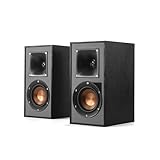
| Klipsch RP-8000F II | Passive floorstander | Dual 8 in woofers, about 98 dB sensitivity | Not applicable | Premium | Large living room, loud music |
| SVS PB-1000 Pro | Powered subwoofer | 12 in driver, about 300 W RMS | Not applicable | Premium | Deep, tight bass for any system |
The numbers above come from manufacturer pages and professional reviews. Battery figures are measured at moderate volume, and party speakers play for much less at full volume.
How loud is loud enough: the numbers
Sound level falls by about 6 dB each time you double the distance from a speaker in open space. Indoors, reflections reduce that drop, but the rule still helps. A party conversation sits at about 70 to 75 dB, so music at 85 to 90 dB at the listener is clearly louder but still comfortable for a few hours. Levels above 100 dB are very loud and can damage hearing in under 15 minutes without protection.
Take a worked example. A party speaker rated at 110 dB at 1 meter reaches about 110 minus 20 times the base-10 logarithm of the distance in meters. At 8 meters that is about 92 dB, and at 16 meters about 86 dB. So a single speaker covers a garden of about 15 meters with enough volume to dance to, but not much further without a second unit. Each time you add an identical speaker playing the same signal nearby, you gain about 3 dB. Two PartyBox-class speakers therefore add about 3 dB, which sounds modestly louder and helps with coverage, but the bigger gain is even coverage across the space.
| Room or space | Typical size | Suggested speaker setup | Reason |
|---|---|---|---|
| Living room | 200 to 350 sq ft | Pair of floorstanding speakers or one large party speaker | Moderate volume and coverage |
| Open-plan floor | 400 to 700 sq ft | Floorstanders plus subwoofer, or two party speakers | Large volume and long throw |
| Backyard | 20 by 30 ft and up | Large party speaker, raised on a stand | No walls to reflect sound |
| Garage or basement | 300 to 600 sq ft | Party speaker or floorstanders and subwoofer | Hard surfaces add loudness |
Best party speaker with wheels: JBL PartyBox Stage 320 and its successors
Spec line: about 240 W output, up to roughly 18 hours of battery, telescopic handle and wheels, light show, microphone and guitar inputs, per JBL. Newer PartyBox 330 and 520 models sit above it in output.
Best for: events and parties where you move the speaker between rooms or outdoors. Skip if: you need a speaker you can carry on a hike, or you want very refined sound for quiet listening.
- Pro: Wheels and a telescopic handle make heavy speakers manageable.
- Pro: Microphone and instrument inputs suit karaoke and live use.
- Pro: Built-in lighting adds atmosphere.
- Con: Heavy and bulky.
- Con: Bass can become boomy near walls.
Best portable bass speaker: JBL Boombox 4
Spec line: two woofers, two tweeters and three passive radiators, IP67-class protection and playtime up to about 28 hours, per JBL.
Best for: beach, camping, patio and backyard parties where you want large sound without a heavy wheeled box. Skip if: you want a stereo pair for a large indoor room.
- Pro: Deep bass for a portable speaker and a strong outdoor presence.
- Pro: Long battery and good water and dust protection.
- Pro: Carry handle and a robust build.
- Con: Premium tier and heavy for its category.
- Con: Not as loud as the largest PartyBox models.
Best tower-style party speaker: Sony ULT Tower 9
Spec line: mains-powered tower party speaker with Sony’s ULT bass modes, lighting effects, and karaoke and guitar inputs, per Sony.
Best for: indoor parties and large living rooms where you want strong bass and visual effects. Skip if: you want a portable speaker or one that works without wall power.
- Pro: Big sound and bass modes for dance music.
- Pro: Stands upright and takes little floor space compared with floorstanding hi-fi speakers.
- Pro: Karaoke and instrument inputs.
- Con: Needs mains power.
- Con: Premium tier and bass-heavy tuning that is less suited to critical listening.
Best big speakers for home: Klipsch RP-8000F II
Spec line: two-way floorstander, dual 8-inch copper-spun woofers, 1.25-inch titanium tweeter on a Tractrix horn, about 98 dB sensitivity, 8 ohm, per Klipsch.
Best for: large rooms, loud music and home theater with a receiver of 80 to 150 W per channel. These are the most obvious answer for best big speakers and best loud speakers for home. Skip if: you want a small footprint or dislike a bright horn tweeter.
- Pro: Very efficient, so volume comes easily even from modest amplifiers.
- Pro: Dual 8-inch woofers deliver strong midbass without a subwoofer in many rooms.
- Pro: Dynamic, lively sound that suits rock, pop and movies.
- Con: Large cabinets, around 45 inches tall.
- Con: Horn tweeter can be forward on bright recordings.
Best bass speaker upgrade: SVS PB-1000 Pro
Spec line: 12-inch driver in a ported sealed-front cabinet, roughly 300 W RMS amplifier, app control with room EQ presets, per SVS.
Best for: adding clean, deep bass to any floorstanding or bookshelf system in a medium to large room. This is the sensible answer for best bass speakers in a home context. Skip if: you live in a shared building where deep bass will annoy neighbours, or you do not have space for a cabinet of about 15 inches on each side.
- Pro: Tight, accurate bass that blends with the main speakers.
- Pro: App-based room tuning helps with placement problems.
- Pro: Suits music and movies equally.
- Con: Large compared with compact subwoofers.
- Con: Bass leaks through floors and walls, which matters in apartments.
Best speakers for large rooms: how to choose
- Measure the room. Multiply length by width. Under 250 square feet, a pair of stand-mounted speakers is usually enough. Over 400 square feet, plan for floorstanders, a subwoofer or a pair of party speakers.
- Decide whether the setup is fixed or movable. Fixed rooms suit floorstanders and a subwoofer. Movable parties suit wheeled or portable speakers.
- Check sensitivity. Speakers with 95 dB or higher reach loud levels with small amplifiers, while 85 dB speakers need much more power. Each 3 dB difference is equivalent to doubling amplifier power.
- Plan for bass. Large rooms lose low frequencies. A subwoofer rated down to about 25 to 30 Hz fills in effects and dance music.
- Consider hearing safety and neighbours. Check local noise rules and keep levels below about 90 dB for long events.
- Add a second speaker for coverage. For parties across two rooms or a large yard, two identical speakers placed at opposite ends give even coverage compared with one speaker at maximum volume.
Placement for best sound in a big space
Put speakers at ear height or higher, pointing slightly downward toward the crowd, because bodies absorb sound. Raise party speakers on stands or sturdy tables, which gives more even coverage and reduces boominess from floor reflections. Keep bass-heavy speakers 1 to 2 feet away from walls and out of corners. Corner placement boosts low frequencies by up to 6 to 9 dB, which sounds loud but muddy. Outdoors, place the speaker so it points toward the crowd and away from neighbouring houses.
Ownership realities: heat, battery and hearing
Running a party speaker at full volume for hours stresses amplifiers and batteries. Keep speakers out of direct sun, because lithium cells lose capacity when hot. Leave ventilation space behind powered cabinets. If a speaker plays distorted audio, reduce the volume and bass boost, since distortion damages tweeters faster than loud but clean sound. Charge the battery fully before an event, and store it at around half charge for long periods. Wipe wheels and handles after outdoor use. With home speakers, check the amplifier’s rating and avoid clipping, which is the most common cause of tweeter damage.
Home system versus party speaker: which route for your space
| Factor | Floorstanders plus subwoofer | Party speaker |
|---|---|---|
| Sound quality | Higher fidelity, accurate imaging | Loud and fun, less precise |
| Portability | Fixed in place | Wheels or a handle |
| Setup | Amplifier, cables, placement | Plug in or charge and play |
| Outdoor use | Not suitable | Designed for it |
| Extras | Home theater and stereo | Lights, microphone, guitar input |
| Typical cost tier | Premium for the full system | Mid to premium for one unit |
If you host a few parties a year and mostly listen at moderate volume, a party speaker is the better value. If you listen loudly every day, or watch movies in a large room, a home system is more satisfying and sounds cleaner at volume.
Bass in big spaces: why it disappears and how to fix it
Bass wavelengths are long. A 40 Hz note is about 28 feet from peak to peak, which is why small speakers in big rooms or outdoors sound thin: nothing reinforces the low frequencies. Indoors, room boundaries help, and placing a speaker or subwoofer near a wall or corner raises bass output. Outdoors, there are no walls, so a party speaker loses much of its bass as soon as you move away from it. To improve outdoor bass, place the speaker near a wall or fence, raise it off the ground slightly, and use the bass boost mode only if the speaker handles it cleanly. For indoor parties, avoid placing a bass-heavy speaker in a corner of a bare room, where bass becomes boomy; moving it a few feet along the wall often tightens the sound.
Linking multiple speakers for bigger coverage
Many party speakers can link wirelessly. JBL’s PartyBoost and Auracast, Sony’s Party Connect and similar systems from other brands let you connect dozens of compatible speakers, or two of the same model in stereo. Use stereo mode for a single room, where left and right separation matters. Use party mode, with the same signal on both speakers, for two rooms or a large outdoor area, so that someone moving between zones hears continuous music. Keep linked speakers on the same firmware version for reliable connection. If you want a wired setup for an event, an audio splitter and powered speakers on cables avoid wireless dropouts.
Power sources and cables for events
Mains-powered speakers need an outdoor-rated extension cord when used in a garden, and the connection should be kept off wet grass, ideally in a weatherproof cover. A single 15 A circuit supports several speakers, but check the total draw if you add lighting and a DJ controller. For battery speakers, bring a power bank or a charger and plan a swap point mid-event. If you use a microphone, keep it away from the speaker’s front to avoid feedback, and set the microphone volume lower than the music so speech is clear without a squeal. A basic speaker stand or a sturdy table at about 4 to 5 feet high improves coverage and keeps the speaker out of reach of drinks and small children.
Frequently Asked Questions
What are the best speakers for large rooms?
Efficient floorstanding speakers such as the Klipsch RP-8000F II paired with a subwoofer such as the SVS PB-1000 Pro are a strong home option. For movable parties, large wheeled speakers such as JBL PartyBox models are the practical choice.
How many speakers do I need for a house party?
One large party speaker suits a room of up to about 400 square feet. Two speakers at opposite ends give even coverage in an open-plan space or a yard.
How many watts do I need to be loud?
Watts alone mislead. A 100 W speaker with high sensitivity can be louder than a 200 W speaker with low sensitivity. Look at maximum sound pressure level or sensitivity as well.
Do I need a subwoofer for a party?
Many party speakers have strong built-in bass. A separate subwoofer helps in a home audio system, because floorstanders and bookshelf speakers do not reproduce very low notes at party levels.
Are big speakers worth it for a small room?
Usually not. Large speakers can overload a small room with bass, and a pair of well-placed bookshelf speakers with a small subwoofer sounds cleaner.
How can I protect my hearing at loud parties?
Keep levels at or below about 90 dB for long periods, take breaks, and consider earplugs designed for music. If you need to shout to be heard from an arm’s length away, the volume is too high.
More from Amazon
Programs that pair well with the guide above. Offers and eligibility are set by Amazon and may change.
Free shipping on eligible items, Prime Video and more. Eligible new members can start with a free trial.
Start a Prime free trialAd-free music streaming. Eligible new subscribers can start with a free trial.
Try Music Unlimited freeA Prime membership for ages 18-24 with a trial period. Eligibility is set by Amazon.
See Prime for Young AdultsAudiobooks and podcasts to listen to on the go. Eligible new members can start with a free trial.
Try Audible freeAs an Amazon Associate we earn from qualifying purchases.