Our Top Picks
The best snow roof rakes are the ones whose reach, blade and weight fit the roof you are standing under, and for most one-story houses that means a telescoping pole in the mid-teens to low-twenties of feet, not the longest model on the page. Everything below is ground-level work; if a plan involves climbing a snowy roof or a ladder in winter, stop and call a professional instead. This guide compares ten listings from their titles alone, and flags where a title does not tell you what you need. Nobody here has used these tools, so every spec is a seller claim until you check the product page.
Top picks at a glance

USA-Made Snow Roof Rake with Shingle Saver Rollers (20 Foot)


As an Amazon Associate we earn from qualifying purchases. Product prices and availability are accurate as of the date/time indicated.

Snow Joe Telescoping Roof Rake, Extendable Leaf & Snow Shovel with Poly Blade, 25 Inch Wide, RJ204M


As an Amazon Associate we earn from qualifying purchases. Product prices and availability are accurate as of the date/time indicated.

SNOWPEELER Premium Roof Rake for Snow Removal - 30 ft. Snow Removal Tool - Snow Rake for House Roof - Snow Roof Rake - Telescopic Heavy Duty Snow Shovel for Rooftop


As an Amazon Associate we earn from qualifying purchases. Product prices and availability are accurate as of the date/time indicated.

VEVOR Snow Roof Rake, 26 in Aluminum Blade, 7.5-20 ft Adjustable Roof Snow Scraper with Wheels, Anti-Slip Handle Snow Removal Tool, Lightweight House Rooftop Rake for Leaves Debris Removal


As an Amazon Associate we earn from qualifying purchases. Product prices and availability are accurate as of the date/time indicated.

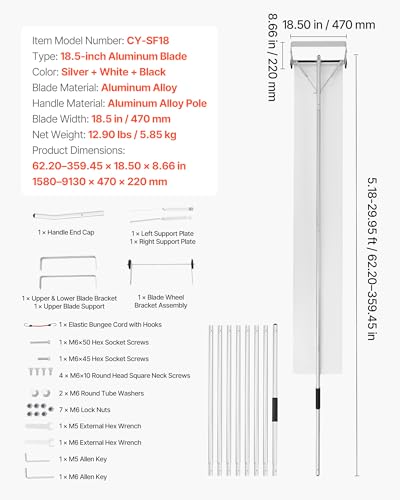
VEVOR Snow Roof Rake, 5.2-30 ft Adjustable Reach, 18.5'' Aluminum Blade, Roof Rakes for Snow Scraper with Wheels & Slide, Roof Snow Removal Tool for House Rooftop Leaves Debris Clearing




As an Amazon Associate we earn from qualifying purchases. Product prices and availability are accurate as of the date/time indicated.

Year-Round Roof Rakes for Snow, Leaves & Moss – 16” No-Scratch Foam Blade & Roof Brush, 4.7-24ft Telescoping Snow Rake for Roof, Solar Panels, RVs & Cars, C-Shaped Push/Pull -Patent Pending


As an Amazon Associate we earn from qualifying purchases. Product prices and availability are accurate as of the date/time indicated.
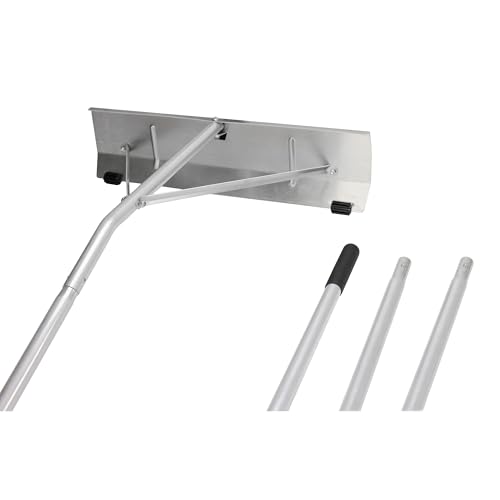
Extreme Max 5600.3207 Shingle-Saver 21' Roof Snow Rake with 24" Blade


As an Amazon Associate we earn from qualifying purchases. Product prices and availability are accurate as of the date/time indicated.

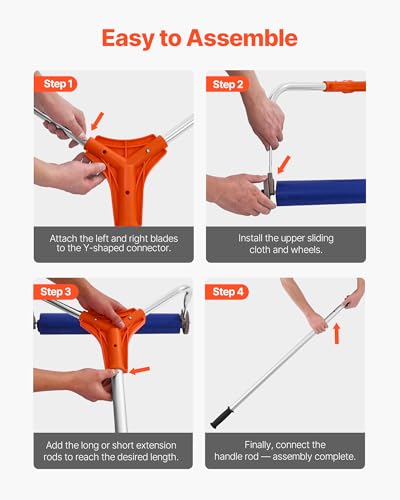
VEVOR Snow Roof Rake, 17 in Aluminum Blade, 4.1-17.2 ft Adjustable Roof Snow Scraper with Wheels & Slide, Lightweight Snows Removal Tool for House Rooftop Leaves Debris Clearing




As an Amazon Associate we earn from qualifying purchases. Product prices and availability are accurate as of the date/time indicated.

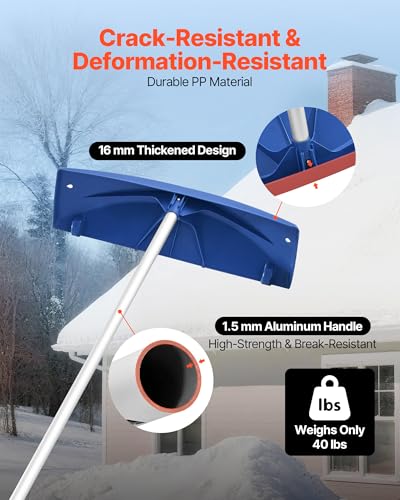
VEVOR Snow Roof Rake, 24 in PP Plastic Blade, 3.8-18.2 ft Adjustable Roof Snow Scraper with Wheels, Anti-Slip Handle Snows Removal Tool, Lightweight House Rooftop Rake for Leaves Debris Removal



As an Amazon Associate we earn from qualifying purchases. Product prices and availability are accurate as of the date/time indicated.

Extreme Max 5600.3288 Poly Roof Rake - 21' Reach with 23" Blade,Red


As an Amazon Associate we earn from qualifying purchases. Product prices and availability are accurate as of the date/time indicated.
| Model | Key point from title | Price tier | Best for |
|---|---|---|---|
| USA Handy Tools rake | USA-made, shingle saver rollers, 20 foot | Mid-range | Shingle roofs, buyers who want rollers |
| Snow Joe RJ204M | Telescoping, poly blade, 25 inch wide, leaf and snow use | Budget | Light snow and leaf cleanup |
| SNOWPEELER 30 ft | Telescopic heavy duty, 30 ft | Premium | Tall eaves |
| VEVOR 26 in aluminum | 7.5-20 ft, wheels, anti-slip handle | Budget | Wide blade, one-story homes |
| VEVOR 18.5 in aluminum | 5.2-30 ft, wheels and slide | Mid-range | Long reach, narrow blade |
| Leanaco year-round rake | 16 in foam blade and brush, 4.7-24 ft, solar panels, RVs | Mid-range | Delicate surfaces, light snow |
| Extreme Max 5600.3207 | Shingle-saver, 21 ft, 24 in blade | Budget | General shingle use |
| VEVOR 17 in aluminum | 4.1-17.2 ft, wheels and slide | Budget | Low single-story eaves |
| VEVOR 24 in plastic | PP plastic blade, 3.8-18.2 ft, wheels | Budget | Scratch-conscious roofs |
| Extreme Max 5600.3288 Poly | 21 ft reach, 23 in blade, red | Mid-range | Plastic-blade fans |
Roof rake basics before you shop
A roof rake is a long pole with a wide blade used from the ground to pull snow off the lowest few feet of a roof. The point is not to clear the whole roof. It is to remove the snow near the eave, where melting and refreezing tend to form ice dams, and to reduce load where it matters. The blade pulls snow toward you, so you must stand clear of the drop zone.
Three variables decide the fit: how far the pole must reach, how wide and strong the blade is, and what the blade is made from. Reach depends on eave height and how far up the slope you intend to clear. Wide blades move more snow per stroke but are heavier at the end of a long pole. Blade material trades toughness for roof friendliness; aluminum edges are sturdy but can scrape, while plastic or foam is gentler but may flex under packed snow.
Features that appear in these titles include wheels or rollers that touch the roof so the blade glides, slides that help snow fall away, and anti-slip handles. They sound similar but help in different ways, so look for what each listing says about its design. One more factor is pole material: aluminum is common, and aluminum conducts electricity, which makes power-line awareness essential.
What is changing in this category
Roof rakes used to be a fixed aluminum pole with a stiff blade. The newer listings lean on telescoping poles with wide adjustment ranges, so one tool can serve both a low porch and a taller eave. Several titles also stress wheels, rollers or slides, which suggests makers are responding to the shingle-scuffing complaint. Plastic, polypropylene and foam blades are appearing next to aluminum ones for the same reason.
Another shift is the multi-purpose pitch: snow today, leaves, moss or debris later, and even solar panels, RVs and car roofs. That breadth can be convenient, but a tool designed to do many jobs may be a compromise on the hardest one, which is moving heavy, wet snow. Treat “year-round” claims as a prompt to ask what snow conditions the product is rated for.
Finally, reach numbers have crept upward, with 24 and 30 foot figures common in titles. Longer is not automatically better, since weight and leverage grow with length. These are general observations, hedged, rather than claims about any specific brand or season.
How these ten were picked
We gathered the listings returned for “snow roof rake” when this guide was prepared and compared titles for reach, blade width, blade material and design notes. Prices were grouped into relative tiers within the set. Nobody on the team used or measured these units. Information comes from titles, published specifications and manufacturer documentation where it exists, and gaps are marked “check the listing”. Four of the ten are VEVOR models that differ mainly in blade width, blade material and reach, so treat them as one family with different sizes.
The ten rakes, one at a time
USA Handy Tools Snow Roof Rake with Shingle Saver Rollers, 20 Foot
The title is short: USA-made, shingle saver rollers and a 20 foot size. Rollers are meant to keep the blade lifted slightly off the roof surface, which is the feature to look for if you worry about scuffing shingles. It is priced in the mid-range of this set.
Scenario: a one-story ranch with asphalt shingles and eaves around nine feet. A 20 foot rake offers more extension than you will use, so you can set it shorter. Whether “20 foot” refers to maximum extension, total length or working reach is not stated.
- Pros: rollers named in the title; domestic manufacture claimed; mid-range price.
- Cons: blade width and material are not stated.
- Cons: the title does not say whether the pole telescopes.
Check the listing for blade width, pole material and weight. Question to ask before buying: is the 20 feet a fixed length, and how heavy is the rake when fully extended?
Who should skip it: shoppers who want a confirmed wide blade or a known pole material before ordering, because the title omits both. It also suits people who value domestic manufacture only if the product page backs the claim with details.
Snow Joe RJ204M Telescoping Roof Rake
The title calls it an extendable leaf and snow shovel with a poly blade, 25 inches wide. That dual-purpose wording hints at lighter duty; it may suit new snowfall and debris more than packed, icy loads. The listing does not give a reach figure, which is a notable gap for a product in this category.
Scenario: a modest house with a low porch roof that collects leaves in fall and light snow in winter. A wide poly blade keeps weight down and is less likely to damage roofing.
- Pros: wide blade; poly material; telescoping design; budget price.
- Cons: reach is not stated in the title.
- Cons: “leaf and snow shovel” wording suggests lighter duty.
Check the listing for extended length, pole material and whether the blade has wheels or a scraping edge. Ask: what snow depth and density is this designed for?
Who should skip it: owners of steep or tall roofs, or anyone who regularly faces heavy, packed snow. The leaf-and-snow wording makes it look like a seasonal convenience tool rather than a heavy-duty one, and the missing reach figure means you must measure your own need first.
SNOWPEELER Premium Roof Rake, 30 ft
The most expensive item and the only one marketed as premium. The title states 30 ft, telescopic and heavy duty, and calls it a rooftop snow shovel. A 30 ft pole is a long lever; it suits tall eaves but is hard to control, so confirm weight and balance.
Scenario: a two-story home where the gutter line is high and standard rakes fall short. Note that a long metal pole near service wires is a hazard, so inspect the area first and follow the manufacturer’s instructions.
- Pros: longest stated reach in the set; heavy-duty positioning.
- Cons: highest price tier.
- Cons: blade width and material not in the title.
Check the listing for weight, blade dimensions and pole material. Question: is 30 ft the maximum extension, and how stable is it at that length?
Who should skip it: owners of single-story houses, for whom a shorter, lighter rake will be easier to use and cheaper. A 30 foot tool is not a bargain if you only ever extend it to twelve.
VEVOR Snow Roof Rake, 26 in Aluminum Blade, 7.5-20 ft
This is the widest aluminum blade in the VEVOR group, with wheels, an anti-slip handle and a stated 7.5 to 20 ft adjustment. A 26 inch blade moves more snow per pull, but aluminum edges can scratch if dragged against roofing, so the wheels matter.
Scenario: a one-story house with a long eave. You work in short strokes and let the wheels carry the blade along the roof surface.
- Pros: wide blade; wheels; anti-slip handle; budget price.
- Cons: minimum extension of 7.5 ft means it is not compact for storage in the short setting.
- Cons: metal blade on delicate roofing needs care.
Check the listing for weight and whether the wheels are removable. Ask: how does the aluminum edge treat the roof at low temperatures?
Near-duplicate note: this listing is one of four VEVOR rakes that share a naming pattern. The differences are in the numbers (blade width, reach, material), so compare those rather than the brand name. If you want the widest aluminum blade in the family, this is the one the titles point to.
VEVOR Snow Roof Rake, 18.5 in Aluminum Blade, 5.2-30 ft
The VEVOR with the longest stated extension, 5.2 to 30 ft, paired with a narrower 18.5 inch aluminum blade, wheels and a slide. A narrower blade is easier to push at the end of a long pole, which is a reasonable trade for tall eaves.
Scenario: a two-story home with a modest budget. You can pull smaller loads at a time, which also lowers the strain on your arms.
- Pros: very long stated reach; narrow blade is easier to manage; wheels and slide.
- Cons: more strokes needed on a wide roof.
- Cons: mid-range price within this set.
Check the listing for weight and pole thickness. Question: how much flex does the pole show at the full 30 ft, and are there locking collars?
The minimum of 5.2 ft is also worth noting: a very wide adjustment range means the pole has many sections, and each joint is a place where flex or a loose lock can appear. If you never need more than 18 ft, a shorter model with fewer sections may feel firmer in the hand.
Leanaco Year-Round Roof Rake, 16 in Foam Blade and Brush
A different design. The title describes a no-scratch foam blade and roof brush, 4.7 to 24 ft, C-shaped push and pull, patent pending, for snow, leaves, moss, solar panels, RVs and cars. A foam blade is gentler on delicate surfaces but may be less effective on heavy or icy snow.
Scenario: a house with solar panels or a camper roof where scratches matter. Light, fresh snow is the likely sweet spot.
- Pros: gentle foam blade; multi-surface use; brush function.
- Cons: only 16 inches wide.
- Cons: “patent pending” is a seller claim, not a quality measure.
Check the listing for how the brush attaches, the foam’s rated load and whether you can use the pole for other tasks. Ask: is it suitable for wet, heavy snow or only dry, fresh snow? Follow the manufacturer’s instructions for solar panels.
Weaker class, plainly: for clearing a thick snowpack, a 16 inch foam blade is a different tool from the 24 inch hard blades in this set. It looks best as a light-touch brush for delicate surfaces and fresh snowfall, and it is not an obvious match for a roof carrying a heavy load. Never stand on a roof or vehicle to use it, and keep clear of power lines.
Extreme Max 5600.3207 Shingle-Saver Roof Snow Rake, 21 ft
The title names a shingle-saver design, 21 ft and a 24 inch blade. That combination of a wide blade, long reach and roller protection is a classic format, offered at the budget end of the set.
Scenario: a mid-size house with two stories at one corner. You need reach but also want protection for the shingles.
- Pros: wide blade; shingle-saver features; budget price.
- Cons: material is not stated in the title.
- Cons: 21 ft may be maximum extension, so confirm weight.
Check the listing for pole material, roller details and blade construction. Question: how does the model number compare to the poly version from the same brand?
Because the listing prints a model number, you can look up the manufacturer’s documentation to confirm the pole material, roller design and weight. That is an advantage over titles that give only marketing adjectives. Just make sure the number on the product page matches the number in the title.
VEVOR Snow Roof Rake, 17 in Aluminum Blade, 4.1-17.2 ft
The shortest-reach aluminum VEVOR. A 4.1 to 17.2 ft range and a 17 inch blade point toward single-story eaves and tight spaces. Storage is easier because the minimum length is short.
Scenario: a bungalow or a shed roof where a long pole would be awkward. Short and narrow tools are lighter to swing.
- Pros: compact; wheels and slide; budget price.
- Cons: narrow blade means more strokes.
- Cons: may not reach tall eaves.
Check the listing for weight and the locking mechanism. Ask: is 17.2 ft enough for my eave height plus a few feet of slope?
By the worked example below, a nine-foot eave needs about twelve feet extended, so this model has headroom for a one-story home with some margin. A two-story eave is outside its comfortable range. Who should skip it: anyone with eaves above roughly twelve feet.
VEVOR Snow Roof Rake, 24 in PP Plastic Blade, 3.8-18.2 ft
The plastic-blade sibling: 24 inches wide, polypropylene, 3.8 to 18.2 ft, wheels and an anti-slip handle. Plastic is gentler on roofing than metal but can crack in extreme cold, so check the manufacturer’s temperature guidance.
- Pros: roof-friendly material; wide blade; wheels; budget price.
- Cons: plastic may flex or chip under heavy loads.
- Cons: near-duplicate of the aluminum models, differing in blade material and width.
Scenario: a home with newer shingles or a coated metal roof, where scratch avoidance is the top priority. Check the listing for blade thickness and reinforcement. Question: does the plastic blade have a metal-reinforced edge or not?
Plastic blades can chip when they meet frozen gutters, hidden roof vents or chimney flashing, so work slowly near obstacles. If your roof has a lot of protrusions, a narrower blade is easier to steer around them, and this 24 inch width gives you less room for error than the 17 inch version in the same family.
Extreme Max 5600.3288 Poly Roof Rake, 21 ft Reach, 23 in Blade
A poly blade, 23 inches wide, with a 21 ft reach and a red color. Compared with the 3207 model, the main difference named in the title is the blade material and “poly” label. It sits in the mid-range tier.
- Pros: poly blade; wide; reach for two-story eaves.
- Cons: priced above several alternatives.
- Cons: roller or wheel features are not in the title.
Scenario: you want the Extreme Max format but prefer plastic over metal on the blade. Check the listing for rollers, weight and pole construction. Ask: does the poly blade have the shingle-saver feature or not?
Price context: it costs more than the 3207 shingle-saver sibling, and the title does not explain why. If the product page shows no additional features such as rollers or a thicker pole, the extra spend is mainly for the blade material and color. Compare the specification tables side by side before you commit, and favor whichever one lists its weight.
Buying guide: seven things to check
1. Reach, measured honestly
Titles list maximum extension, not working reach. You need enough length to put the blade several feet up the slope while you stand on the ground, plus some pole behind your hands for leverage. Add up eave height, distance from the wall and the slope you want to clear. Use the example further down.
2. Blade width
Wider blades clear more snow per pull but weigh more and bite deeper into heavy snow, which can make them hard to control at full extension. Narrower blades suit long poles and heavy snow. Titles here range from 16 to 26 inches.
3. Blade material
Aluminum is stiff and durable, plastic and polypropylene are gentler on roofing, and foam is gentlest and least robust. Cold weather stiffens roofing and plastics alike, so use light strokes and avoid forcing the blade.
4. Wheels, rollers and slides
These keep the blade off the roof surface or help snow slide free. They are not a substitute for care. Check whether the titles list wheels (several VEVOR models), rollers (USA Handy Tools, Extreme Max 3207) or neither (Snow Joe, Leanaco).
5. Weight and balance
A heavier tool is more tiring and harder to control. Weight is not in any title here, so check the listing. Long poles amplify small movements at the blade end.
6. Pole material and electrical awareness
Most extension poles are metal. Never use a metal rake near overhead lines, and keep clear of wires where they attach to the house. Follow the manufacturer’s instructions and local codes, and if unsure, hire a professional.
7. Grip, locking and storage
Telescoping poles use locks, buttons or twist collars. A lock that slips is a hazard. Anti-slip handles and cold-weather gloves matter. Short minimum lengths store more easily.
Worked example: how long a rake do you need?
Assumptions: a one-story house with a 9 ft eave, a 4-in-12 roof slope, you stand 3 ft out from the wall, your hands are about 4 ft off the ground, and you want to clear 5 ft up the slope. The blade point sits about 4.7 ft horizontally from the eave and 1.6 ft higher, so about 7.7 ft from you and 10.6 ft up. That is 6.6 ft above your hands. The straight-line distance is about 10.2 ft, plus roughly 2 ft of pole behind your hands, so you need about 12 ft extended. Any rake in the set that extends past 12 ft works. For a two-story 18 ft eave, the same math gives roughly 19 to 20 ft at a steep angle, which is tiring and unstable. These are labeled estimates, not measurements, and real roofs vary with overhangs and gutters.
| Spec concept | What to look for | Why |
|---|---|---|
| Extended length | Your eave height plus 3 to 6 ft of slope plus handle | Working reach is shorter than maximum |
| Blade width | 16 to 26 inches, matched to your strength | Wider means heavier pulls |
| Blade material | Aluminum, poly or foam | Toughness versus roof friendliness |
| Rollers or wheels | Named in the listing | Reduce contact with shingles |
| Pole lock | Secure collars or buttons | Prevent collapse mid-stroke |
Safety: what a roof rake cannot do
A rake is not a way to inspect or repair a roof. Stay out from under the section you are clearing, since snow and ice can slide down with force. Wear a hard hat and eye protection if you expect falling debris. Do not chop at ice. Do not work near power lines. If you see signs of structural stress such as sagging, new cracks or doors that stick, contact a qualified professional rather than relying on a pole. These are general cautions, and the manufacturer’s instructions for each tool come first.
Mistakes buyers make
Buying the longest pole by default is the most common one. Extra length means extra weight and wobble. Another is ignoring electrical hazards because the rake looks harmless. Buyers also pick a wide aluminum blade for a delicate roof, then scrape it. Others assume a plastic blade is indestructible and use it on thick ice. Many forget storage, and a 30 ft pole with a 5 ft minimum is awkward in a small shed. Skipping weight checks, since none of these titles give weight, is the last. Finally, some owners try to use the rake on ice dams; it is for snow, not ice.
Verdict by use case
For a one-story home with typical shingles, the USA Handy Tools, Extreme Max 3207 and VEVOR 26 inch listings cover the standard format. For gentler contact, the VEVOR plastic model and the Extreme Max poly rake are the matches, with the Leanaco foam design as the lightest-touch choice. For tall eaves, the VEVOR 18.5 inch and SNOWPEELER give the longest stated reach, though both demand care and electrical awareness. For small, low roofs, the VEVOR 17 inch is the compact choice. The Snow Joe is the entry-level option, with the caveat that its title gives no reach. When in doubt, choose the shortest reach that works for your roof.
Related guides
- Mechanical Keyboard For Programming
- Black Friday And Cyber Monday Deals
- How To Set Up A Home Media Server
Frequently asked questions
How long should a roof rake be?
Long enough to reach the first four to six feet of roof from the ground without leaning back or standing under falling snow. For a one-story eave around nine feet high, a rough estimate puts the needed extended length near twelve feet, while a two-story eave can push it toward twenty. Listing figures describe maximum extension, so check working reach, and choose the shortest rake that does the job because long poles are heavier at the end.
Is it safe to use an aluminum roof rake near power lines?
Treat any metal pole as a conductor. Do not use a long aluminum or steel rake near overhead service lines, and be aware of where the wires enter your home before extending the pole. If a line crosses the area you need to clear, leave it alone and call a qualified professional. Always follow the manufacturer’s instructions and local codes, and never touch a fallen or sagging wire.
Will a roof rake damage my shingles?
It can if you scrape down to the surface or pull hard against loose or brittle shingles. Wheels, rollers and plastic or foam blades are meant to reduce contact, and many users leave a thin layer of snow rather than scraping to bare roof. Cold weather makes roofing more brittle, so use gentle strokes. Check the manufacturer’s guidance for your roof type, and ask a roofer if the surface is old or damaged.
Can a roof rake remove ice dams?
No. Ice dams are solid ice built up at the eaves, and chopping or prying at them can damage the roof and gutters. A rake helps by removing snow before it melts and refreezes, which may reduce dam formation. If you already have a dam or water is entering the house, contact a qualified roofing or ice-removal professional rather than attempting removal yourself.
How often should I rake my roof?
There is no universal schedule. Rake after heavy accumulation rather than every flurry, and watch for signs of stress such as new cracks, sticking doors or creaking. Roof load capacity depends on structure, snow depth and density, so if you are worried about a large buildup, ask a qualified structural professional. Never climb a snowy roof to clear it yourself.
Is a foam or plastic blade better than aluminum?
It depends on the roof and the snow. Foam and plastic are gentler on shingles, coated metal and solar panels, but they can flex under dense snow and may be less durable in extreme cold. Aluminum is stiffer and tougher but can scratch if dragged hard. Check the manufacturer’s guidance for your roof surface, and use light strokes whichever material you choose.