Key takeaways
- Keep away from children and pets: Electronic traps deliver a shock. Place them where only mice can reach, such as behind appliances or in a tamper-resistant station, and follow the maker’s instructions.
- Do not use outdoors unless the maker says so: Water and electronics do not mix. Many models are rated for indoor use only.
- Handle catches carefully: Public health agencies advise wearing gloves, avoiding stirring up dust and disinfecting areas where rodent droppings have been found, because rodents can carry diseases. Follow guidance from your local health authority.
- Batteries: Use the type the maker lists, replace them when the indicator shows they are low, and dispose of them as required by local rules.
- Poisoned bait: Avoid combining poison with traps, as poisoned rodents can die inside walls and create odour and secondary risk for pets.
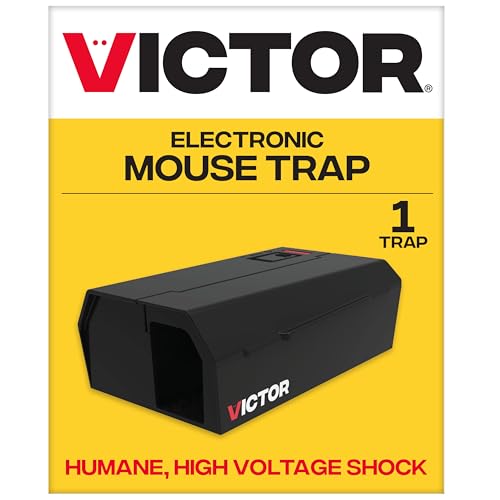
A battery-powered electronic mouse trap such as the Victor Electronic Mouse Trap suits homeowners who want a no-touch, enclosed way to dispose of mice indoors, while the Victor Smart-Kill Wi-Fi model suits those who want alerts about catches, and a higher-voltage option like the Rat Zapper line suits larger rodents or heavier problems. These products work by luring the animal into a chamber, where a plate completes a circuit and delivers a high-voltage shock. They are used indoors, away from children and pets, and they should be treated as one part of a plan that also includes sealing entry points and removing food sources. For a large or persistent infestation, a licensed pest control professional is the safer route.
Our top picks


As an Amazon Associate we earn from qualifying purchases at no extra cost to you.
How electronic traps work
Electronic traps have a covered chamber with a baited entry. When a mouse steps onto the metal plates, the circuit closes and the unit delivers a shock that the makers describe as killing quickly. An indicator light, often a blinking green or red LED, tells you whether the trap is ready or has a catch. Because the mouse stays inside the chamber, you empty the trap without handling the animal in most designs. Makers typically run the units on a small set of batteries, and some report that a set of batteries lasts for many catches.
Compared with snap traps, electronic units are enclosed and do not fire a spring, so many users find them less frightening to set and empty. They also cost more. Compared with glue boards, which many animal welfare groups and pest professionals discourage, electronic traps are generally viewed as the quicker option, though outcomes depend on correct use.
At a glance
| Trap | Best for | Key stated features | Limits |
|---|---|---|---|
| Victor Electronic Mouse Trap | Typical indoor mouse problems | Battery-powered enclosed chamber, indicator light, no-touch disposal, per the maker | Mice only; needs fresh batteries |
| Victor Smart-Kill Wi-Fi Electronic Mouse Trap | Hard-to-reach spots where you want alerts | Wi-Fi connectivity and phone notifications, per the maker | Premium tier; depends on your home network |
| Rat Zapper Classic | Rats and mice in garages or basements | Larger chamber and higher-power design, per the maker | Bulkier; more caution needed around children and pets |
| Victor Multi-Kill style multi-catch electronic traps | Several mice at once | Multiple-catch design, per the maker | Check the exact model; larger footprint |
| Traditional snap trap | Lowest cost option | Spring-loaded bar | Not enclosed; fingers and pets at risk when set |
Lineups and model names change, so read the exact listing for the product you are considering.
Victor Electronic Mouse Trap
This is the model most readers think of when they search for an electronic mouse trap. Victor describes a battery-powered enclosed trap that uses a high-voltage shock, with an indicator light that tells you when a mouse has been caught and a design that lets you tip out the catch without touching it. Reviewers who cover pest control products generally rate it as effective when placed along walls, where mice travel, and baited with a small amount of peanut butter or the maker’s suggested bait. Common complaints include battery drain if left on for months, the need to clean the plates, and the cost compared with a pack of snap traps.
It is a good fit for households that want to avoid spring traps, that have a mouse in the kitchen or pantry, and that can place the trap where children and pets cannot reach it.
Victor Smart-Kill Wi-Fi Electronic Mouse Trap
This version adds Wi-Fi connectivity and a mobile app, which sends a notification when a mouse is caught. The maker presents it for spots that are inconvenient to check, such as an attic or crawl space entry, and for landlords or property managers who maintain several locations. The premium comes from the connectivity features, and the trade-off is reliance on a network signal and a phone app. If you check your traps every day anyway, the standard unit is likely enough.
Rat Zapper Classic and larger units
Rat Zapper traps are designed with a bigger chamber so they can handle rats as well as mice, and the maker describes them as higher-power electronic units. Reviewers say they work well when placed along rat runways, though rats can be cautious about new objects, so patience is needed. Because larger units use more power and a larger entrance, follow the maker’s safety instructions closely and keep them well away from children and pets. If you suspect rats, contact a pest control professional, since rats often indicate an entry point or nearby food source that needs a wider fix.
Multi-catch electronic traps
Some electronic traps include a multi-catch design, which lets several mice be dispatched before emptying. They suit larger infestations or commercial spaces, where checking every day is difficult. They tend to be bulkier and higher in cost, and you should confirm the specifics for the exact model.
Safety and hygiene notes
- Keep away from children and pets: Electronic traps deliver a shock. Place them where only mice can reach, such as behind appliances or in a tamper-resistant station, and follow the maker’s instructions.
- Do not use outdoors unless the maker says so: Water and electronics do not mix. Many models are rated for indoor use only.
- Handle catches carefully: Public health agencies advise wearing gloves, avoiding stirring up dust and disinfecting areas where rodent droppings have been found, because rodents can carry diseases. Follow guidance from your local health authority.
- Batteries: Use the type the maker lists, replace them when the indicator shows they are low, and dispose of them as required by local rules.
- Poisoned bait: Avoid combining poison with traps, as poisoned rodents can die inside walls and create odour and secondary risk for pets.
Tips for better results
- Place traps flat against walls, with the entrance facing the wall, where mice run.
- Use a small amount of bait. Too much lets the mouse eat without stepping on the plates.
- Set several traps a few metres apart if you have signs of more than one mouse.
- Seal gaps around pipes and doors with steel wool and sealant, since mice can squeeze through very small openings.
- Keep pet food and crumbs sealed and cleaned up.
Budget tiers
- Budget tier: Snap traps and basic enclosed traps. They are inexpensive and effective but not no-touch.
- Mid-range tier: The Victor Electronic Mouse Trap. Reusable and clean to use.
- Premium tier: Smart Wi-Fi traps and multi-catch units. Convenience and capacity at a higher cost.
Pick X if …
| Pick this | If you … |
|---|---|
| Victor Electronic Mouse Trap | have a few mice indoors and want a no-touch, reusable trap |
| Victor Smart-Kill Wi-Fi | want phone alerts for hard-to-check locations |
| Rat Zapper Classic | deal with rats or need a larger chamber in a garage or basement |
| Multi-catch electronic trap | face a bigger problem and cannot check traps daily |
| Snap traps | want the lowest cost and can handle manual disposal |
Alternatives worth considering
- Enclosed snap traps: Covered spring traps that keep fingers and pets away from the mechanism. They cost less than electronic models.
- Live-catch traps: Humane options if you prefer to release the mouse. Release it far from your home, and check them often.
- Professional pest control: The best choice for large, recurring or rat infestations, or if you cannot find the entry point.
Frequently Asked Questions
Are electronic mouse traps safe around pets and children?
They are designed with an enclosed chamber, but they still deliver a shock and should not be placed where children or pets can reach them. Follow the maker’s safety instructions, and use tamper-resistant stations if needed. If a child or pet is shocked or you have concerns, contact a doctor or vet.
How often should I empty an electronic trap?
Check it daily, and empty it as soon as the indicator shows a catch. Leaving a dead mouse in the chamber causes odour and may attract insects. Wear gloves and follow the maker’s cleaning notes.
What bait works best?
Many makers suggest a small amount of peanut butter, and some sell their own bait. Use only a pea-sized amount so the mouse must step on the plates. If your trap is not catching anything, try a different bait or location.
Do electronic traps use a lot of batteries?
Makers list a set of batteries as lasting for many catches, but battery life depends on usage and how long the trap is switched on. Replace batteries when the indicator says so, and avoid leaving the trap on with no activity for months.
Can I use an electronic trap outdoors?
Only if the maker says the model is rated for outdoor conditions. Most are indoor-only because moisture can damage the electronics or create a hazard. For outdoor rodents, look for weather-resistant stations.
Will one trap solve my mouse problem?
Probably not. Mice usually come in groups, so use several traps, seal entry points and remove food sources. If the problem continues after a few weeks, hire a pest control professional.
More from Amazon
Programs that pair well with the guide above. Offers and eligibility are set by Amazon and may change.
Free shipping on eligible items, Prime Video and more. Eligible new members can start with a free trial.
Start a Prime free trialAd-free music streaming. Eligible new subscribers can start with a free trial.
Try Music Unlimited freeA Prime membership for ages 18-24 with a trial period. Eligibility is set by Amazon.
See Prime for Young AdultsAudiobooks and podcasts to listen to on the go. Eligible new members can start with a free trial.
Try Audible freeAs an Amazon Associate we earn from qualifying purchases.