Key takeaways
- Ten Anker power banks compared by capacity, output wattage and built-in cables, from a 10,000mAh pocket unit to 300W Prime models, with a watt-hour check.
For most people, the Anker Power Bank 20,000mAh with a built-in USB-C cable and 87W maximum output is the best all-rounder here: it covers phones, tablets and many laptops without a separate cable. The ten listings below span 10,000mAh pocket units to 26,250mAh 300W models with an optional base. Nobody on the team handled any of them, so the picks rest on listing titles and published specifications only.
Short answers by need
Our top picks



As an Amazon Associate we earn from qualifying purchases at no extra cost to you.
- All-rounder: the 20,000mAh, 87W bank with a built-in cable.
- Cheapest and smallest: the 10,000mAh PowerIQ unit.
- Best for laptops on the road: the 25,000mAh laptop power bank with 165W total output.
- Two built-in cables: the 20,000mAh 45W model.
- Wireless magnetic: the MagGo 10,000mAh Qi2 bank.
- Everything at once: the Prime 26,250mAh 300W, with or without the charging base.
Side-by-side summary
| Model | Key point from the title | Best for |
|---|---|---|
| 20,000mAh, 87W, built-in cable | 3 ports, 87W max | Phone, tablet and laptop travel |
| Laptop Power Bank 25,000mAh | 165W total, 3 USB-C at 100W each | Two laptops or a laptop plus phone |
| 10,000mAh PowerIQ | 5V/3A USB-C, compact | Pocket phone top-ups |
| Zolo 20,000mAh 30W | 30W, built-in USB-C | Phones and light use |
| Prime 26,250mAh 300W | 3-port, two-way charging, app control | Heavy multi-device carry |
| MagGo 10,000mAh | Qi2-certified 15W, MagSafe-compatible | Compatible iPhones |
| 20,000mAh 45W dual cables | Two built-in USB-C cables, plus USB-A | Charging two devices without extra cables |
| Prime 26,250mAh 300W with base | Charging base, up to 6 devices | Desk plus travel use |
| Nano 10,000mAh 45W | Retractable USB-C cable | Slim travel carry |
| Zolo 20,000mAh 45W | 45W, built-in USB-C | Faster Zolo option |
The ten power banks, one by one
Anker Power Bank, 20,000mAh, 87W Max (Built-in USB-C Cable)
The title lists 3 ports, 87W maximum output and a built-in USB-C cable, aimed at MacBook, iPhone 15 and 16 series, Samsung and Switch. The 87W peak is the highest of the 20,000mAh models here, which is why it is the all-rounder. Check the listing for how the 87W splits when multiple ports are in use. Because the cable is fixed, also look at its length in the photos, since a short lead can be awkward at a desk or in a cramped seat.
- Pros: cable built in; 87W ceiling; mainstream capacity.
- Cons: mid-price range; a built-in cable limits repair options if it frays.
Who it’s for: one-bag travellers carrying a phone and a laptop.
Anker Laptop Power Bank, 25,000mAh, 165W Total
This listing mentions 165W total output, 3 USB-C ports at 100W maximum each and built-in retractable cables, described as flight-ready. The retractable cables reduce what you pack. The title does not state weight, so check that if you are weight sensitive. It is the only listing here that explicitly pitches itself as a laptop bank, so it is the natural step up if the 87W model feels tight for your workload.
- Pros: three 100W-capable ports; retractable cables; high capacity.
- Cons: one of the pricier options; size and weight not in the title.
Who it’s for: people running a laptop and tablet at the same time.
Anker Power Bank, 10,000mAh PowerIQ (Black)
A compact USB-C unit with 5V/3A output. That output is plenty for phones but slow for laptops. The title does not mention a built-in cable, so plan to carry your own. At 10,000mAh it sits at the small end of the group and is the obvious fit for pockets. The title mentions iPhone, iPad and similar devices, so it is aimed at phone-class charging rather than anything larger.
- Pros: compact; very low cost; simple.
- Cons: no laptop-class output; cable not included in the title.
Who it’s for: daily commuters who only top up a phone.
Anker Zolo Power Bank, 20,000mAh, 30W
The title says 30W with a built-in USB-C cable, aimed at iPhone 15 to 17 and Galaxy phones. 30W is enough for phones and many tablets. This listing and the 45W Zolo further down look near-identical in the images, so differences come down to the wattage in the title. Capacity matches the 45W version, which makes this the choice if a lower price matters more than charging speed.
- Pros: large capacity at moderate cost; built-in cable.
- Cons: 30W is too low for most laptops.
Who it’s for: phone-first buyers wanting two-plus days of charge.
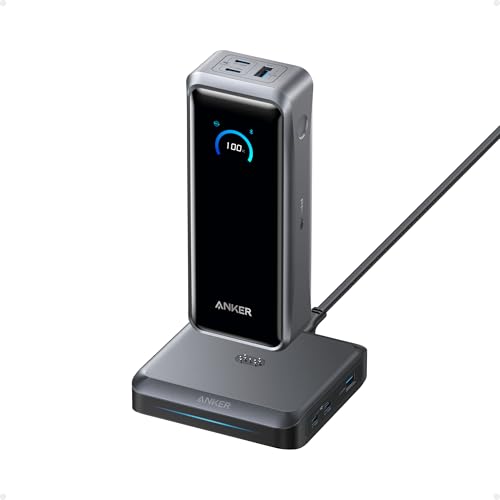
Anker Prime Power Bank, 26,250mAh, 300W (Base Not Included)
The title mentions three ports, two-way charging, TSA-approved status and app control, with the base sold separately. 300W is aimed at power users and the title says the base is not included. Confirm the shipping contents, since it reads like a premium device with a premium price. Two-way charging means the bank itself can be recharged quickly from a strong adapter, which the title presents as a headline feature, though you should confirm the adapter requirements on the listing.
- Pros: highest listed output; app control; two-way charging.
- Cons: expensive; base excluded.
Who it’s for: creators or travellers powering a laptop plus extras.
Anker MagGo Power Bank, 10,000mAh, Qi2 15W
The listing describes a slim Qi2-certified, MagSafe-compatible bank with an ergonomic design for iPhone 13 to 16 series. Magnetic wireless charging is convenient when you do not want a cable, though it is slower than wired charging. The capacity is the same as the PowerIQ but the price is higher because of the wireless feature. If you use a phone case, check that it is compatible with magnetic charging before you buy.
- Pros: clips to compatible phones; slim shape.
- Cons: costs more than similar-capacity cabled units; wireless is slower.
Who it’s for: iPhone owners who like a snap-on charger.
Anker Power Bank, 20,000mAh, 45W, Dual Built-in Cables
The title lists two built-in USB-C cables plus USB-C and USB-A ports. That mix means you can charge two devices without packing a lead. It is rated for phones, Galaxy and MacBook use. Built-in cables are convenient, though a damaged cable is harder to replace. The USB-A port is useful for older accessories such as earbuds cases or a small fan.
- Pros: two integrated cables; extra USB-A port; 45W.
- Cons: built-in cables limit reach; cable lengths not in the title.
Who it’s for: couples or travellers sharing a single bank.
Anker Prime Power Bank, 26,250mAh, 300W with Charging Base
Same capacity and output as the earlier Prime listing, but this one includes a fast charging base and says it powers up to 6 devices. It also lists two-way charging, flight-safe status and app control. The base suits a desk setup. If you do not want the base, buy the other listing instead. Because the base is the only difference, compare the two prices and decide whether a desk charger is worth the difference.
- Pros: base included; very high output.
- Cons: highest price here; the base adds desk space and bulk.
Who it’s for: buyers who want a desk charger that doubles as a travel bank.
Anker Nano Power Bank, 10,000mAh, 45W (Retractable Cable)
The listing says 45W, a built-in retractable USB-C cable and a compact travel design, for iPhone 16 and 17, iPad, Galaxy and Pixel. It is the small, fast option, trading capacity for pocket size. For short trips it removes the need for a separate cable. Because it shares the 45W figure with larger banks, it is a handy way to charge a tablet without carrying a bulky 20,000mAh brick.
- Pros: 45W in a 10,000mAh body; retractable cable.
- Cons: mid-price for the capacity; one cable only.
Who it’s for: day-trippers who want faster top-ups without extra gear.
Anker Zolo Power Bank, 20,000mAh, 45W
The shortest title in the group: 20,000mAh, 45W and a built-in USB-C cable. It shares an image with the 30W Zolo, so treat the two as variants and decide on wattage. At 45W, a small laptop or tablet is within reach. Check the listing for compatibility notes since the title is brief, and confirm the cable length and any included accessories.
- Pros: larger capacity at moderate cost; 45W.
- Cons: sparse title; same family as the 30W listing.
Who it’s for: buyers who want Zolo value with a bit more speed.
How we picked these
This list draws on listing titles, published specifications, manufacturer documentation and general buyer-review patterns for portable chargers. Nobody on the team used or measured these units. All outputs, capacities and certifications are the sellers’ claims as shown in the titles, and we point out where the title is silent so you can check the listing.
What to look for in an Anker power bank
Capacity in mAh versus watt-hours
The mAh figure is headline capacity; watt-hours is what airlines care about. A rough conversion is mAh multiplied by 3.7 volts, divided by 1,000. By that estimate, 20,000mAh is about 74Wh, 25,000mAh is about 92.5Wh and 26,250mAh is about 97Wh. These are nominal numbers, not label values, so check the product label and your carrier’s rules before flying.
Output wattage
Match the bank to the device. Phones generally charge on modest wattage, often under 30W. Tablets and small laptops tend to want 45W or more. A larger laptop may need 65W to 100W on a single port. If a bank’s maximum output is shared across ports, the figure per port drops when you plug in more than one device.
Built-in cable versus ports only
A built-in cable is one less item to lose. Ports-only models, such as the PowerIQ unit, let you swap cables when one breaks. Dual built-in cables are handy but add bulk.
Worked example: two devices, one bank
Say you carry a phone that charges at about 20W and a tablet that charges at about 30W. The 87W bank looks like it should cover both together if the limit is shared across ports (check the listing), while a 30W Zolo would have to slow one of them down. Add the two figures and keep the total under the bank’s stated limit.
Mistakes to avoid
Buying on capacity alone is the big one, since a 20,000mAh bank with weak output is slow for a laptop. Others: ignoring that a base is excluded or included, assuming Qi2 matches wired speeds, and skipping the airline rules. Treat near-duplicate listings, like the two Zolo variants, as one family and compare wattage first. Another slip is buying the biggest bank for a commute where a 10,000mAh unit would do, then carrying the extra weight every day. Finally, remember that listings can change, so recheck titles and included items at checkout.
Verdict
Pick the 20,000mAh 87W bank if you want a single, versatile choice. Go for the 10,000mAh PowerIQ for the smallest budget, and the 25,000mAh laptop bank or a Prime unit if you power more than one laptop-class device.
Related guides
- Wireless Chargers For Iphone And Airpods
- Black Friday And Cyber Monday Deals
- Mechanical Keyboard For Programming
Frequently asked questions
How many phone charges does a 20,000mAh power bank give?
As a rough rule, plan on about 60 to 70 percent of the rated capacity being delivered to a device, because of voltage conversion and heat. For a phone battery in the 4,000mAh range, that works out to around three charges from a 20,000mAh bank. This is an estimate from the rating, not a measured result, and real numbers vary with the phone, cable and charging speed.
Can an Anker power bank go on a plane?
Several titles here say flight-ready, TSA-approved or flight-safe, but airline rules still apply and they can change. Power banks generally go in carry-on bags, not checked luggage, and many carriers cap capacity by watt-hours. Work out watt-hours from the rating and check your airline’s policy before you fly. A 26,250mAh unit lands close to the commonly quoted 100Wh line.
Is 300W necessary for charging a laptop?
Rarely. Many thin laptops charge on well under 100W, and the 300W Prime models are aimed at buyers who want to power several devices at once. Look up your laptop’s charger wattage, then pick a bank whose single-port output meets it. The 87W, 100W-per-port and 45W options in this list cover many common cases.
What is the difference between the two Zolo listings?
The titles describe one Zolo as 30W and the other as 45W, both with 20,000mAh and a built-in USB-C cable. The images look the same in the data we have. If you want faster charging for a tablet or small laptop, the 45W figure is the relevant difference, but confirm ports and cable length on each listing before you choose.
Is a MagSafe-style power bank worth it?
It depends on how you use your phone. The MagGo listing describes a Qi2-certified, magnetic 15W wireless charger that clips to the back of compatible iPhones, which suits one-handed use. The trade-off is that wireless charging is generally slower and warmer than a cable, and capacity is lower than the cabled banks on this list.