Our Top Picks
 Sony WI-C100 Wireless in-Ear Bluetooth Headphones with Built-inOne Size2.76 x 0.75 x 6.3 inches0 PoundsCheck on Amazon
Neckband headphones suit people who want a wireless earphone that cannot fall out of a pocket or be lost on a bus: the two earpieces hang from a band that rests on the neck. In this set of nine listings, the Sony WI-C100 is the best-documented everyday pick, the DEWALT models target job sites, and the SHOKZ OpenRun Pro 2 is a different class altogether because it is an open-ear bone conduction design. The rest are low-cost neckbands that rely heavily on big battery claims, so treat those numbers with care.
Top picks at a glance
Sony WI-C100 Wireless in-Ear Bluetooth Headphones with Built-in Mic, Black | Up to 25 Hrs of Battery, Clear Hands-Free Calling, Easy Button Operation, Flexible Neckband, IPX4 Water Resistant


As an Amazon Associate we earn from qualifying purchases. Product prices and availability are accurate as of the date/time indicated.

CXK Neckband Bluetooth Headphones, 80Hrs Wireless Headphones with Mic | Neckband Headphones, Bluetooth 5.3 Earbuds, Stereo Bass in-Ear Headsets, IPX6 Waterproof, Neckband Earbud for Sport, Business


As an Amazon Associate we earn from qualifying purchases. Product prices and availability are accurate as of the date/time indicated.

SHOKZ OpenRun Pro 2 Bone Conduction Bluetooth Sport Headphones, Black | Bundle with Reflective Strip;DualPitch premium sound;Open ear awareness; Smart Mic; IP55; 12H battery; Running/Cycling/Hiking


As an Amazon Associate we earn from qualifying purchases. Product prices and availability are accurate as of the date/time indicated.

Lecefty Neckband Bluetooth Headphones, 200H Extra Long Playtime Wireless Stereo Neckband Earbuds with Microphone, Waterproof Balanced Armature Drivers in Ear Headset for Sports/Workout (Cyan Green)


As an Amazon Associate we earn from qualifying purchases. Product prices and availability are accurate as of the date/time indicated.

Rythflo Bluetooth Headphones, 150H Playtime Wireless Bluetooth Earbuds w/Mic in-Ear Magnetic Neckband Earphone, IPX7 Sweatproof Deep Bass Headset for Home, Traveling, Outdoor, Business Trips


As an Amazon Associate we earn from qualifying purchases. Product prices and availability are accurate as of the date/time indicated.

Neckband Bluetooth Earbuds, Wireless Bluetooth 5.4 Headphones with Microphone, Ultra-Lightweight Comfort, IPX6 Waterproof, Deep Bass Strong Beat, 80H Playtime, Magnetic Earphones (Orange)


As an Amazon Associate we earn from qualifying purchases. Product prices and availability are accurate as of the date/time indicated.
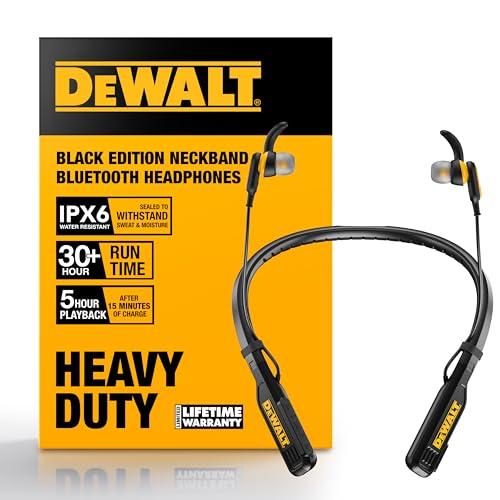
DEWALT Heavy Duty Magnetic Bluetooth Neckband Headphones, Wireless Around the Neck Earbuds w/30H Runtime+Noise Isolation, HandsFree Magnetic Wireless Earphones w/Mic Bluetooth Headsets - Black Edition


As an Amazon Associate we earn from qualifying purchases. Product prices and availability are accurate as of the date/time indicated.
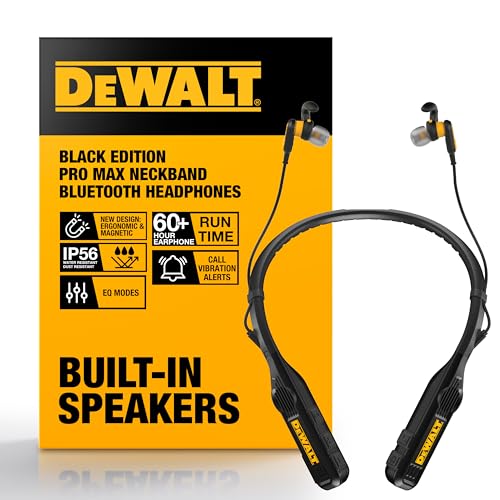
DEWALT Heavy Duty Black Edition 2-in-1 Neckband Bluetooth Headphones | w/Built-in Speakers, Jobsite Wearable Speaker & Around Neck, Wireless Headset, 60+ Hrs Hands-Free Music & Calls, Carry Pouch


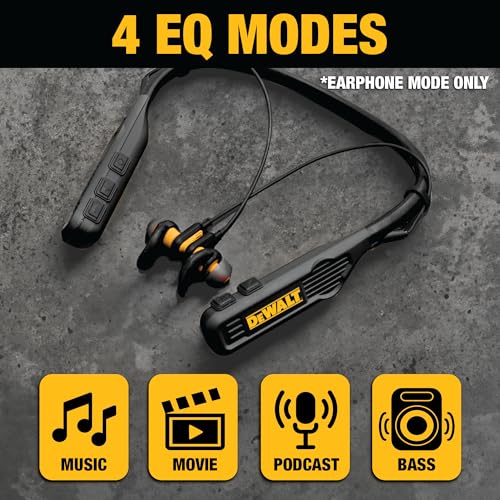


As an Amazon Associate we earn from qualifying purchases. Product prices and availability are accurate as of the date/time indicated.
| Model | Key point from the title | Price tier | Best for |
|---|---|---|---|
| Sony WI-C100 | Up to 25 hrs, built-in mic, IPX4, flexible neckband | Budget | Everyday calls and music |
| CXK Neckband | Bluetooth 5.3, 80Hrs claim, IPX6 | Budget | Sport on a tight budget |
| SHOKZ OpenRun Pro 2 | Bone conduction, open ear, IP55, 12H battery | Premium | Runners and cyclists |
| Lecefty Neckband | 200H claim, balanced armature drivers, waterproof wording | Budget | Workouts with long listening between charges |
| Rythflo | 150H claim, IPX7, magnetic earpieces | Budget | Travel and commuting |
| Generic Neckband (Orange) | Bluetooth 5.4, IPX6, 80H claim, magnetic | Budget | Casual use |
| DEWALT Heavy Duty Magnetic | 30H runtime, noise isolation, magnetic earphones | Mid-range | Workshops and job sites |
| DEWALT 2-in-1 | Built-in speakers, 60+ hrs, carry pouch | Mid-range | Jobsite music and calls |
| N18 (TONEMAC) | Bluetooth 6.0 claim, IPX7, 20H | Budget | Light everyday use |
What is changing in the neckband headphone category
Neckbands once looked like the default wireless option for sport. Over the last several years many buyers moved to true wireless earbuds, so the neckband category has become more specialized. It now serves people who prefer a band for comfort, those who lose small earbuds, and workers who want a durable accessory that hangs on the neck and can be tucked under a hard hat or collar.
Listings reflect that split. Several titles in this set emphasise huge playtime claims, which signal a value pitch to buyers who dislike charging. Others, like the DEWALT titles, emphasise rugged use. The SHOKZ listing appeals to people who want to hear their surroundings.
Bluetooth version numbers are also climbing in the titles: 5.3, 5.4 and even 6.0 appear. A newer version number can indicate newer radio capabilities, but it is not by itself a sound-quality guarantee, and the real result depends on the chip, codec support and the device you pair with.
A common caution applies across this segment: feature lists in marketplace titles are written by the seller. Playtime figures, water ratings and noise cancellation claims are worth cross-checking with the product page and independent feedback. Active noise cancelling is also unusual in this price class, and some titles say “noise isolation,” which is a passive effect from fit rather than electronic cancelling.
It also helps to separate what a neckband does well from what it does not. It keeps both earpieces tethered, it can hold a larger cell than a tiny earbud, and it makes taking a call simple because the earphones hang within reach. It does not disappear under a collar, it can bounce during hard running if the band is heavy, and it can feel warm in summer. Knowing which of those trade-offs matters to you narrows the nine listings quickly.
How we picked these
We selected the nine listings as a cross-section of the neckband market: a known-brand budget model, several low-cost neckbands, two job-site designs and one bone conduction option for comparison. Each is described from its title and general category knowledge. The Editorial team works from published specifications, manufacturer documentation and buyer reviews. Nobody on the team used or measured these units. Where a title is unclear, we say so and recommend checking the listing.
The nine listings
Sony WI-C100 Wireless In-Ear Bluetooth Headphones
The title packs in the essentials: Bluetooth, built-in mic, black color, up to 25 hours of battery, clear hands-free calling, easy button operation, a flexible neckband and IPX4 water resistance. It is the most conventional listing in the group, with a plain feature list and a battery claim that sounds believable.
It fits a commuter who wants simple controls and dependable calls without chasing big battery numbers. IPX4 is generally treated as splash resistance, so it can handle a sweaty walk, but do not take it swimming.
A typical use case: a daily train ride of 45 minutes each way, with a few calls. At 25 hours of claimed playback, that is over two weeks of commuting between charges under the stated conditions.
The wording “easy button operation” is a clue to the audience: people who want physical controls they can find without looking, rather than touch panels. That is useful on a bike path, in gloves or when your hands are full. Check the listing for what the buttons control, such as volume, track skipping and call answering, because the title only says they are easy.
- Pros: realistic battery claim; button operation; mic for calls.
- Cons: no stated noise cancelling; basic feature list.
Check the listing: Bluetooth version, charging port and included ear tips. Ask before buying: do I need more than splash resistance?
CXK Neckband Bluetooth Headphones
The title states an 80Hrs wireless claim, a mic, Bluetooth 5.3, stereo bass, in-ear headsets, IPX6 waterproofing and use for sport and business. It is a low-cost listing that leans on playtime and a modern Bluetooth number.
A figure of 80 hours is far above what the better-documented listings claim, so check how the maker reached it. The IPX6 rating suggests resistance to strong water jets under the conditions defined by that rating, though real-life wear varies.
It is a reasonable candidate if you want a sport neckband for sweaty sessions at the lowest cost and you are comfortable with an unfamiliar brand. The title describes use “for Sport, Business,” which is broad. Before buying, search the product page for the earpiece weight and the cable thickness, since a heavy band can bounce when you run.
- Pros: low price tier; IPX6 wording; Bluetooth 5.3 in the title.
- Cons: unverified playtime claim; unknown brand.
Check the listing: how battery hours are defined and what the return policy says. Ask before buying: is 80 hours standby or playback?
SHOKZ OpenRun Pro 2 Bone Conduction Bluetooth Sport Headphones
This one is not a classic neckband. It is a bone conduction design sold as a bundle with a reflective strip, with DualPitch sound, open ear awareness, a smart mic, IP55 and a 12H battery claim, aimed at running, cycling and hiking. Bone conduction sends sound through the cheekbones, leaving your ear canals open.
Open-ear awareness is valuable outdoors, since you can hear traffic and conversation. Sound in noisy places can be thinner than from sealed in-ear tips. This is a general trade-off, not a statement about this listing. The premium tier makes sense only if open-ear design is your priority. See our bone conduction headphones guide for more detail.
The bundle with a reflective strip points to early-morning and evening outdoor use, where being seen matters as much as hearing. A 12-hour claim is shorter than many neckbands here, but it is in line with the 25 and 30-hour listings once you allow for different design goals. If you swim or shower, do not assume this suits those uses; the IP55 code in the title is about splashes and dust, not immersion.
- Pros: open-ear design; IP55 rating stated; bundle includes reflective strip.
- Cons: highest price in the set; shorter battery claim than the neckbands.
Check the listing: fit guidance and charging method. Ask before buying: do I want awareness more than isolation?
Lecefty Neckband Bluetooth Headphones
The title advertises 200H of extra long playtime, wireless stereo neckband earbuds with a microphone, waterproof balanced armature drivers and use for sports and workouts, in Cyan Green. It does not state a water rating, so “waterproof” has no standard definition here.
Balanced armature drivers are a design type often associated with detail in small earphones, but the title does not give enough information to say how this pair sounds. A 200-hour claim is extreme; treat it as marketing until the page explains it.
Someone who exercises daily and hates charging is the buyer this listing speaks to. If the playtime claim turns out to be real, you would charge rarely. If it is optimistic, you will find out within the first week, so keep the return window in mind. The lack of an IP code is the practical weak point, because “waterproof” without a rating is an invitation to read more before committing.
- Pros: low price; colour option; claimed driver type.
- Cons: no IP rating; extreme battery number.
Check the listing: what the 200H figure refers to. Ask before buying: what water rating does the page actually give?
Rythflo Bluetooth Headphones
Rythflo describes 150H playtime, wireless earbuds with a mic, magnetic neckband earphones, IPX7 sweatproofing, deep bass and use at home, while travelling, outdoors and on business trips. Magnetic earpieces clip together so they hang neatly around the neck when you pause.
IPX7 is a stronger rating than IPX4 and appears here on a low-cost listing, which is positive on paper. The title’s “Bluetooth Headphones” wording and the “Earbuds” label overlap, so check that you are buying a neckband style.
Consider a frequent traveller who wants earphones that stay around the neck through security lines and airport waits. Magnetic earpieces make that easy, and the large playtime claim would mean fewer chargers on a trip, if it holds. Pack the charging cable you need, since the title does not identify the port, and keep the earphones dry in damp climates even though the IPX7 label is encouraging.
- Pros: IPX7; magnetic earpieces; broad use cases.
- Cons: heavy playtime claim; little brand information.
Check the listing: Bluetooth version, charging port and eartip sizes. Ask before buying: is this really a neckband?
Generic Neckband Bluetooth Earbuds (Orange)
The listing lists Bluetooth 5.4, a microphone, ultra-lightweight comfort, IPX6 waterproof rating, deep bass, 80H playtime and magnetic earphones, in orange. The brand field shows “Generic,” so there is no identifiable maker in the title.
Without a brand it is harder to judge support or warranty, which affects what happens if one earpiece stops working. The bright color can be a practical bonus for visibility outdoors.
The most important question for this type of listing is who stands behind it. Look at the seller’s name, shipping origin and return terms before looking at features. The orange finish might help you find the earphones in a gym bag, and the lightweight claim is helpful if you dislike a heavy band. Both are small bonuses next to warranty clarity.
- Pros: low price tier; Bluetooth 5.4 claim; IPX6.
- Cons: no brand; support unclear.
Check the listing: seller information and warranty. Ask before buying: who will handle a return?
DEWALT Heavy Duty Magnetic Bluetooth Neckband Headphones
This DEWALT model is aimed at work: heavy-duty construction, magnetic earphones, 30H runtime, noise isolation, a mic and a Black Edition finish. “Noise isolation” is passive, relying on how the tips seal in the ear canal.
It is a mid-range choice for people who spend the day in a garage or on a site and want a neckband that can be pulled down and clipped together. Hearing protection standards are a separate matter. If you work around loud machinery, follow your workplace safety rules and do not treat these as hearing protection.
A practical scenario: a technician who moves between a vehicle, a workshop and customer sites, and needs earphones that can hang on the neck without tangling. Magnetic earpieces help here. Dust and moisture exposure on job sites is common, yet the title does not give an IP code, so confirm whether the maker states any protection level before relying on it in harsh conditions.
- Pros: 30H claim is more modest than some rivals; rugged positioning; magnetic clip.
- Cons: mid-range tier; no water rating in the title.
Check the listing: water or dust rating and included accessories. Ask before buying: do I need workplace-approved hearing protection instead?
DEWALT Heavy Duty Black Edition 2-in-1 Neckband
The 2-in-1 label is the difference. The title lists built-in speakers, a jobsite wearable speaker mode, around-the-neck wear, a wireless headset, 60+ hours of hands-free music and calls and a carry pouch. It is both earphones and a small speaker worn on the shoulders.
That is an unusual combination and suits someone who wants shared music in a work area without a separate speaker. Playing audio from a body-worn speaker may disturb others, so use judgment in shared spaces.
Because this is two products in one, ask how each mode behaves. Do the speakers play at the same time as the earphones? How do you switch? How loud is the speaker mode, and does it leak into the microphone on a call? None of those answers are in the title. A body-worn speaker also adds weight to the shoulders, so consider whether you will wear it for hours.
- Pros: speakers plus headset; carry pouch; long claimed runtime.
- Cons: bulkier concept; sound quality of the speakers unknown.
Check the listing: how the speaker and earphones switch. Ask before buying: will I actually use the speaker mode?
N18 Neckband Bluetooth Earbuds (TONEMAC)
N18 lists Bluetooth 6.0, a microphone, ultra-lightweight comfort, IPX7 waterproofing, deep bass, 20H playtime and magnetic earphones. Its 20H claim is the most modest of the low-cost group, which can make it more believable than the 150H and 200H titles.
Bluetooth 6.0 on a very low-cost listing is something to verify on the product page. A newer version name does not guarantee better range or sound.
The N18 is a decent test of the principle that smaller claims are easier to believe. Twenty hours is plenty for a few days of commuting. Because the title lists a very new Bluetooth version and a water rating on a low-cost listing, read buyer feedback specifically about connection stability and earpiece durability, which are the two areas where inexpensive neckbands most often draw complaints.
- Pros: modest playtime claim; IPX7; low price tier.
- Cons: Bluetooth 6.0 claim needs verification; limited details.
Check the listing: charging port and eartip sizes. Ask before buying: does the page back up the Bluetooth version?
Buying guide: choosing neckband headphones
Fit and comfort
A neckband should rest lightly, without pressing on the neck, and the earpieces should seal comfortably. Check that the listing includes multiple ear tip sizes. If you wear glasses, a hat or a hard hat, the band may interact with collars and hoods. For mixed work and exercise, our guide to the best noise canceling headphones for the gym covers comfort and stability in more depth.
Neckband, earbuds or open-ear?
A neckband gives you a tethered pair that stays with you, a band that can hold a larger battery and an easy way to hang the earphones when you take a call in person. True wireless earbuds are less visible and easier to pocket. Open-ear and bone conduction designs, such as the SHOKZ listing, keep the ear canal clear. Pick on lifestyle: commuting and gym, job-site work, or outdoor sport each lean toward a different style.
Battery claims
Compare claims by what they describe. A figure of 25 or 30 hours reads like playback. Numbers of 80, 150 or 200 hours deserve skepticism. Check whether the figure refers to music at moderate volume, standby or a case. Real life depends on volume and features.
Water resistance
IPX4 is splash resistance, IPX6 and IPX7 are stronger, and IP55 on the SHOKZ also covers dust. Ratings describe lab conditions and do not cover swimming or showers. Dry the earpieces after workouts and follow the manufacturer’s instructions on charging, since moisture in a charging port can cause problems.
Calls and microphones
Neckband microphones sit near the chin or mouth on the band, which can help voice pickup, but wind and movement still cause noise. For regular video meetings, see headphones for Zoom calls. The Sony title highlights clear hands-free calling, while others simply list a mic.
Wearing it with other gear
If you wear a hard hat, helmet, scarf or high collar, the band may rub or lift. Try the listing’s fit comments for these combinations. A thinner flexible band is generally easier to wear under a collar than a thick, rugged one. If you are cycling, check local rules about earphone use, and keep the band away from any moving parts or straps.
Safety and hearing
Keep volume at a comfortable level, because long listening at high volume can harm hearing. Do not use sealed earphones where you need to hear traffic or alarms. Lithium batteries should not be exposed to extreme heat, and you should stop using a device that swells or smells hot. Follow the manufacturer’s instructions for charging.
Worked example: how long between charges?
Assumptions: you listen two hours a day and the battery delivers about 70 percent of its claimed hours in real use, an estimate to cover higher volume and calls. For a 25-hour claim, 25 x 0.7 = 17.5 hours, which lasts 8 to 9 days. For a 30-hour claim, 30 x 0.7 = 21 hours, or about 10 days. For an unverified 80-hour claim, the same method gives 56 hours, or 28 days, but only if the claim is honest. These numbers are illustrations, not measurements of any listing.
| Spec concept | What to look for | Why it matters |
|---|---|---|
| Battery hours | Playback hours stated for realistic volume | Sets charging frequency |
| Water rating | Specific IP code, not just “waterproof” | Tells you how much sweat or rain it can face |
| Microphone | Placement and noise reduction wording | Affects call clarity |
| Fit | Multiple ear tips, light band | Comfort and seal for bass |
| Brand and warranty | Named maker, return terms | Support if a bud fails |
Mistakes buyers make
Chasing the biggest battery number. The larger the claim, the more important it is to ask what it measures. Treating “waterproof” as a rating. Look for an IP code. Confusing noise isolation with noise cancelling. The first is passive, the second is electronic. Ignoring fit. Poor ear tips make bass thin and make the earpieces fall out. Using sealed earphones near traffic. Keep awareness in mind. Overlooking brand and warranty. A generic listing can be hard to return. Assuming Bluetooth version equals quality. Chips and codecs matter. Treating job-site models as hearing protection. They are not. Skipping the return window. A budget neckband that disappoints is easy to send back during the stated period but hard to fix later, so use the first week to check fit, calls and connection stability.
Verdict by use case
- Everyday commuting and calls: Sony WI-C100.
- Work and job sites: DEWALT Heavy Duty or the 2-in-1, depending on whether you want speakers.
- Outdoor awareness: SHOKZ OpenRun Pro 2.
- Lowest cost: CXK, Lecefty, Rythflo, Generic or N18, with caution about big claims.
- Anyone unsure where to start: the Sony WI-C100, because its claims are the easiest to sanity-check and its feature list matches everyday needs.
- Sweat resistance: Rythflo or N18 for IPX7 wording, or CXK and Generic for IPX6, after confirming on the page.
Frequently asked questions
Are neckband headphones better than true wireless earbuds?
They suit different habits. A neckband keeps the two earpieces connected by a band, so there is less to lose, and the band usually leaves room for a bigger battery than a tiny earbud. True wireless earbuds are more compact and have no band to feel around the neck. If you often take earbuds out and let them hang, or you worry about dropping a bud, a neckband is a practical choice.
Can I trust battery claims such as 80, 150 or 200 hours?
Treat very large numbers with caution. Titles in this set claim 200H, 150H and 80H playtime, which is far above the 25H or 30H on better-documented listings, and the conditions behind the figures are not stated. Battery hours depend on volume, codec, temperature and features. The listing may mean standby, a charging accessory or very low volume. Check the product page and buyer feedback for realistic daily use before relying on any big number.
What does an IPX rating mean for sweat and rain?
The IPX number describes resistance to water ingress under defined conditions, and higher is generally better, but it is not a guarantee against all damage. IPX4 is generally described as splash resistant, while IPX6 and IPX7 indicate stronger resistance. None of these titles promise suitability for swimming, and ratings can wear with time. Wipe the earpieces dry after sweaty sessions and follow the manufacturer’s instructions on care and charging.
Are bone conduction headphones the same as neckbands?
Not quite. Many bone conduction models sit on a band behind the head and rest against the cheekbones instead of sealing the ear canal, so you hear ambient sound. The SHOKZ OpenRun Pro 2 listing uses that open-ear design, which is different from the in-ear neckbands in this set. It can suit running or cycling where awareness matters, but it is a different class of product and typically costs more.
Is it safe to wear neckband headphones while running or cycling outdoors?
It depends on your volume, your surroundings and local rules. Sealed in-ear tips block traffic and warning sounds, so keep the volume low enough that you can still hear your environment, or use only one earpiece where permitted. Open-ear designs such as the SHOKZ listing are meant to leave more ambient sound audible, though they do not remove risk. Follow local laws and use common sense near roads, trains and machinery.
Which neckband is best for phone calls?
Look for a named microphone feature and a clear description of call quality. The Sony WI-C100 title highlights clear hands-free calling, and the DEWALT 2-in-1 mentions hands-free calls, while the budget listings usually just say “with mic.” No title can prove how well voices come through in wind or noise, so check buyer feedback specifically about calls, and keep the microphone clear of collars and scarves.