Key takeaways
- The center channel carries most of a movie's dialogue, yet it is often the worst-placed speaker in the room.
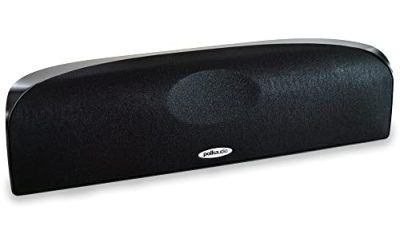
The center channel carries most of a movie’s dialogue, yet it is often the worst-placed speaker in the room. It gets wedged inside a media cabinet, laid flat on a TV console or balanced on a pile of books, so voices bounce off shelves and seem to come from the wrong spot. A dedicated center channel stand fixes the three things that matter: height relative to the screen, the angle toward the seats and isolation from the furniture underneath.
This guide is for home theater owners who place a center speaker beneath a wall-mounted TV, on a stand in front of a projector screen or on a shelf where it needs a slight tilt. Seven stands are compared using only what the listing titles state, such as height range, weight rating, tilt angle and material. Footprint, finish and exact fitment for a specific speaker model should always be confirmed on the listing in 2026 before ordering, since center speakers vary widely in width and depth.
Quick Picks
Our top picks


As an Amazon Associate we earn from qualifying purchases at no extra cost to you.
| Product | Best for | Key spec from the title |
|---|---|---|
| Kanto SCH | Height-adjustable placement | Up to fifty lb, 15 to 24 inch vertical adjustment, resonance damping |
| Monolith 18in Stand | Heavy centers and bookshelf speakers | 75 lbs max weight, scratch-resistant |
| Kanto S12 | Low-profile angled placement | Supports up to 32 lb, reduces resonance, 16 degree angle |
| Kanto S10 | Soundbar or center under a TV | Low-profile, angled |
| IsoAcoustics Iso-430 | Isolation with tilt | Tilt adjustment, 17 x 9 inch, sold single |
| Sanus SFC18-B1 | Steel build at 18 inches | 18 inch steel stand for center channel speakers |
| Focal Theva Center Stand | Matching a Focal Theva center | Made for Focal Theva Center, sold individually |
How to Choose
Height and the screen line
Dialogue should appear to come from the screen, so the center speaker belongs just above or below it, with the tweeter close to ear level for a seated viewer. A wall-mounted TV sits higher than a console TV, which often leaves a gap for a stand of 15 to 24 inches. Measure from the floor to the bottom edge of the screen and subtract the speaker height, and the result tells how tall a stand must be. Adjustable stands help when the TV or seating changes.
Weight capacity and footprint
Center speakers can be heavy, particularly large three-way designs. Compare the speaker weight on its spec page with the stand rating, and leave a margin, since listings range from 32 lb to 50 lb to 75 lbs. Also compare top plate width and depth with the speaker, because a stand that is narrower than the speaker will let it hang over the edges and tip more easily.
Tilt, angle and isolation
If the stand sits low and the listeners sit higher, a slight tilt upward points the sound at their ears. Titles that mention a 16 degree angle or tilt adjustment are aimed at this. Isolation or resonance damping, as in the Kanto and IsoAcoustics titles, is meant to reduce vibration passed to the furniture, which can make dialogue boomy. Ignore exotic claims and look for a stable platform first.
Material, cable routing and where budget stands cut corners
Steel and thick MDF resist wobble better than thin plastic. Internal cable management hides wires, which matters when the speaker sits in the middle of the room. Cheaper stands often use light bases, thin columns and glossy finishes that scratch easily. If the stand has to match a specific speaker, as the Focal title does, confirm the fit with the speaker model number.
It also pays to plan the whole front stage. The left and right speakers should sit at similar heights to the center, and the center should be roughly in line with them, so voices pan smoothly across the screen. A center stand that raises the speaker too far above the others can break that smooth match, which is why a modest, well-chosen height often beats a tall stand.
Projector owners face a slightly different problem. With an acoustically transparent screen, the center can sit behind it at eye level, but with a standard screen the speaker usually sits below, so tilt and height both matter more. Soundbar and center stands that sit low and angle upward are a good match for that layout, while a taller adjustable stand suits a setup where the screen floats high on the wall and the console below is short.
Think about stability around children and pets. A stand with a narrow base that holds a heavy cabinet is easy to knock over, and a loose center speaker falling off a console can damage the speaker and the floor. Anti-slip pads, a wide base and a conservative weight margin go a long way. Follow the manufacturer’s instructions for load limits and assembly, and recheck screws after a few weeks.
Finally, remember the look of the room. A stand that blends with the TV furniture, in black or a neutral finish, stays out of sight, and cable routing hides the wires that otherwise run across the floor. These small choices make the home theater feel finished rather than temporary.
The 7 Best Options
Kanto SCH
The Kanto SCH is a universal height-adjustable stand for center channel speakers up to fifty pounds, with 15 to 24 inches of vertical adjustment, a resonance damping design and internal cable management.
- Strength: a wide adjustment range suits changing TV and seating layouts.
- Strength: damping and cable routing give a clean, stable setup.
- Trade-off: it is a taller stand and needs floor space in front of the TV.
Skip it if the center must sit low on a console.
Monolith 18in Stand
Monolith lists an 18 inch stand with a 75 lbs maximum weight and a scratch-resistant finish, suited to center or bookshelf speakers.
- Strength: the highest weight capacity in the group suits large center speakers.
- Strength: scratch-resistant finish copes with moving and cleaning.
- Trade-off: the fixed 18 inch height cannot adjust.
Skip it if the stand must fit under a wall-mounted TV with unusual clearance.
Kanto S12
The S12 is a low-profile angled stand for soundbars and center channel speakers, supporting up to 32 lb, reducing resonance and tilting at 16 degrees.
- Strength: angled design sends dialogue upward toward seated listeners.
- Strength: low profile sits beneath a TV without blocking the screen.
- Trade-off: 32 lb capacity is lower than some rivals.
Skip it if the center speaker is very heavy.
Kanto S10
The S10 is a smaller low-profile angled stand for soundbars and center speakers, finished in black.
- Strength: slim shape helps with tight spaces.
- Strength: angled shape improves aim when seats sit higher.
- Trade-off: the visible title does not state weight capacity.
Skip it if the speaker is large or the listing does not confirm the load.
IsoAcoustics Iso-430
The IsoAcoustics Iso-430 is an isolation stand with tilt adjustment measuring 17 by 9 inches, and the listing is for a single stand.
- Strength: isolation is the main design goal, which helps on resonant shelves.
- Strength: tilt adjustment fine-tunes the aim.
- Trade-off: the 17 by 9 inch footprint can be small for wide center speakers.
Skip it if the speaker is wider than the platform.
Sanus SFC18-B1
Sanus offers an 18 inch black steel stand designed for center channel speakers.
- Strength: steel construction resists wobble.
- Strength: simple, fixed design is easy to place.
- Trade-off: weight and plate size are not listed in the visible title.
Skip it if adjustable height is needed.
Focal Theva Center Stand
This stand is made for the Focal Theva Center speaker and is sold individually.
- Strength: a matched fit with the Focal Theva center.
- Strength: purpose-built for a specific speaker.
- Trade-off: it is not a general-purpose stand.
Skip it if the center speaker is another brand.
Which One Fits Your Situation
Wall-mounted TV with space beneath
The Kanto SCH adjusts from 15 to 24 inches, making it the most flexible way to align the speaker with the bottom edge of the screen.
Large three-way center speaker
The Monolith 18in Stand has the highest listed capacity, which suits larger and heavier cabinets.
Low console with seats above the speaker
The Kanto S12 or Kanto S10 angled stands tilt sound upward toward the couch, and both sit low enough to stay clear of the screen.
Focal Theva owner or a resonant cabinet
The Focal Theva Center Stand fits that speaker, while the IsoAcoustics Iso-430 is a pick for isolating a speaker from a vibrating surface.
To narrow the field quickly, measure three numbers: the clearance beneath the TV, the weight of the speaker and the width of its base. Any stand that fits all three is a candidate, and the final choice then comes down to adjustability, tilt and cable routing. If two stands pass, favor the one with the larger weight margin, because it will cope with a future speaker upgrade without another purchase.
Buyers who rent or move often may prefer the simpler fixed stands, since fewer moving parts means fewer things to loosen. Buyers who rearrange rooms regularly will appreciate the adjustable height of the Kanto SCH. In either case, keep the original packaging for a while in case the fit is wrong, and confirm the return rules on the listing.
Common Mistakes
- Placing the center speaker inside a cabinet where sound is blocked.
- Ignoring the speaker weight and exceeding the stand rating.
- Choosing a stand taller than the screen allows, which blocks the picture.
- Forgetting that a rear-ported center needs air space behind it.
- Assuming any stand fits any speaker without checking plate width and depth.
In short, adjustable stands such as the Kanto SCH fit rooms that change, fixed 18 inch stands from Monolith and Sanus fit a stable layout, angled low-profile Kanto models fit tight clearances, and brand-matched or isolation stands suit specific speakers and surfaces. Pick the type that matches the room first, and the model within that type second. Reading the listing for plate size, weight rating and included hardware completes the check before ordering, so there are no surprises on installation day.
Related guides
- Electrical Testing Tools For Diy Projects
- Wireless Chargers For Iphone And Airpods
- Bookshelf Speakers Under 300 Dollars
Frequently Asked Questions
Why does a center speaker need a stand at all?
A stand controls height, angle and isolation. That helps dialogue sound like it is coming from the screen and reduces vibration from the furniture beneath.
Should a center speaker tilt upward?
If listeners sit higher than the speaker, a small upward tilt points the sound at ears. If the speaker is already at ear level, keep it flat.
Can a soundbar stand be used for a center speaker?
Often yes, as long as the weight and size fit. The Kanto S12 and S10 are described for both soundbars and center speakers.
Does isolation make a noticeable difference?
It can reduce resonance on hollow furniture. The effect varies with the room and the speaker, so expect subtle gains rather than a dramatic change.
More from Amazon
Programs that pair well with the guide above. Offers and eligibility are set by Amazon and may change.
Free shipping on eligible items, Prime Video and more. Eligible new members can start with a free trial.
Start a Prime free trialAd-free music streaming. Eligible new subscribers can start with a free trial.
Try Music Unlimited freeA Prime membership for ages 18-24 with a trial period. Eligibility is set by Amazon.
See Prime for Young AdultsAudiobooks and podcasts to listen to on the go. Eligible new members can start with a free trial.
Try Audible freeAs an Amazon Associate we earn from qualifying purchases.