Key takeaways
- The best smart sprinkler controllers for drip irrigation, with cycle and soak, long run times and per-zone programs for beds, containers and slopes.
Drip irrigation plays by different rules than spray heads. Emitters release water slowly, so drip zones often need long run times, short repeated pulses for containers, or cycle and soak scheduling that lets water absorb into sloped or clay soil instead of running off. A standard timer handles none of that gracefully. The smart controllers below were chosen for the features drip systems actually use: flexible per-zone programs, multiple start times, cycle and soak, weather-based skips so drip lines stay off after rain, and master valve support. Whether you are watering raised beds, a greenhouse bench, foundation plantings, or a mixed yard with both drip and spray zones, one of these five controllers will fit the layout.

As an Amazon Associate, we earn from qualifying purchases.
Quick Answer
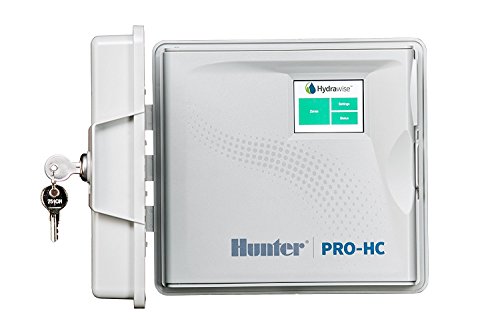
For most drip systems, the Hunter Pro-HC PHC-600 is the strongest pick, with built-in Wi-Fi, Hydrawise cycle and soak, and per-zone scheduling. The Hunter X2-800 adds an eight-station cabinet with modular Wi-Fi, while the Rain Bird RC2 and ST8O-2.0 suit Rain Bird app users. The Netro Sprite 6-Zone automates small bed and container zones from plant data.
Table of Contents
- Hunter Pro-HC PHC-600
- Hunter X2-800
- Rain Bird RC2
- Rain Bird ST8O-2.0
- Netro Sprite 6-Zone
- How to Choose a Smart Controller for Drip Irrigation
- Who Should Skip a Smart Controller
- FAQ
- Final Verdict
Hunter Pro-HC PHC-600
The Pro-HC PHC-600 is the most drip-friendly controller in this roundup because its Hydrawise software treats every zone independently. Cycle and soak can be set per zone, so a sloped bed gets short cycles with rest periods while a flat vegetable garden runs one long, deep soak. Predictive Watering adjusts schedules from local weather data, and the optional flow meter input can flag a broken drip line or stuck valve before it floods a bed. The full-color touchscreen makes manual runs and zone checks easy at the unit, and the outdoor-rated cabinet suits garage or exterior wall mounting near the valve manifold.
Specs:
- 6 fixed stations plus a master valve and pump start relay terminal
- Built-in Wi-Fi with Hydrawise app and web-based control
- Cycle and soak programmable per zone
- Predictive Watering with Virtual Solar Sync weather adjustments
- Full-color touchscreen display
- Two sensor inputs and an optional flow meter input
- 120 VAC transformer input, 24 VAC station output
- Indoor or outdoor mounting depending on model
- 2-year limited warranty
Hunter X2-800
The X2-800 is a conventional dial controller that becomes smart when the WAND Wi-Fi module clicks into the facepack, which makes it a practical upgrade path for anyone replacing an older Hunter timer on an existing drip manifold. Once connected, Hydrawise adds cycle and soak, weather adjustments, and app control, while the dial and buttons still handle basic programming at the unit without a phone. Eight stations cover most residential drip layouts with room for a master valve. Note that the WAND module is sold separately and only fits X2 controllers built after December 2022, so confirm your unit’s build date before ordering the module.
Specs:
- 8 stations in an outdoor plastic cabinet
- Internal 120 VAC transformer
- Wi-Fi ready via the WAND module, sold separately
- Hydrawise software with cycle and soak once the module is added
- 3 programs with 4 start times per program
- Dial and button programming on the unit
- Rain sensor input and master valve terminal
- EPA WaterSense labeled when paired with the WAND module
- Works with Amazon Alexa and Control4 through Hydrawise
Rain Bird RC2

The RC2 is Rain Bird’s current-generation residential controller, and its cycle and soak function is exactly what drip zones on slopes or compacted soil need: watering splits into shorter cycles separated by soak time, so emitters do not overwhelm the soil surface. Quick Pair Bluetooth setup and an access point mode let you program the controller even before home Wi-Fi reaches the mounting spot, which helps in detached garages and pump houses. Inside the Rain Bird app, saved schedule templates speed up seasonal reprogramming, automatic weather adjustments trim run times, and seasonal adjust scales every zone at once when conditions change.
Specs:
- 8 stations plus a master valve terminal
- Built-in 2.4 GHz Wi-Fi
- Quick Pair Bluetooth setup and access point programming mode
- Cycle and soak to reduce runoff on slopes and clay
- Seasonal adjust and automatic weather adjustments
- Saved program templates for fast seasonal changes
- 120V power cord included
- Indoor or outdoor mounting
- Model F56118 (RC2-8)
Rain Bird ST8O-2.0

The ST8O-2.0 puts Rain Bird’s irrigation scheduling into an indoor and outdoor cabinet with built-in Wi-Fi, so there is no add-on module to buy. Three independent programs with up to four start times each make it easy to separate drip duties: one program for long morning soaks in the beds, another for short midday pulses on container lines, and a third for any conventional spray zones sharing the manifold. Run times extend to six hours per station, which suits low-flow emitter layouts that need extended watering. Shared app access also lets a landscaper or family member adjust schedules remotely.
Specs:
- 8 stations in an indoor and outdoor cabinet
- Built-in Wi-Fi, no separate module required
- Rain Bird app control, compatible with Amazon Alexa
- EPA WaterSense certified
- 3 programs with up to 4 start times per program
- Run times up to 6 hours per station
- Seasonal adjust for quick schedule scaling
- Master valve and pump start relay terminal
- Model C53210
Netro Sprite 6-Zone

The Sprite takes the most automated approach in this group. Its Smart Zone feature builds schedules from plant type, soil, and local weather rather than fixed runtimes, which suits mixed plantings where some beds want deep, infrequent watering and others want frequent light drinks. The controller supports cyclic schedules, so container drip lines can get brief pulses through the day instead of one long run. It is an indoor unit, so plan on a weatherproof enclosure for outdoor mounting, and check the listing carefully because some listings ship without the 24V power adapter.
Specs:
- 6 zones plus a master valve terminal
- 2.4 GHz Wi-Fi connection
- Smart Zone automatic scheduling from plant, soil, and weather data
- Supports cyclic watering schedules for pulse irrigation
- Works with Amazon Alexa and Google Assistant
- EPA WaterSense certified
- Indoor mounting, 5.7 x 5.7 x 1.2 inches
- Confirm whether the 24V power adapter is included before ordering
How to Choose a Smart Controller for Drip Irrigation
Start with station count and program flexibility. Count your drip zones, add any spray zones sharing the manifold, and choose a controller with at least that many stations plus a master valve terminal. Independent programs matter more for drip than for lawns: beds, containers, and trees all want different schedules, so look for at least three programs or fully independent zone scheduling.
Next, confirm the watering features drip actually uses. Cycle and soak prevents runoff on slopes and clay soil. Long maximum run times suit low-flow emitters, while multiple start times per day enable pulse watering for pots and hanging baskets. Weather-based adjustments keep drip lines off after rain, and flow monitoring, where offered, catches leaks that would otherwise run unnoticed underground.
Finally, check the physical and network fit. Drip manifolds often sit in garages, basements, or exterior walls, so decide between indoor and outdoor cabinets and confirm whether Wi-Fi is built in or needs a module. Every controller here uses 2.4 GHz Wi-Fi. Remember that pressure regulators and filters live at the valve, not the controller; a smart controller improves scheduling, not water pressure.
Who Should Skip a Smart Controller
Skip the upgrade if you run a single drip zone from a hose bib; a simple battery hose-end timer covers that job for far less effort. Gardeners without reliable Wi-Fi near the valve location will fight connectivity instead of enjoying automation. If your current conventional timer already runs healthy drip zones on a stable schedule and you never adjust it seasonally, the gains are modest. And if your irrigation problems are clogged emitters, kinked lines, or wrong emitter spacing, fix the hardware first, because no controller can compensate for distribution problems at the tubing.
FAQ
Can one controller run drip and spray zones together?
Yes. Every controller here runs mixed systems, because each station is programmed independently. Put drip zones on their own program with long or cycled run times, keep spray zones on a separate program with shorter runtimes, and the two never interfere with each other.
Why does cycle and soak matter for drip lines?
Drip emitters apply water slowly, but on slopes, clay, or compacted soil even that slow rate can pool and run off. Cycle and soak splits one long watering into shorter cycles with rest periods between them, giving water time to absorb where the roots are.
How many start times do drip zones need?
It depends on the planting. Deep bed watering usually needs one start time per watering day, while containers and hanging baskets do better with two to four short pulses spread across the day. A controller with several start times per program covers both styles.
Do these controllers still water if Wi-Fi goes down?
Yes. Schedules are stored on the controller itself, so watering continues during an outage. What you lose until the connection returns is app control and weather-based adjustments, which is why controllers with on-unit controls are handy for remote mounting spots.
Final Verdict
For most drip systems, the Hunter Pro-HC PHC-600 earns the top spot with built-in Wi-Fi, per-zone cycle and soak, and optional flow monitoring through Hydrawise. The Hunter X2-800 is the better path for larger eight-station manifolds or anyone modernizing an existing Hunter setup. Rain Bird loyalists should pick between the RC2 for its setup flexibility and the ST8O-2.0 for its long run times and three-program layout, while the Netro Sprite 6-Zone suits smaller plantings where automatic, plant-based scheduling is the priority.
Product and ASIN Reference
| Product | ASIN |
|---|---|
| Hunter Pro-HC PHC-600 (6-Station) | B06XQ5PTZP |
| Hunter X2-800 (X2 8-Station) | B08T21JZQZ |
| Rain Bird RC2 (RC2-8) | B0C5P828JD |
| Rain Bird ST8O-2.0 | B07N3DTQH4 |
| Netro Sprite 6-Zone | B076CZ6DHR |
More from Amazon
Programs that pair well with the guide above. Offers and eligibility are set by Amazon and may change.
Free shipping on eligible items, Prime Video and more. Eligible new members can start with a free trial.
Start a Prime free trialAd-free music streaming. Eligible new subscribers can start with a free trial.
Try Music Unlimited freeA Prime membership for ages 18-24 with a trial period. Eligibility is set by Amazon.
See Prime for Young AdultsAudiobooks and podcasts to listen to on the go. Eligible new members can start with a free trial.
Try Audible freeAs an Amazon Associate we earn from qualifying purchases.