Key takeaways
- Music earphones and call earphones are not the same product. A pair that sounds wonderful on a playlist can still turn your voice into a muffled.
Music earphones and call earphones are not the same product. A pair that sounds wonderful on a playlist can still turn your voice into a muffled smear on a conference line, and a pair built around a clear microphone may sound flat on a podcast. Anyone shopping for earphones mainly for calls has to weigh three things before anything else: how the voice is picked up, how the earphones connect to the phone or laptop, and whether they stay comfortable through a long meeting. Bass tuning and flashy cases come a distant fourth.
This guide is written for people who spend real hours on voice and video calls: remote workers, field sales staff, students on group projects, and commuters who answer the phone on a train. The list mixes wired and wireless options, including USB-C wired pairs for newer iPhones, a pair of open-ear clip-ons, and a translation model for multilingual conversations, so you can match the connection type to the device you actually carry in 2026.
Quick Picks
Our top picks




As an Amazon Associate we earn from qualifying purchases at no extra cost to you.
| Product | Best for | Key spec from the title |
|---|---|---|
| Antool Wired Earbuds | Simple plug-in calling on a headphone jack | 3.5mm wired, in-ear, built-in mic |
| Hi-Fi Wireless Earbuds (48H) | Long wireless shifts with a charge readout | 48H playtime, 2 mics, IPX7, LED display |
| Dual-Driver Wired Earphones | Cheap wired backup with fuller sound | Dual-driver, noise canceling for phone calls |
| Philips Pro Wired Earbuds | Calls plus critical music listening | 3.5mm jack, Hi-Res Audio, microphone |
| AI Translation Earbuds | Multilingual calls and meetings | 141+ languages, 90H playtime, IPX6 |
| USB C Wired Earphones, 2-Pack | iPhone 15 and newer users who want wired | Apple MFi certified, in-line remote |
| SIMOLIO Open-Ear Clip-On Earbuds | Staying aware of your surroundings | Open-ear clip-on, USB C, inline call control |
| Nothing Ear (3a) | Premium wireless calls with noise control | 45dB hybrid ANC, 6 mics, 12mm driver |
How to Choose
Microphone count and placement
Look for a stated microphone count. A single mic in an in-line wired remote sits near your chest and picks up clothing rustle. Wireless pairs that list two mics, and premium ones that list six, use extra capsules to separate your voice from the room. The spec sheet claim worth hunting for is a mic dedicated to calls, such as an environmental noise reduction feature, not just the word “HD.”
Connection type and compatibility
Count your ports before anything else. A 3.5mm plug is useless on a recent phone without an adapter, and a USB-C earphone only works with devices that output audio over USB-C. Apple-focused buyers should look for the MFi certification wording, which signals the accessory is made for iPhone and iPad. Bluetooth models remove the port question but add pairing and charging to your routine.
Battery and charging for wireless
Playtime figures in titles usually include the charging case, so a 48H or 90H headline often means a fraction of that per charge. For a full day of calls, look for single-charge hours in the listing details and a case that recharges the buds at least twice. A charge display on the case is a small convenience that saves surprise dead earbuds before a meeting.
Fit, comfort, and what to ignore
For long calls, weight and seal matter more than driver size. In-ear designs isolate you but create pressure after an hour; open-ear clips leave the ear canal free and let you hear a colleague walk in. Ignore bass-boost marketing, which does nothing for voice clarity. Budget models usually cut corners on the microphone and on Bluetooth stability at distance, so be skeptical of low-cost wireless pairs promising studio-clear calls.
The 8 Best Options
Antool Wired Earbuds
The Antool pairs a 3.5mm connector with an in-ear fit, and its title leads with clear calls and reduced background noise. It suits someone with a phone, tablet, or laptop that still has a headphone jack and who wants a call pair without batteries, pairing, or charging. Nothing to power means nothing to forget on the desk.
- Strength: wired connection avoids dropouts and audio lag on video calls.
- Strength: in-line microphone is built in, so it works with phones and many laptops.
- Trade-off: the 3.5mm plug rules out recent phones that lack a jack unless you add an adapter.
Skip it if your phone has only USB-C or Lightning, or if you want to walk away from your desk while talking.
Hi-Fi Wireless Earbuds (48H)
This generic wireless pair lists 48 hours of playtime, two microphones for calls, an IPX7 water rating, touch control, and an LED display on the case. It is aimed at buyers who want a cable-free pair for a long commute or a busy workday and would like to see remaining battery at a glance.
- Strength: the LED readout makes charge status obvious before a meeting.
- Strength: IPX7 water resistance is generous for sweat or a rainy walk between calls.
- Trade-off: an unbranded budget design leaves call quality and app support uncertain, so treat the headline hours as case-included totals.
Skip it if you need verified, brand-backed call performance for client-facing work.
Dual-Driver Wired Earphones
The title describes rich bass, noise canceling for phone calls, and a dual-driver layout. That makes it an inexpensive wired option for someone who wants more body in the sound than a basic single-driver earbud, while still having an inline mic for the occasional call.
- Strength: the dual-driver design promises fuller sound from a wired pair.
- Strength: no battery, so it is a dependable spare for a bag or desk drawer.
- Trade-off: the listing gives little detail on connector type or microphone count, so confirm the plug fits your device.
Skip it if you need a clearly stated connector for a specific phone or a named mic technology.
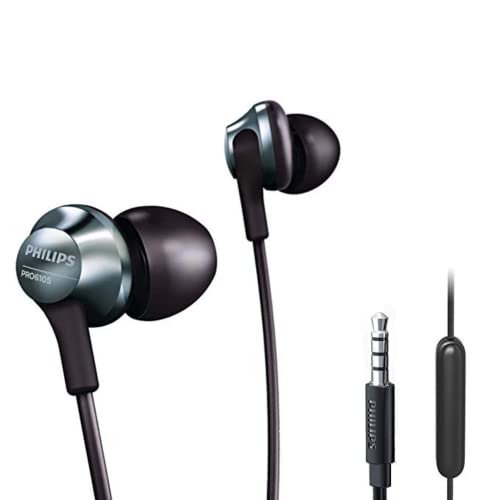
Philips Pro Wired Earbuds
The Philips Pro uses a 3.5mm jack, includes a microphone, and advertises Hi-Res Audio with a durable build. It fits people who take calls in the morning and spend the evening listening to music with the same pair, and who prefer a recognizable brand over an anonymous listing.
- Strength: the Hi-Res Audio claim makes it the strongest music performer in the wired group.
- Strength: a durable build helps with the daily coil-and-stuff routine of wired earphones.
- Trade-off: it needs a headphone jack, and the title says little about microphone noise rejection.
Skip it if your phone has no 3.5mm port and you do not want to carry an adapter.
AI Translation Earbuds
This pair claims real-time translation across 141+ languages, 90H playtime, an IPX6 rating, and support for audio and video calls in an open-ear style. It is for travelers, international teams, and anyone who regularly talks across a language gap.
- Strength: translation across a very wide language list is the main reason to buy it.
- Strength: open-ear styling keeps you aware of the room during a conversation.
- Trade-off: translation features usually depend on an app and a connection, which the title does not detail.
Skip it if you only speak one language at work, since you would pay for features you will not use.
USB C Wired Earphones, 2-Pack
This Apple MFi certified pair terminates in USB-C and includes a built-in remote for music, calls, and volume. It is a sensible answer for iPhone 15 and newer owners who liked the reliability of wired earphones and do not want to buy an adapter.
- Strength: MFi certification points to proper Apple compatibility.
- Strength: a two-pack gives you a spare for the car, desk, or travel bag.
- Trade-off: it works only with devices that output audio over USB-C, so older Lightning phones are out.
Skip it if you use an older iPhone or a laptop without a USB-C audio output.
SIMOLIO Open-Ear Clip-On Earbuds
The SIMOLIO is a corded open-ear clip design with a USB-C plug, a microphone, and inline call and volume control. It targets people who work in an office, run, or walk while listening and want ambient sound to stay audible.
- Strength: the clip-on open-ear design avoids sealing the ear canal during long calls.
- Strength: inline controls handle calls and volume without touching the phone.
- Trade-off: open-ear designs leak more sound and offer no isolation in a loud street or train.
Skip it if you need isolation from noisy surroundings during calls.
Nothing Ear (3a)
The Nothing Ear (3a) is the premium wireless entry here. Its title lists 45dB hybrid ANC, a 12mm driver with Hi-Res Audio, and 6 mics for clear calls and recording. It suits buyers who want a modern wireless set that can quiet a commute and still sound clear to the person on the other end.
- Strength: six microphones give it the most robust call hardware in this group.
- Strength: 45dB hybrid ANC helps in open offices and on transit.
- Trade-off: it carries the highest cost tier of the list and needs charging like any wireless pair.
Skip it if you want a wired, battery-free solution or have a strict budget.
Which One Fits Your Situation
You work from a loud open office
Choose the Nothing Ear (3a). Hybrid noise cancelling plus a six-mic array addresses both sides of the problem: you hear less of the room and the other person hears less of it too.
You carry a recent iPhone and hate dongles
Pick the USB C Wired Earphones 2-Pack. The MFi certification and USB-C plug mean it connects directly, and the spare pair is handy.
You talk with people in other languages
Go with the AI Translation Earbuds. The long language list and extended playtime fit a day of international calls.
You want one pair for calls and music at your desk
The Philips Pro Wired Earbuds balance a recognizable brand, a microphone, and Hi-Res Audio, and you never need to charge them.
Common Mistakes
- Buying on battery hours alone and ignoring that most headline figures include the charging case.
- Assuming noise cancelling means your callers hear less noise; that depends on the microphones, not the ANC.
- Ordering a 3.5mm pair for a phone that has no headphone jack.
- Choosing open-ear clips for a loud train and then struggling to hear the call.
- Paying for translation or app features you will never open, instead of spending on better microphones.
Related guides
- Wireless Chargers For Iphone And Airpods
- Noise Cancelling Earbuds Under $100
- Mechanical Keyboard For Programming
Frequently Asked Questions
Are wired earphones better than wireless for calls?
Wired pairs avoid Bluetooth dropouts and lag, which helps on video calls. Wireless pairs win on freedom of movement. Choose based on whether you stay at a desk.
Does noise cancelling improve how I sound to callers?
Not by itself. ANC reduces what you hear. Callers hear you through the microphones, so look for a high mic count or a stated call noise-reduction feature.
Do I need MFi certification?
It is useful for Apple users because it signals compatibility with iPhone and iPad. It matters most for wired USB-C and Lightning accessories.
Are open-ear earbuds suitable for private calls?
They leak more sound than sealed in-ear pairs, so they suit quiet offices and walks better than crowded trains where others can overhear.