
Key takeaways
- Ingress rating: IP68 covers dust and submersion under stated conditions, while IP69K is aimed at high-pressure, high-temperature water. Match the rating to your environment.
- Battery capacity: Rugged phones often carry very large batteries. Check whether the phone also supports fast charging, since a large battery can take a long time to refill.
- Storage expansion: Some listings advertise very large expandable storage. Actual capacity depends on the memory card you add, so budget for a card separately.
- Network bands: Confirm 4G or 5G band support for your carrier, and whether the model is unlocked or locked to a specific network.
- Accessories: Charging bundles and power banks can complete a rugged setup, but check the wattage and connector type for your phone before buying.
Rugged smartphones are built for jobsites, outdoor trips, and anyone who expects a phone to take hard knocks. Under a moderate budget, rugged models trade some screen and camera refinement for durability, large batteries, and water and dust resistance. This roundup covers the rugged phones and one charging bundle from the listed options, and explains how to judge whether a rugged build is what you actually need.
Rugged ratings such as IP68 and IP69K describe specific test conditions, not guaranteed protection in every situation. Large batteries and loud speakers are also common selling points. Read what each rating covers, and treat marketing figures for storage expansion and battery life as starting points to verify.
Our top picks



As an Amazon Associate we earn from qualifying purchases at no extra cost to you.
How to Choose
- Ingress rating: IP68 covers dust and submersion under stated conditions, while IP69K is aimed at high-pressure, high-temperature water. Match the rating to your environment.
- Battery capacity: Rugged phones often carry very large batteries. Check whether the phone also supports fast charging, since a large battery can take a long time to refill.
- Storage expansion: Some listings advertise very large expandable storage. Actual capacity depends on the memory card you add, so budget for a card separately.
- Network bands: Confirm 4G or 5G band support for your carrier, and whether the model is unlocked or locked to a specific network.
- Accessories: Charging bundles and power banks can complete a rugged setup, but check the wattage and connector type for your phone before buying.
The Best Picks Reviewed
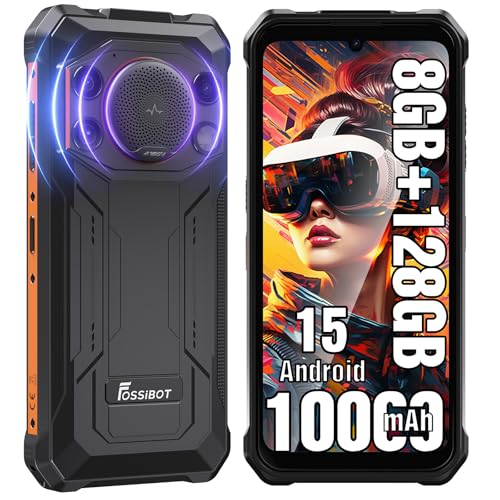
FOSSIBOT F110L Rugged Smartphone, 12GB+128GB
The FOSSIBOT F110L is a rugged Android phone with a large battery, a loud speaker, and a waterproof build. The 12GB and 128GB configuration gives more room for apps than the base version. Its advertised storage expansion depends on the card you add, so verify actual capacity after setup.
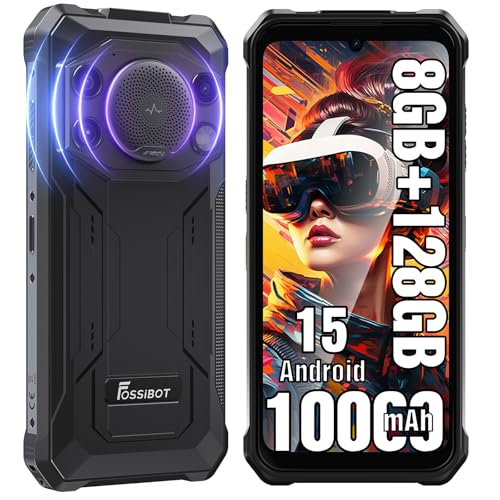
FOSSIBOT F110L Unlocked Phone, 8GB+128GB, 2026 Black
This variant of the F110L uses an 8GB and 128GB configuration in black. The core rugged design and battery are the same as the 12GB version, so the choice comes down to how much memory you want for multitasking. For basic outdoor use, the lower memory setup can be enough.
Blackview Rugged Phone with Android 16 and 10000mAh Battery
The Blackview rugged phone pairs a very large battery with an IP69K rating, which is aimed at harsh and high-pressure water exposure. It suits workers and outdoor users who need a durable device that lasts several days. Check the 4G band support for your carrier before buying.
UGREEN UNO 30W USB-C Charging Bundle with 10,000mAh Power Bank
This bundle combines a 30W GaN wall charger with a 10,000mAh magnetic wireless power bank. It is a useful companion for a rugged phone on long trips, especially if the phone’s own charging speed is modest. Confirm that the charger supports the fast-charging standard your phone uses.
Frequently Asked Questions
Is an IP68 or IP69K phone fully waterproof?
Not in every situation. The ratings describe specified conditions for dust and water exposure. Follow the manufacturer’s depth and temperature limits, and avoid long immersion or high-pressure cleaning unless the phone is rated for it.
Do I need a rugged phone for everyday use?
Usually not. Rugged phones are heavier and thicker than standard models. If you work outdoors, on a site, or on water, the extra durability is worth the bulk. For office or city use, a standard phone with a good case may suit you better.
How much storage do I really get with a card?
The phone’s built-in storage is fixed, and the expansion depends on the card you install. Check the phone’s maximum supported card size and format before buying, and choose a card from a known brand.
Is a power bank bundle worth buying with a rugged phone?
It can be, especially for trips where you have no outlet. Make sure the power bank’s capacity and output match your needs, and that the wall charger supports the fast-charging standard your phone accepts.
Final Thoughts
For a dependable rugged phone from this group, the FOSSIBOT F110L in the 12GB configuration offers the most room for apps and everyday use. Buyers who need extreme water-pressure resistance and very long battery life should look at the Blackview model. The 8GB FOSSIBOT variant suits lighter use, and the UGREEN bundle is a sensible add-on for long days away from power. Confirm the rating and band support before you buy. Rugged phones also need care to keep their ratings. Keep the port covers closed near water, wipe away grit before opening them, and avoid charging with wet ports. Check the warranty and return policy before buying, since rugged handsets are often bought for harsh use and may need replacing sooner than a standard phone.





