Key takeaways
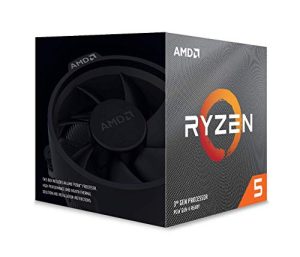
- AMD Ryzen 5 3600XT review: 6 cores, 12 threads, 4.5 GHz boost and a Wraith Spire cooler in the box. Who should still buy this AM4 chip in 2026?
The real question with the AMD Ryzen 5 3600XT today is not whether it is fast enough on paper, but whether a Zen 2 processor from 2020 still makes sense when the AM4 platform has long since been replaced by AM5. Its specification sheet is unchanged: 6 cores, 12 threads, a 4.5 GHz maximum boost clock and a bundled Wraith Spire cooler. What has changed is the context around it, because this chip now only makes sense for a specific kind of buyer working within a specific budget and an existing parts shelf.
This review is for AM4 owners planning a drop-in upgrade, builders assembling a low-cost gaming or office machine around DDR4 memory they already own, and anyone comparing leftover stock against newer entry-level chips. Everything below is judged from the manufacturer’s specification and the Amazon product listing: core and thread counts, clock speeds, cache sizes, socket, power rating and the contents of the box. Where the 3600XT falls short, the shortcoming is visible in those same published numbers.
Quick Picks
As an Amazon Associate we earn from qualifying purchases
| Product | Best for | Key spec from title |
|---|---|---|
| AMD Ryzen 5 3600XT | AM4 owners wanting a drop-in upgrade with a cooler in the box | 6-core, 12-thread unlocked processor with Wraith Spire cooler |
One product, one decision: this is a review of the boxed Ryzen 5 3600XT (part number 100-100000281BOX) only, not of the plain 3600, the 3600X, or any newer Ryzen generation. The sections below walk through how to judge a processor in this class, what the listing actually promises, and which situations still justify choosing this chip over simply moving to a newer platform.
How to Choose
Core and thread count for the work you actually do
Six cores and twelve threads was the sweet spot for gaming builds when this processor launched, and it remains a sensible floor for a mixed-use machine. Games lean on a handful of fast threads, while background tasks such as voice chat, streaming software and browser tabs fill the rest. Buyers whose main work is video rendering or heavy code compilation should count threads first and look further up the range, because those jobs scale with every extra core. For a gaming and general productivity machine, though, 6 cores and 12 threads is still a balanced specification rather than a compromise.
Boost clock and what it means for gaming
The headline number on this listing is the maximum boost clock of up to 4.5 GHz, against a base clock of 3.8 GHz. Boost is the speed a core can reach briefly under favourable thermal and power conditions, and it matters most in games and lightly threaded applications where one or two cores do the heavy lifting. The 3600XT was a clock-refined version of its generation, carrying a higher rated boost than the standard model. Judge any older processor partly on this figure, but remember it is a ceiling, not a guarantee: cooling quality and motherboard power delivery decide how often it is reached.
Platform, socket and memory compatibility
A processor is never a standalone purchase. The 3600XT uses the AM4 socket and DDR4 memory, which means it drops into a wide range of B450, B550, X470 and X570 motherboards, often after a BIOS update. That is the chip’s biggest practical advantage today: millions of boards and DDR4 kits are already in circulation, so an upgrade can reuse nearly everything else in the system. The trade-off is a closed future. AM4 is a finished platform, so there is no next-generation upgrade path on the same board, and buyers starting completely from scratch should weigh that carefully.
Cooling, power draw and the box contents
The listing’s rated thermal design power is 95 W, and the box includes AMD’s Wraith Spire cooler, a detail that has become rarer on newer processors sold without any cooling at all. A bundled cooler removes an immediate extra purchase and is adequate for stock operation in a case with reasonable airflow. Buyers planning sustained overclocking, or working in a small case with restricted airflow, should budget for a stronger aftermarket cooler instead. Always confirm what is physically in the box before ordering, because tray and OEM versions of older processors ship without coolers or retail packaging.
The 1 Best Option
AMD Ryzen 5 3600XT 6-Core, 12-Thread Unlocked Desktop Processor with Wraith Spire Cooler
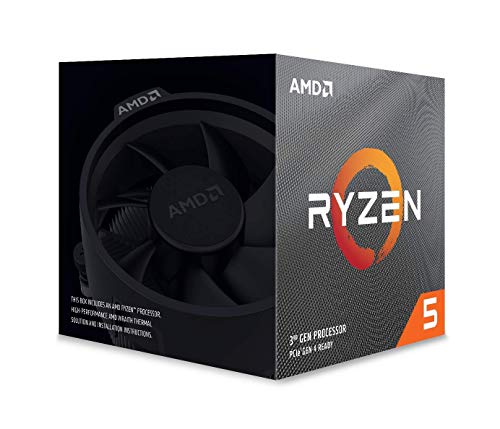
For an AM4 owner, the appeal of the 3600XT is how little else has to change. It slots into an existing motherboard, keeps the DDR4 memory already installed, and arrives with a cooler in the box, so the upgrade is a single purchase rather than a platform rebuild. Its 6 cores and 12 threads handle modern games and everyday multitasking without strain, the unlocked multiplier leaves room for manual tuning, and PCIe 4.0 support on compatible boards keeps fast NVMe storage and current graphics cards fully usable. It suits the upgrader far better than the from-scratch builder.
Judged purely on its specification, the chip’s strengths are balance and completeness. The 35 MB of total cache (32 MB of L3 plus 3 MB of L2) feeds the cores well in games, the 4.5 GHz boost ceiling is respectable for its generation, and the Zen 2 architecture’s PCIe 4.0 controller was ahead of its Intel competition at launch. Its weaknesses are equally visible on paper: there is no integrated graphics, so a discrete graphics card is mandatory; the architecture is two generations behind current designs; and the platform offers no upgrade path beyond other AM4 chips. None of that disqualifies it for the right buyer, but it defines exactly who that buyer is.
Specs
- 6 cores and 12 threads, unlocked for overclocking
- Base clock 3.8 GHz, maximum boost clock up to 4.5 GHz
- 32 MB L3 cache and 3 MB L2 cache (35 MB total)
- Socket AM4, Zen 2 architecture
- Default TDP 95 W
- Wraith Spire cooler included in the box
- Supports DDR4 memory and PCIe 4.0 on compatible motherboards
- Boxed part number 100-100000281BOX
Best for: AM4 owners upgrading from an older Ryzen or Athlon processor who want a complete, single-box improvement for gaming and everyday work.
Watch out for: There is no integrated graphics, so the system will not display anything without a discrete graphics card. Check your motherboard’s BIOS support list before ordering, and note that remaining retail stock of this 2020 processor is limited, so confirm the listing is for the new boxed version rather than a used or tray unit.
Which One Fits Your Situation
You already own an AM4 motherboard and DDR4 memory
This is the situation the 3600XT fits best. If your board supports the chip with a current BIOS, the upgrade costs one processor and an afternoon, and everything else in the machine carries over. Moving from a four-core Ryzen 3 or an early Ryzen 5 to 6 cores, 12 threads and a 4.5 GHz boost ceiling is a clear step up for games and multitasking, with no new board, memory or cooler required.
You are building a budget gaming PC from used and leftover parts
A build assembled around inexpensive DDR4 and a second-hand B450 or B550 board is the second natural home for this processor. The 3600XT is strong enough to pair sensibly with mid-range graphics cards, and the bundled Wraith Spire removes one more line from the parts list. The discipline is in the total: if the combined cost of chip, board and memory approaches a newer platform bundle, the newer platform is the smarter spend.
You are building a brand-new PC from scratch
Here the honest answer is that the 3600XT is hard to recommend. A from-scratch build has no existing AM4 parts to protect, and current-generation entry processors on newer sockets deliver more performance per core, better efficiency and years of upgrade options on the same board. Choose the 3600XT for a new build only if a specific deal on the chip and an AM4 board makes the complete package clearly cheaper than the modern alternative.
You need a PC that works without a graphics card
Skip this processor entirely. The 3600XT has no integrated graphics, so a system built around it shows no display output until a discrete graphics card is installed. Office machines, home servers and troubleshooting benches that rely on basic onboard video should look at processors with built-in graphics instead, including AMD’s own G-series APUs, rather than discovering the limitation after assembly.
Common Mistakes
- Buying the 3600XT for a new build without comparing the full platform cost against a current-generation socket and DDR5 bundle.
- Forgetting that there is no integrated graphics, then having no display output because no graphics card was ordered.
- Skipping the motherboard BIOS check; many AM4 boards need a firmware update before they will boot with this processor.
- Confusing the 3600XT with the plain Ryzen 5 3600 or 3600X, which are different parts with different clock ratings and box contents.
- Assuming all remaining listings are new retail stock; some sellers offer used or tray units without the Wraith Spire cooler.
Frequently Asked Questions
Is the Ryzen 5 3600XT still good for gaming?
For 1080p and 1440p gaming with a mid-range graphics card, yes, within the limits of its generation. Six cores and twelve threads remain enough for current games, and the 4.5 GHz boost clock keeps frame rates healthy in lightly threaded titles. It will hold back a high-end graphics card in CPU-limited games, so pair it with a GPU from its own performance class rather than a flagship.
Does the Ryzen 5 3600XT have integrated graphics?
No. The 3600XT has no integrated GPU, and its motherboard video outputs will not work with this processor installed. A discrete graphics card is required for any display output. Buyers who need onboard graphics from AMD should look at the Ryzen G-series processors with the G suffix, which are built as APUs with integrated Radeon graphics, instead of the standard Ryzen 5 desktop line.
What motherboard and memory does the 3600XT need?
It fits AM4 motherboards, including B450, B550, X470 and X570 models, usually with an up-to-date BIOS installed before the swap. Memory is DDR4, and the platform officially supports speeds up to DDR4-3200, with faster kits commonly used through memory profiles. It does not fit AM5 boards and cannot use DDR5, which is the central platform difference between this chip and current Ryzen generations.
Is the included Wraith Spire cooler enough?
For stock operation, yes. The Wraith Spire in the box is rated for the processor’s 95 W thermal design power and keeps it running within specification in a case with decent airflow. Buyers planning manual overclocking, sustained all-core workloads in a warm room, or the quietest possible system should consider a larger aftermarket tower cooler, but it is an optional upgrade rather than a requirement for normal use.
More from Amazon
Programs that pair well with the guide above. Offers and eligibility are set by Amazon and may change.
Free shipping on eligible items, Prime Video and more. Eligible new members can start with a free trial.
Start a Prime free trialAd-free music streaming. Eligible new subscribers can start with a free trial.
Try Music Unlimited freeA Prime membership for ages 18-24 with a trial period. Eligibility is set by Amazon.
See Prime for Young AdultsAudiobooks and podcasts to listen to on the go. Eligible new members can start with a free trial.
Try Audible freeAs an Amazon Associate we earn from qualifying purchases.