Our Top Picks
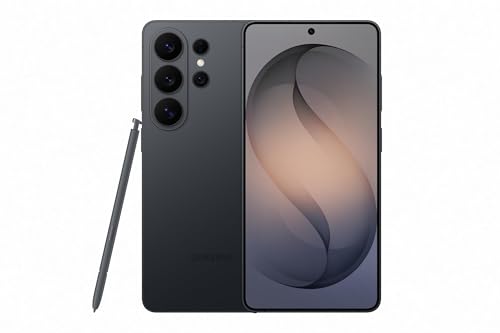


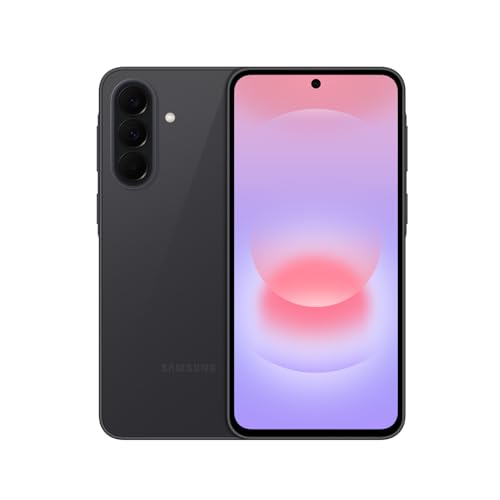
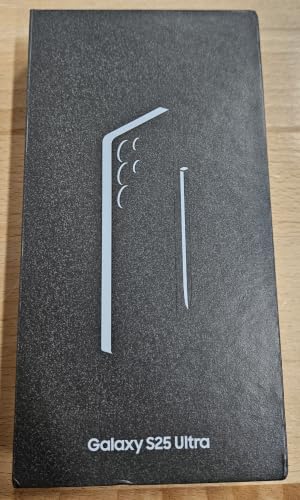
The best Samsung 5G phones in 2026 are the Galaxy S26 Ultra for the best overall hardware, the Galaxy S25 FE for flagship-style value, the Galaxy A56 5G and Galaxy A37 5G for mid-range buyers, the Galaxy A36 5G for the lowest cost of entry, and the Galaxy Z Flip7 for anyone who wants a pocketable foldable. Every phone in this guide supports 5G, but they do not all support the same 5G bands, so the right choice depends on your carrier, your budget and how long you plan to keep the phone.
Samsung sells 5G phones across several lines. The S series carries the fastest chips and best cameras, the FE line trims cost, the A series targets mid-range and entry buyers, and the Z series covers foldables. Within each line, the same model can differ by region: processor, band support and mmWave availability vary between countries and carriers. This guide groups the models by buyer criteria, shows a comparison table, walks through a 5G band check, works out how update length changes yearly ownership cost, and answers eight common questions.
Quick answer: which Samsung 5G phone fits which buyer
- Best overall: Galaxy S26 Ultra. Top cameras, S Pen, flagship processor and long software support.
- Best compact flagship: Galaxy S26. A 6.3-inch display in a 167 g, 7.2 mm body.
- Best value for flagship-style features: Galaxy S25 FE. Large 120 Hz display, 4,900 mAh battery and seven years of updates.
- Best mid-range all-rounder: Galaxy A56 5G. 6.7-inch 120 Hz AMOLED, 5,000 mAh battery, IP67.
- Best budget 5G: Galaxy A36 5G. Snapdragon 6 Gen 3, 6.7-inch AMOLED, 5,000 mAh battery.
- Best foldable: Galaxy Z Flip7. 6.9-inch inner display and a 4.1-inch cover screen.
How we chose
This guide is research-based. It draws on Samsung’s published specifications and on the 2026 roundups from phone-review publications and carrier guides. No device was bench-measured by us. We ranked models by the criteria that buyers repeatedly compare: processor class, display size and refresh rate, battery capacity and charging speed, camera hardware, software update length, water and dust resistance, and 5G band coverage. Prices are described by tier because retail and carrier deals change weekly. Where a specification differed between sources or between regions, we describe the phone by class instead of quoting a number.
What buyers compare, with concrete thresholds
1. 5G bands and carrier match
A phone that says 5G is not automatically fast on your carrier. Three groups of spectrum matter. Low-band gives wide coverage with modest speed. Mid-band, including the C-band spectrum used in the United States, gives the best balance and is the band most users actually experience. High-band mmWave gives very high speed over very short range and is rarely needed. Most buyers need strong mid-band support. Treat mmWave as optional unless you live and work in a dense downtown with a carrier that offers it. Samsung flagship models for some carriers include mmWave, while many mid-range models focus on sub-6 GHz bands, so check the carrier’s compatibility tool using the phone’s model number.
2. Processor class
In North America the Galaxy S26 and S26+ use the Snapdragon 8 Elite Gen 5, and the S26 Ultra uses a Snapdragon chip worldwide. Some other regions get an Exynos chip in the smaller S26 models. The Galaxy S25 FE uses Exynos 2400, the Galaxy Z Flip7 uses Exynos 2500, the A56 uses Exynos 1480 and the A36 uses Snapdragon 6 Gen 3. For everyday use, any of these is smooth. The flagship chips matter for gaming, long video edits and on-device AI features.
3. Display
Look for an AMOLED panel with a 120 Hz refresh rate. Every phone in this guide offers it except the foldable cover screens, which are smaller. For outdoor use, a high peak brightness rating matters more than resolution, so compare the maker’s peak brightness figure if sunlight readability is a priority.
4. Battery and charging
Aim for at least 4,500 mAh in a standard-size phone and at least 5,000 mAh for heavy users. The Galaxy S25 FE has 4,900 mAh with 45 W charging, the A56 has 5,000 mAh with 45 W charging, and the A36 has 5,000 mAh. The Galaxy Z Flip7 has the smallest battery of the group at 4,300 mAh, which is the trade-off for its foldable shape.
5. Camera hardware
For a single glance: a main camera of 50 MP or more, a real ultrawide and, for zoom shots, a dedicated telephoto. The Galaxy S25 FE has 50 MP, 12 MP ultrawide and 8 MP telephoto cameras. The Galaxy Z Flip7 has a 50 MP main and 12 MP ultrawide. The S26 Ultra has a 200 MP main camera, a 50 MP ultrawide, a 10 MP 3x telephoto and a 50 MP 5x periscope.
6. Update length
Samsung guarantees seven years of operating-system and security updates on the Galaxy S25 FE. Flagship S-series phones carry the same long window. Mid-range A-series phones have shorter, but still multi-year, commitments, and the details vary by model, so check Samsung’s update page for the specific phone. A longer window raises resale value and lowers the cost per year of ownership, as shown below.
7. Durability
The Galaxy A56 has an IP67 rating, which covers dust and short immersion. Flagship models typically carry IP68. Foldables have a water-resistance rating but no dust rating, so avoid sand and fine dust with a Flip.
Comparison table
| Model | Display | Chip | Battery / charging | Main cameras | Tier |
|---|---|---|---|---|---|
| Galaxy S26 Ultra | Large flagship AMOLED, S Pen | Snapdragon (worldwide) | Large flagship battery | 200 MP main, 50 MP ultrawide, 10 MP 3x tele, 50 MP 5x periscope | Premium |
| Galaxy S26 | 6.3 in AMOLED, up to 120 Hz | Snapdragon 8 Elite Gen 5 (North America) | Compact flagship battery | Flagship triple camera | Premium |
| Galaxy S25 FE | 6.7 in FHD+ 120 Hz Dynamic AMOLED 2X | Exynos 2400, 8 GB RAM | 4,900 mAh, 45 W | 50 MP + 12 MP ultrawide + 8 MP tele | Mid-range to premium |
| Galaxy A56 5G | 6.7 in 120 Hz AMOLED | Exynos 1480, 8 GB RAM | 5,000 mAh, 45 W | Mid-range triple camera | Mid-range |
| Galaxy A37 5G | 6.7 in Super AMOLED, 120 Hz | Mid-range chip | 5,000 mAh class | Mid-range camera set | Mid-range |
| Galaxy A36 5G | 6.7 in AMOLED | Snapdragon 6 Gen 3, 6 GB RAM | 5,000 mAh | Entry-level triple camera | Entry-level |
| Galaxy Z Flip7 | 6.9 in inner foldable, 4.1 in Super AMOLED cover | Exynos 2500 | 4,300 mAh | 50 MP main + 12 MP ultrawide | Premium |
The best Samsung 5G phones in 2026
1. Samsung Galaxy S26 Ultra
Spec line: 200 MP main (1/1.3-inch, f/1.4) · 50 MP ultrawide · 10 MP 3x telephoto · 50 MP 5x periscope · 12 MP front · 8K/30 video · S Pen · Snapdragon worldwide
Best for: buyers who want the strongest cameras, longest zoom, S Pen note-taking and the fastest chip Samsung offers.
Skip if: you prefer a small phone or want to stay in the mid-range price tier.
Pros:
- Most versatile camera system in the line-up, with two telephoto lenses.
- Reliable all-round performance and long software support.
- Built-in privacy features highlighted in several 2026 reviews.
Cons:
- Premium price tier, one of the highest in the market.
- Large and heavy for one-handed use.
As an Amazon Associate we earn from qualifying purchases at no extra cost to you.
2. Samsung Galaxy S26
Spec line: 6.3-inch AMOLED · up to 120 Hz · 167 g · 7.2 mm thick · Snapdragon 8 Elite Gen 5 in North America (Exynos 2600 in some regions)
Best for: people who want a flagship that still fits in a small pocket.
Skip if: you need long zoom or an S Pen.
Pros:
- Light, slim and comfortable to carry.
- Flagship-class chip and display.
Cons:
- Smaller battery than the larger models.
- Regional chip differences; check which version your carrier sells.

3. Samsung Galaxy S25 FE
Spec line: 6.7-inch FHD+ 120 Hz Dynamic AMOLED 2X · Exynos 2400 · 8 GB RAM · 4,900 mAh · 45 W charging · 50 MP + 12 MP ultrawide + 8 MP telephoto · seven years of updates
Best for: shoppers who want flagship features and a long update window without top-tier pricing.
Skip if: you want the newest chip or the best low-light camera.
Pros:
- Seven-year update promise lowers yearly cost.
- Large, bright display and a real telephoto camera.
Cons:
- Telephoto sensor is modest compared with the Ultra.
- Not the newest generation.

4. Samsung Galaxy A56 5G
Spec line: 6.7-inch 120 Hz AMOLED · Exynos 1480 · 8 GB RAM, 256 GB storage option · 5,000 mAh · 45 W charging · IP67
Best for: mid-range buyers who want a large screen, good battery life and water resistance.
Skip if: you play demanding games or need long optical zoom.
Pros:
- Strong battery and fast charging for its tier.
- IP67 rating and a clean, bright display.
Cons:
- Mid-range chip can feel slow in heavy multitasking.
- Many carrier versions skip mmWave.

5. Samsung Galaxy A37 5G
Spec line: 6.7-inch Super AMOLED · 120 Hz · IP68 listed in recent guides · expandable storage reported in some guides
Best for: mid-range buyers who want a newer A-series model and may value extra storage.
Skip if: your carrier does not list it, or if you need verified long-term update terms before buying.
Pros:
- Large AMOLED display with a high refresh rate.
- Reported higher water-resistance rating than older A-series models.
Cons:
- Newer in the market, so fewer long-term reports exist.
- Some detailed specifications vary between sources and by region.
6. Samsung Galaxy A36 5G
Spec line: 6.7-inch AMOLED · Snapdragon 6 Gen 3 · 6 GB RAM · 128 GB storage · 5,000 mAh
Best for: first-time 5G buyers and anyone who wants the lowest cost of entry from Samsung.
Skip if: you keep phones for many years and want top performance.
Pros:
- Lowest cost among the featured models, with a large AMOLED screen.
- Strong battery capacity.
Cons:
- Entry-level processor and modest RAM.
- Cameras are fine in daylight and weaker at night.

7. Samsung Galaxy Z Flip7
Spec line: 6.9-inch foldable inner display · 4.1-inch Super AMOLED cover screen · Exynos 2500 · 50 MP main + 12 MP ultrawide · 4,300 mAh
Best for: buyers who want a compact phone that opens into a full-size screen.
Skip if: battery life is your first priority or you work in dusty environments.
Pros:
- Folds to a pocket-sized square.
- Useful cover screen for quick replies and widgets.
Cons:
- Smallest battery in the group.
- Premium price tier, and the crease and hinge need care.
A lower-cost Z Flip7 FE also exists as the entry-level foldable, but its detailed specifications should be confirmed against the maker’s page before purchase.

Step-by-step 5G compatibility check
- Find the exact model number. On the maker’s product page, pick the carrier variant. The same marketing name can have different model numbers for carrier and unlocked versions.
- Open the carrier’s device-check tool. Enter the model number. It confirms whether the phone supports the carrier’s mid-band network.
- Decide whether you need mmWave. If your carrier’s mmWave map does not cover your home, work or commute, ignore it.
- Check dual-SIM and eSIM needs. If you travel, confirm eSIM support and the number of simultaneous SIMs.
- Check the update commitment. Read the maker’s update promise for the exact model and record the end year.
- Check storage. Aim for at least 128 GB; choose 256 GB if you shoot a lot of video.
Worked calculation: cost per year of support
The number that matters is not the sticker price but the price divided by the years of support you actually get. The numbers below are relative units, not real prices.
- Phone A, a mid-range model, costs 1.0 unit and gets five years of security support. 1.0 / 5 = 0.20 units per year.
- Phone B, a mid-to-premium model with a seven-year promise, costs 1.3 units. 1.3 / 7 = 0.186 units per year.
- Phone C, a flagship, costs 2.0 units and also gets seven years. 2.0 / 7 = 0.286 units per year.
Phone B is cheaper per supported year than Phone A, even though it costs more upfront. Phone C costs more per year but brings the best camera and chip. If you plan to keep a phone for only two or three years and sell it, resale value matters more than the update window, and flagship models tend to resell better. If you plan to keep it for six or seven years, the long update promise on the Galaxy S25 FE or an S-series phone becomes the main reason to pay more.
Decision matrix
| Buyer | Priority | Pick | Skip |
|---|---|---|---|
| Photographer | Zoom range and sensor size | Galaxy S26 Ultra | Galaxy A36 5G |
| Student on a tight budget | Battery, screen, low cost | Galaxy A36 5G or A56 5G | Galaxy Z Flip7 |
| Long-term keeper | Seven-year updates | Galaxy S25 FE or S26 | Entry-level models |
| Small-hands buyer | Compact size | Galaxy S26 or Z Flip7 | Galaxy S26 Ultra |
| Note-taker | Stylus and large screen | Galaxy S26 Ultra | Galaxy A-series |
| Outdoor user | Water and dust resistance | Galaxy A56 5G or S-series | Foldables in dusty settings |
Common mistakes
- Paying for mmWave you cannot use. Check your local coverage map first.
- Buying by chip name only. A strong chip with a small battery can still run out of power by evening.
- Ignoring the regional model. Processor and band support change between regions. An imported unit may not support your carrier’s mid-band.
- Skipping the storage tier. Some models do not support memory cards, so choose enough storage at purchase.
More Samsung 5G phones worth shortlisting
The seven phones above cover the S, FE, A and Flip lines. These six add a larger flagship, a previous-generation flagship, a newer mid-ranger, two lower-cost A-series phones and a book-style foldable. The same carrier band check applies to each.
8. Samsung Galaxy S26+
Spec line: Snapdragon 8 Elite Gen 5 in North America · larger display than the S26 · larger battery than the S26 · flagship camera set.
The S26+ sits between the compact S26 and the Ultra. It uses the same flagship platform as the S26 in North America but fits a bigger screen and a bigger battery, so it is the better choice for people who want flagship speed without paying for the S Pen and long-zoom hardware.
Best for: buyers who want flagship performance and all-day battery in a large but not extreme body. Skip if: you want a small phone or need an S Pen.
Pros: flagship chip, bigger battery than the S26, large display, long software support. Cons: premium cost, no S Pen, no long periscope zoom.

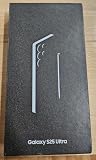
9. Samsung Galaxy S25 Ultra
Spec line: Snapdragon 8 Elite for Galaxy · 6.9 in 120 Hz Dynamic AMOLED 2X · about 5,000 mAh · 45 W wired · IP68 · S Pen · seven years of updates.
The previous-generation Ultra is the value route to the S Pen and top-tier zoom. Its chip is still fast enough for years of use, and the price gap to the S26 Ultra can be meaningful when retailers clear stock. The seven-year update promise runs from its launch, so the clock is slightly older.
Best for: buyers who want Ultra features and are willing to skip the newest generation. Skip if: you want the longest remaining update window or the newest camera hardware.
Pros: S Pen, long zoom, IP68, big battery, strong performance. Cons: large and heavy, older chip generation, update clock started earlier.
10. Samsung Galaxy A57 5G
Spec line: AMOLED display · triple camera · IP68 rating listed · battery in the 5,000 mAh class.
The A57 5G is the successor to the A56 and takes over as the mid-range reference. Specifications vary between sources and regions, so confirm the chip, charging speed and band list on the exact model page. The water-resistance step up from the A56’s IP67 is the headline change in listings.
Best for: mid-range buyers who want the newest A-series phone and the better water-resistance rating. Skip if: you want a proven model with many long-term reports or the lowest cost.
Pros: IP68 listed, large AMOLED display, triple camera, big battery. Cons: newer model with fewer long-term reports, cost is higher than the A56.

11. Samsung Galaxy A26 5G
Spec line: 6.7 in 120 Hz AMOLED · IP67 · 50 MP main camera with optical stabilization · 5,000 mAh class battery.
The A26 5G is the better-equipped entry model, sitting below the A36. It keeps the large 120 Hz AMOLED screen and an IP67 rating, which is unusual at this tier, while giving up processing speed and fast charging. It is a sound budget pick for browsing, messaging and photos in good light.
Best for: buyers who want a large smooth screen and water resistance at a low cost. Skip if: you play demanding games or want fast charging.
Pros: 120 Hz AMOLED, IP67, stabilized main camera, big battery. Cons: entry-level chip, slower charging, low-light camera is average.

12. Samsung Galaxy A17 5G
Spec line: 6.7 in Super AMOLED · 5,000 mAh · 25 W wired · IP54 · six years of updates.
The A17 5G is the lowest-cost Samsung 5G phone in this guide that still offers an AMOLED screen and a long update window. It is built for basic daily use, so performance, water resistance and charging are all a step below the A26. It works as a first phone or a secondary line.
Best for: first-time 5G buyers, kids and anyone who wants the lowest cost of entry. Skip if: you want 120 Hz smoothness, fast charging or high water resistance.
Pros: very low cost, AMOLED display, six-year updates, big battery. Cons: IP54 only, slow charging, entry-level speed and cameras.

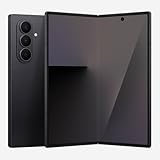
13. Samsung Galaxy Z Fold7
Spec line: Snapdragon 8 Elite for Galaxy · 8 in inner display · 6.5 in cover display · very thin and light for a book-style foldable · 200 MP main camera · seven years of updates.
Where the Flip7 is a compact phone that folds, the Fold7 is a small tablet that folds. It suits people who read, multitask or work on documents on the go. It is the most expensive phone in this guide, so the case for it rests on how often you will use the large screen.
Best for: multitaskers, readers and professionals who want a tablet-sized screen in a pocket device. Skip if: you want a low-cost phone or the most durable body; foldables have weaker dust protection.
Pros: huge inner display, flagship chip, 200 MP main camera, long updates. Cons: premium cost, smaller battery than slab flagships, fold crease and durability trade-offs.
All Samsung 5G phones in this guide compared
| Phone | Line | Tier | Pick it for |
|---|---|---|---|
| Galaxy S26 Ultra | S series | Premium | Best overall hardware and cameras |
| Galaxy S26+ | S series | Premium | Flagship speed with a bigger battery |
| Galaxy S26 | S series | Premium | Compact flagship |
| Galaxy S25 Ultra | S series | Premium | S Pen at a lower-generation cost |
| Galaxy S25 FE | FE | Mid-range to premium | Seven-year updates for less |
| Galaxy A57 5G | A series | Mid-range | Newest mid-range with IP68 |
| Galaxy A56 5G | A series | Mid-range | Proven mid-range all-rounder |
| Galaxy A37 5G | A series | Mid-range | Newer A-series with a large screen |
| Galaxy A36 5G | A series | Entry-level to mid-range | Low cost, 5,000 mAh battery |
| Galaxy A26 5G | A series | Entry-level | 120 Hz AMOLED and IP67 on a budget |
| Galaxy A17 5G | A series | Entry-level | Lowest cost of entry |
| Galaxy Z Flip7 | Z series | Premium | Pocketable foldable |
| Galaxy Z Fold7 | Z series | Premium | Tablet-size screen in a phone |
How to choose a Samsung 5G phone: thresholds that matter
- Budget tier: entry-level means A17 or A26, mid-range means A36 through A57, mid-range to premium means S25 FE, and premium means the S and Z lines.
- Battery: 5,000 mAh or more for heavy use; foldables and compact flagships sit lower, so expect a mid-evening top-up.
- Charging: 25 W is slow, 45 W is the practical target, and anything above that is a bonus.
- Water resistance: IP68 for beach, pool or rain use; IP67 for everyday accidents; IP54 for splashes only.
- Updates: Samsung’s A17 and A26 class phones carry shorter terms than the seven-year flagships, so check the model page for the exact promise.
- Size: under 170 g and about 6.3 in suits one-handed use; a 6.7 in or larger phone suits video and games.
- Carrier: confirm the model number on the carrier’s compatibility tool before buying any international or unlocked variant.
Short version: A17 or A26 for lowest cost, A36 to A57 for balance, S25 FE for long support at a mid-tier cost, S26 for compact power, S26 Ultra for everything, and a Z phone only if you want a foldable.
FAQ
Which Samsung 5G phone is best overall?
The Galaxy S26 Ultra is the best overall Samsung 5G phone in 2026 for cameras, performance and features. It is also the most expensive.
For most buyers, the Galaxy S25 FE or A56 5G offers a better balance of price and capability.
What is the cheapest Samsung 5G phone worth buying?
The Galaxy A36 5G is the lowest-cost model in this guide. It has a large AMOLED display and a 5,000 mAh battery.
Expect weaker night photos and slower multitasking than on the higher tiers.
Do all Samsung 5G phones work on every carrier?
No. Band support depends on the exact model and region. Check the carrier’s compatibility tool with the model number before buying, especially for unlocked imports.
Do I need mmWave?
Most people do not. Mid-band 5G delivers the speeds users notice in everyday use. mmWave helps only in dense areas where a carrier has deployed it.
How long will a Samsung 5G phone get updates?
It depends on the model. The Galaxy S25 FE has a seven-year guarantee, and S-series phones carry long windows. A-series phones have shorter, multi-year commitments. Check the maker’s update page for the exact model.
Is the Galaxy Z Flip7 a good daily phone?
Yes, if you value pocket size. It has a 6.9-inch inner screen and a 4.1-inch cover display. The 4,300 mAh battery is the smallest in this guide, so heavy users may need a midday top-up.
Is the Galaxy A56 5G water resistant?
Yes. It carries an IP67 rating, which covers dust and brief immersion. It is not rated for swimming or repeated submersion.
Should I buy an older S-series phone instead of a new A-series?
Often yes, if the older flagship still has several years of updates left. Compare the remaining update years and the battery condition, and consider a certified refurbished unit with a warranty.
Final recommendation
Choose the Galaxy S26 Ultra if you want the best Samsung hardware and can afford the premium tier. Choose the Galaxy S25 FE if you want flagship-like features and the longest update promise at a lower tier. Choose the Galaxy A56 5G or A37 5G for solid mid-range value, and the Galaxy A36 5G if cost is the deciding factor. Pick the Galaxy Z Flip7 if you want a foldable and accept a smaller battery. Before you buy any of them, confirm that the exact model supports your carrier’s mid-band 5G network.
More from Amazon
Programs that pair well with the guide above. Offers and eligibility are set by Amazon and may change.
Free shipping on eligible items, Prime Video and more. Eligible new members can start with a free trial.
Start a Prime free trialAd-free music streaming. Eligible new subscribers can start with a free trial.
Try Music Unlimited freeA Prime membership for ages 18-24 with a trial period. Eligibility is set by Amazon.
See Prime for Young AdultsAudiobooks and podcasts to listen to on the go. Eligible new members can start with a free trial.
Try Audible freeAs an Amazon Associate we earn from qualifying purchases.