Our Top Picks
 Best mid-range screen and batterySamsung Galaxy A17 5G Smart PhoneAndroid 15, One UI 8.04 GB2.4 GHzCheck on Amazon



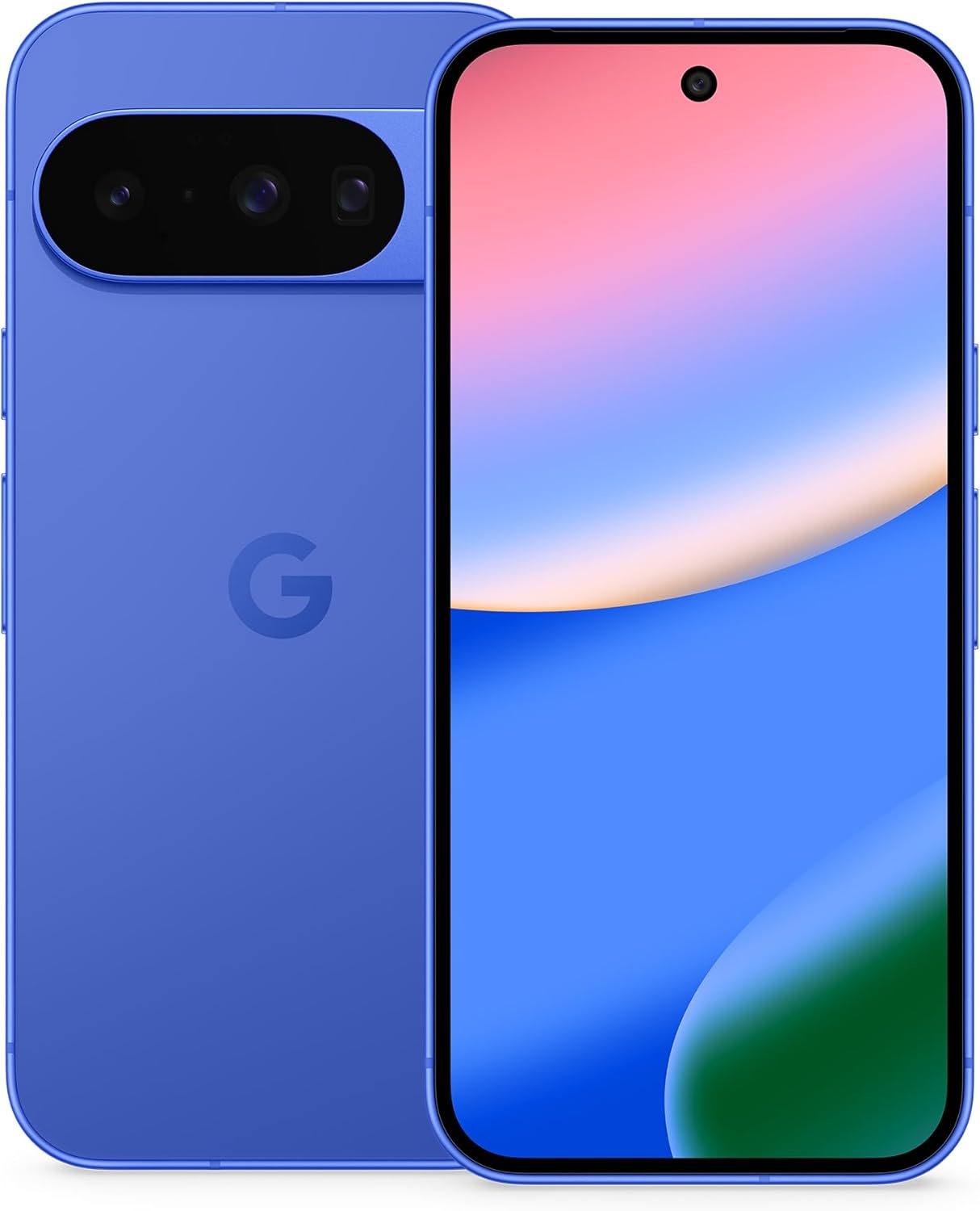
The best unlocked 5G phones in 2026 are the Google Pixel 9a for the best all-round value, the Samsung Galaxy S25 for a compact flagship, the Samsung Galaxy A56 5G for a big-screen mid-ranger with six years of updates, and the OnePlus 13R for raw speed and battery life. Each one works with the major US carriers when you buy the right regional variant, but “unlocked” does not guarantee full 5G coverage, so how you check carrier bands matters as much as which phone you pick.
An unlocked phone is sold without a carrier lock, so you can insert any compatible SIM or activate an eSIM. That freedom is the main reason to buy one: you choose the plan, you can switch carriers without trading in the phone, and you avoid the installment contracts that tie a device to a provider. It also moves the compatibility check onto you. This guide covers the phones worth considering, the spec criteria that matter for an unlocked purchase (bands, eSIM, dual SIM, update length, warranty) and a step-by-step method to confirm that a given model will work on your network before you buy it.
Quick answer: the best unlocked 5G phone by buyer type
- Best overall value: Google Pixel 9a.
- Best compact flagship: Samsung Galaxy S25.
- Best Google flagship-class software: Google Pixel 9.
- Best mid-range screen and battery: Samsung Galaxy A56 5G.
- Best speed and battery for the money: OnePlus 13R.
- Best rugged build with fast charging: Motorola Edge (2025).
- Best budget with long support: Samsung Galaxy A36 5G.
- Best low-cost battery phone: Motorola Moto G Power 5G (2026).
How we chose
This is a research-based comparison built from manufacturer specification pages, carrier compatibility documentation and buyer questions that recur around unlocked phones. We did not run lab measurements. Where a detail could not be confirmed, such as the full band list of a regional variant, we say so and point you to the check that settles it. Prices vary by retailer and season, so we use tier words (entry-level, mid-range, premium) instead of dollar figures.
The criteria, in priority order for an unlocked buyer:
- Carrier band support. The 5G bands your carrier uses must be on the phone, especially the low and mid bands that carry most of the coverage.
- eSIM and dual SIM. eSIM makes switching plans easy and enables a second line for travel or work.
- Update promise. Unlocked phones are often kept for years. Five to seven years of updates is the benchmark.
- Warranty and return path. A US-market unit with a manufacturer warranty beats an imported unit that may lack both.
- Performance tier and display. Chip class and 120 Hz AMOLED screens decide how fast the phone feels over time.
- Battery and charging. 5,000 mAh or more is the target for all-day use.
Comparison table: unlocked 5G phones at a glance
| Phone | Tier | Chip | Display | Battery / wired charging | Water resistance | Update promise |
|---|---|---|---|---|---|---|
| Google Pixel 9a | Premium-budget | Google Tensor G4 | 6.3 in, 120 Hz pOLED | About 5,100 mAh / 23 W | IP68 | 7 years |
| Google Pixel 9 | Premium | Google Tensor G4 | 6.3 in, 120 Hz OLED | About 4,700 mAh / 27 W | IP68 | 7 years |
| Samsung Galaxy S25 | Premium | Snapdragon 8 Elite for Galaxy | 6.2 in, 120 Hz Dynamic AMOLED 2X | 4,000 mAh / 25 W | IP68 | 7 years |
| Samsung Galaxy A56 5G | Mid-range | Exynos 1580 | 6.7 in, 120 Hz Super AMOLED | 5,000 mAh / 45 W | IP67 | 6 years |
| Samsung Galaxy A36 5G | Mid-range | Snapdragon 6 Gen 3 | 6.7 in, 120 Hz Super AMOLED | 5,000 mAh / 45 W | IP67 | 6 years |
| OnePlus 13R | Upper mid-range | Snapdragon 8 Gen 3 | 6.78 in, 120 Hz LTPO AMOLED | 6,000 mAh / 80 W | IP65 | 4 OS years, 6 years security |
| Motorola Edge (2025) | Mid-range | MediaTek Dimensity 7400 | 6.7 in, 120 Hz pOLED | About 5,200 mAh / 68 W | IP68 / IP69 rated | Shorter than Samsung and Google |
| Motorola Moto G Power 5G (2026) | Entry to mid | MediaTek Dimensity 6300 | 6.8 in, 120 Hz LCD | 5,200 mAh / 30 W | IP68 / IP69 rated | Shorter than Samsung and Google |
Google Pixel 9a: the best all-round unlocked 5G phone
Spec line: Google Tensor G4 · 6.3 in 120 Hz pOLED · about 5,100 mAh · 23 W wired · IP68 · seven years of updates · eSIM support.
Pixels have the broadest carrier compatibility of any Android line, because Google certifies them with all major US networks and sells them unlocked by default. The Pixel 9a pairs that with a strong camera pipeline, a bright 120 Hz display and the longest update window in this list. For an unlocked buyer who wants the fewest surprises, this is the safe pick.
Best for: people who want a phone that works on any US carrier, take many photos and keep devices for years.
Skip if: you want the fastest charging or the highest raw performance for gaming.
- Pros: excellent carrier compatibility, seven years of updates, IP68, strong camera processing, clean software.
- Cons: modest 23 W charging, performance is upper mid-range rather than flagship, smaller display than the A-series phones.
As an Amazon Associate we earn from qualifying purchases at no extra cost to you.

Google Pixel 9: flagship-class software at a lower price than a Pro
Spec line: Google Tensor G4 · 6.3 in 120 Hz OLED · about 4,700 mAh · 27 W wired · IP68 · seven years of updates · eSIM support.
The Pixel 9 uses the same chip as the 9a but adds a brighter display, a more capable camera setup and a more premium build. It is the better choice if you shoot in difficult light or want higher display brightness outdoors. Battery capacity is smaller than the 9a’s, so the 9a often matches it for endurance.
Best for: buyers who want the full Pixel experience, including the strongest camera features, without moving up to the Pro models.
Skip if: you mainly care about battery life or price; the 9a covers most needs for less.
- Pros: seven-year updates, strong cameras, bright display, IP68, broad carrier support.
- Cons: smaller battery than many rivals, premium cost, charging is not class-leading.

Samsung Galaxy S25: the compact flagship with seven years of updates
Spec line: Snapdragon 8 Elite for Galaxy · 6.2 in 120 Hz Dynamic AMOLED 2X · 4,000 mAh · 25 W wired · IP68 · seven years of updates · eSIM support.
The Galaxy S25 is the best choice for someone who wants a small, fast phone with a premium screen and strong resale value. The Snapdragon 8 Elite for Galaxy chip handles demanding tasks and gaming with headroom, and the unlocked US model supports a wide range of bands. Battery capacity is modest, so heavy users should expect to charge daily.
Best for: buyers who want flagship performance in a compact body and the long Samsung update window.
Skip if: you want multi-day battery or the lowest cost.
- Pros: top-tier performance, excellent display, IP68, seven-year updates, strong resale value.
- Cons: 4,000 mAh battery is the smallest in the list, premium cost, 25 W charging.

Samsung Galaxy A56 5G: the big-screen mid-ranger
Spec line: Exynos 1580 · 6.7 in 120 Hz Super AMOLED · 5,000 mAh · 45 W wired · IP67 · six years of updates.
The A56 5G fills the gap between budget and flagship. The large AMOLED screen, 45 W charging and IP67 rating make it a strong daily phone, and the six-year update promise is rare at this tier. Confirm that you are buying the US unlocked variant, because regional models differ in band support.
Best for: people who want a large, bright screen, good battery life and a long-lasting mid-range phone.
Skip if: you want the strongest camera or the fastest chip.
- Pros: large AMOLED display, 45 W charging, six-year updates, IP67.
- Cons: mid-range chip, camera is not class-leading, availability of the unlocked US model varies by retailer.

Samsung Galaxy A36 5G: the long-support budget pick
Spec line: Snapdragon 6 Gen 3 · 6.7 in 120 Hz Super AMOLED · 5,000 mAh · 45 W wired · IP67 · six years of updates.
The A36 5G delivers most of the A56 experience for less. It has the same display size, the same battery and the same fast charging, with a more modest chip. For unlocked buyers who want a dependable phone with a long update window and straightforward carrier support, it is a strong value.
Best for: budget-conscious buyers who still want 120 Hz AMOLED, IP67 and six years of updates.
Skip if: you play demanding games or want a premium camera.
- Pros: good value, long updates, fast charging, IP67.
- Cons: mid-range performance, camera improvements are modest.

OnePlus 13R: the speed and battery leader
Spec line: Snapdragon 8 Gen 3 · 6.78 in 120 Hz LTPO AMOLED · 6,000 mAh · 80 W wired · IP65 · four OS upgrades, six years of security updates · eSIM support on North American models.
The OnePlus 13R offers last-generation flagship silicon, a very large battery and very fast charging. It is the best unlocked pick for power users and gamers who care about speed and endurance. The trade-offs are a shorter update promise than Samsung and Google, a lower water-resistance rating, and carrier compatibility that is less documented than on Pixel or Galaxy phones, so run the band check described below. Imported units from some regions can lack eSIM.
Best for: gamers, heavy users and travelers who want the biggest battery and fastest charging.
Skip if: you want seven years of updates or the simplest carrier setup.
- Pros: flagship-class chip, 6,000 mAh battery, 80 W charging, large bright display.
- Cons: IP65 only, shorter update promise, carrier support needs checking, imports may lack eSIM.

Motorola Edge (2025): rugged and quick to charge
Spec line: MediaTek Dimensity 7400 · 6.7 in 120 Hz pOLED · about 5,200 mAh · 68 W wired · IP68 / IP69 rating.
The Motorola Edge (2025) combines a curved-style pOLED display, near-stock Android and very fast wired charging with a high durability rating. It suits buyers who want a premium feel in a mid-range phone. Motorola’s eSIM support is less consistent across regional models, so confirm eSIM on the exact variant if you rely on it.
Best for: buyers who want fast charging, a clean interface and a rugged build.
Skip if: you want seven years of updates or the strongest camera.
- Pros: 68 W charging, high water resistance rating, clean software, bright pOLED display.
- Cons: shorter update window, performance is mid-range, eSIM support varies by SKU.
Motorola Moto G Power 5G (2026): the low-cost battery phone
Spec line: MediaTek Dimensity 6300 · 6.8 in 120 Hz LCD · 5,200 mAh · 30 W wired · IP68 / IP69 rating.
The Moto G Power 5G (2026) is the inexpensive unlocked option for people who prioritize battery life and durability over speed. It is easy to use on prepaid plans and works as a reliable second phone. The shorter update promise and LCD display are the compromises.
Best for: prepaid users, long-battery needs, secondary phones and tight budgets.
Skip if: you want a long update window, an AMOLED display or strong camera performance.
- Pros: low cost, big battery, strong water resistance rating, clean software.
- Cons: entry-level performance, LCD, shorter update promise.
Worked example: how to verify an unlocked phone works on your carrier
The most common mistake with unlocked phones is assuming that “5G” on the box means “5G on my network.” Use this sequence before you buy.
- Find your carrier’s key bands. Carriers publish the bands they use. As a general pattern, T-Mobile leans on n41 (mid-band) and n71 (low-band), while Verizon and AT&T rely on a mix that includes n5, n66 and n77. Check your carrier’s current device-compatibility page for the authoritative list.
- Find the phone’s band list. Look at the manufacturer’s specification page for the exact model number and region. A model with a different regional suffix can have a different band list.
- Match the bands. Count how many of your carrier’s key bands the phone supports. If the phone is missing the carrier’s main low-band or mid-band, expect weaker indoor coverage or fallback to LTE.
- Run the IMEI check. Enter the phone’s IMEI (or the listing’s stated IMEI for a new unit) into the carrier’s compatibility checker. This confirms network certification, VoLTE and Wi-Fi calling.
- Confirm eSIM. If you plan to use an eSIM, verify that the exact model sold in your region supports it. Imported variants sometimes omit it.
Apply this to a real decision. Suppose you are on a carrier that depends on a low-band such as n71 for rural coverage. A Pixel or Galaxy US model will list it. An imported mid-range model may not. In that case the imported phone might show full bars at home in a city but drop to LTE in a rural area, which is the exact situation you wanted 5G to improve. The five steps take about ten minutes and prevent a return.
Carrier fit matrix
| Buyer situation | Safest pick | Needs a band check |
|---|---|---|
| Uses all major US carriers, wants zero surprises | Google Pixel 9a / Pixel 9 | No |
| Wants Samsung ecosystem and eSIM | Galaxy S25 / A56 5G | Confirm US model |
| Wants the biggest battery and fastest charging | OnePlus 13R | Yes |
| Wants rugged build and clean software | Motorola Edge (2025) | Yes, plus eSIM check |
| Prepaid user on a tight budget | Moto G Power 5G (2026) | Yes, for your prepaid network |
| Travels abroad and wants dual SIM | Galaxy S25 / Pixel 9 | Confirm eSIM plus physical SIM options |
What “unlocked” does and does not guarantee
It guarantees
You can use a SIM or eSIM from a compatible carrier without a lock, switch carriers without replacing the phone and avoid carrier-specific bloatware on many models.
It does not guarantee
Full 5G band support, carrier-specific features such as Wi-Fi calling on every plan, a US warranty for imported units, or carrier-branded software updates arriving at the same time. Updates for unlocked phones usually come directly from the manufacturer, which is often faster than carrier-controlled updates.
Safe-buying habits
- Buy from the manufacturer, a major retailer or a carrier-neutral store with a clear return policy.
- Check the model number against the manufacturer’s US specification page.
- Avoid listings that do not state the model number, warranty or whether the unit is new.
- Check that the IMEI is clean before you pay for a used or refurbished unit.
More unlocked 5G phones worth shortlisting
The picks above cover the mainstream choices. These six add a true flagship, a value flagship, a speed-first option, a low-cost pick and two more Google phones, so every buyer tier has at least two candidates. The same carrier band check applies to each one before you pay.
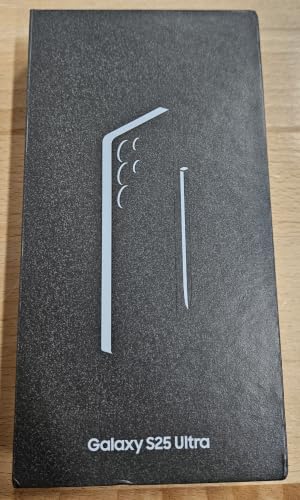
Samsung Galaxy S25 Ultra: the do-everything flagship
Spec line: Snapdragon 8 Elite for Galaxy · 6.9 in 120 Hz Dynamic AMOLED 2X · about 5,000 mAh · 45 W wired · IP68 · built-in S Pen · seven years of updates.
The S25 Ultra is the phone for buyers who want one device to replace a camera, a notepad and a gaming handheld. The US unlocked model carries a wide band list, and its long-zoom camera system is the strongest Samsung makes in this generation. It is large and heavy, so it only suits people comfortable with a big phone.
Best for: power users, note takers and photographers who want the longest update window and the broadest feature set. Skip if: you want a compact phone or a premium-tier cost is a problem.
Pros: top-tier performance, S Pen, long zoom, IP68, seven-year updates. Cons: large and heavy, premium cost, 45 W charging is good rather than fast for this size.
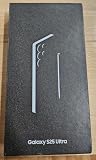
Samsung Galaxy S25 FE: flagship features for less
Spec line: Exynos 2400 · 6.7 in 120 Hz Dynamic AMOLED · 4,900 mAh · 45 W wired · IP68 · seven years of updates.
The S25 FE borrows the look, the large display and the update promise of the flagship line and trims the chip and camera tier. It is a sensible middle ground between an A-series phone and an S-series phone, and the seven-year support window lowers its cost per year of ownership.
Best for: buyers who want a long update window and a bright large screen without paying for an Ultra. Skip if: you want the newest chip or the best low-light camera.
Pros: seven-year updates, large bright display, IP68, solid battery. Cons: older chip generation, camera is a step below the S-series, band differences on imported units.

OnePlus 13: the flagship for battery and charging speed
Spec line: Snapdragon 8 Elite · 6.82 in 120 Hz LTPO AMOLED · about 6,000 mAh · very fast wired charging · IP68 / IP69 rating.
Where the 13R is the value pick, the OnePlus 13 is the full flagship from the same brand. It pairs current Snapdragon silicon with a very large battery, a bright adaptive-refresh display and a higher water-resistance rating than the 13R. Carrier documentation is thinner than for Pixel or Galaxy models, so run the band check first.
Best for: gamers and heavy users who want flagship speed and the biggest battery in a premium phone. Skip if: you need the simplest carrier setup or a seven-year update promise.
Pros: huge battery, very fast charging, flagship chip, strong water resistance. Cons: shorter update promise than Samsung and Google, carrier support needs checking, no mmWave.

Samsung Galaxy A17 5G: the low-cost long-support phone
Spec line: Exynos 1330 class chip · 6.7 in Super AMOLED · 5,000 mAh · 25 W wired · IP54 · six years of updates.
The A17 5G is the entry-level answer for anyone who wants a large AMOLED screen and a long update promise on a tight budget. The trade-offs are plain: modest speed, a lower dust and splash rating than the A56, and slower charging. It is a dependable first unlocked phone or a backup line.
Best for: first-time unlocked buyers, prepaid users and parents buying for a teenager. Skip if: you game, shoot a lot of video or want the smoothest 120 Hz scrolling.
Pros: very low cost for an AMOLED phone, six-year updates, big battery. Cons: slow charging, IP54 only, entry-level performance and camera.

Google Pixel 10a: the newer Google value phone
Spec line: Tensor-class chip · 6.3 in OLED · a battery Google rates for 30-plus hours · durable build · seven years of Pixel updates · Gemini features.
The Pixel 10a continues the 9a formula: broad carrier certification, clean software and the longest update window in this price band. Choose it over the 9a if the cost difference is small, because newer hardware and a fresh seven-year clock both favor it.
Best for: buyers who want a Google phone with the simplest carrier setup and a long support window. Skip if: you want the fastest charging or the strongest camera zoom.
Pros: seven-year updates, excellent carrier compatibility, clean software, strong everyday camera. Cons: charging is not class-leading, costs more than a discounted 9a.

Google Pixel 10: the main Pixel flagship
Spec line: Tensor G5 · 6.3 in 120 Hz OLED · about 5,000 mAh · IP68 · magnetic wireless charging · triple rear camera · seven years of updates.
The Pixel 10 adds a telephoto lens to the standard Pixel line and keeps the broad US carrier certification that makes Pixels the lowest-risk unlocked purchase. It is the pick when you want the best Google camera without moving to a Pro model.
Best for: photographers who prefer Google image processing and want zero band surprises. Skip if: you care most about battery capacity or charging speed.
Pros: seven-year updates, telephoto camera, IP68, magnetic accessories, broad carrier support. Cons: modest charging speed, premium cost.

All unlocked 5G phones in this guide compared
| Phone | Tier | Update promise | Pick it for |
|---|---|---|---|
| Google Pixel 9a | Premium-budget | 7 years | Safest carrier fit |
| Google Pixel 9 | Premium | 7 years | Camera and brighter display |
| Google Pixel 10 | Premium | 7 years | Best Google camera without a Pro |
| Google Pixel 10a | Mid-range | 7 years | Newer Google value pick |
| Samsung Galaxy S25 | Premium | 7 years | Compact flagship |
| Samsung Galaxy S25 Ultra | Premium | 7 years | Cameras, S Pen, big screen |
| Samsung Galaxy S25 FE | Mid-range to premium | 7 years | Flagship feel for less |
| Samsung Galaxy A56 5G | Mid-range | 6 years | Big screen and 45 W charging |
| Samsung Galaxy A36 5G | Mid-range | 6 years | Long support on a budget |
| Samsung Galaxy A17 5G | Entry-level | 6 years | Lowest-cost long-support phone |
| OnePlus 13 | Premium | 4 OS years, 6 years security | Battery and charging speed |
| OnePlus 13R | Upper mid-range | 4 OS years, 6 years security | Speed for the money |
| Motorola Edge (2025) | Mid-range | Shorter than Samsung and Google | Rugged build, fast charging |
| Motorola Moto G Power 5G (2026) | Entry to mid | Shorter than Samsung and Google | Prepaid and battery life |
How to choose an unlocked 5G phone: thresholds that matter
- Update promise: 6 years is the floor for a phone you plan to keep three or more years; 7 years is better for flagships and resale.
- Battery: 5,000 mAh or more for heavy use; under 4,500 mAh means a daily top-up, which is acceptable only in a compact phone.
- Charging: 25 W is slow but adequate overnight; 45 W or more refills a mid-size battery in roughly an hour.
- Water resistance: IP68 survives brief submersion; IP67 is close; IP54 only handles splashes and dust.
- Display: 120 Hz AMOLED is the target; 90 Hz or an LCD is a visible step down for scrolling.
- Storage: 128 GB is the minimum; 256 GB is the safer choice if you keep phones for years and shoot video.
- Carrier fit: if the spec page does not list your carrier’s main low-band and mid-band frequencies, treat the phone as high risk and follow the five-step check below.
Quick rule: choose a Pixel when carrier certainty matters most, a Samsung when update length and resale matter most, a OnePlus when battery and speed matter most, and a Motorola or the A17 when cost matters most.
FAQ
What is the best unlocked 5G phone overall?
The Google Pixel 9a is the best all-round pick because it combines broad carrier support, a seven-year update promise, IP68 protection and a strong camera at a mid-range cost.
Will an unlocked 5G phone work on all US carriers?
Pixel and Samsung US models generally do. Other brands may miss some bands. Always check the phone’s band list against your carrier’s list and run the carrier’s IMEI compatibility checker.
Is an unlocked phone better than a carrier phone?
It is more flexible because you can switch plans freely and avoid installment contracts. A carrier phone may offer promotions, but unlocked models give you control over your plan and update source.
Do unlocked phones support eSIM?
Most current Pixel, Galaxy and OnePlus North American models do. Some Motorola and imported variants differ, so verify eSIM support on the exact model before buying.
How long do unlocked phones get software updates?
It varies. Google Pixel 9a and Pixel 9 promise seven years, the Galaxy S25 seven, the Galaxy A-series six, and OnePlus 13R four OS upgrades with six years of security updates.
Is an unlocked phone safe to buy used or refurbished?
It can be, if the seller offers a warranty and return window. Check the IMEI status, battery health and that the phone is not tied to a carrier lock or an account lock.
Can I use an unlocked phone with a prepaid plan?
Yes. Prepaid carriers accept compatible unlocked phones. Confirm bands against the prepaid network, since some run on a larger carrier’s network with the same band set.
Which unlocked 5G phone has the best battery life?
The OnePlus 13R leads with a 6,000 mAh battery and efficient chip. The Galaxy A56 5G and Motorola models with 5,000 to 5,200 mAh cells are strong alternatives.
More from Amazon
Programs that pair well with the guide above. Offers and eligibility are set by Amazon and may change.
Free shipping on eligible items, Prime Video and more. Eligible new members can start with a free trial.
Start a Prime free trialAd-free music streaming. Eligible new subscribers can start with a free trial.
Try Music Unlimited freeA Prime membership for ages 18-24 with a trial period. Eligibility is set by Amazon.
See Prime for Young AdultsAudiobooks and podcasts to listen to on the go. Eligible new members can start with a free trial.
Try Audible freeAs an Amazon Associate we earn from qualifying purchases.